Local
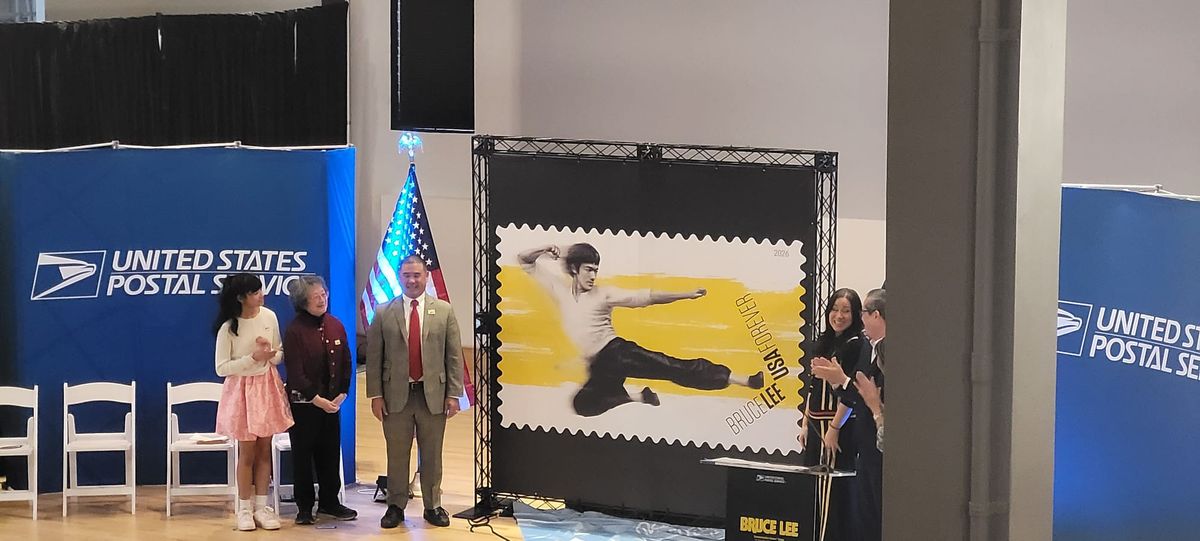
The Highline Journal series "250 Years Celebrating America: The Northwest Lens" starts with Bruce Lee and Seattle’s Chinatown International District.
Why Start with Bruce Lee?
This may seem like an unusual choice, but here are reasons for the combination:
- Bruce Lee exemplifies the American spirit of pursuing a dream to change the world
- Seattle’s Chinatown International District illustrates America’s strengths and positive impacts on the world, and also how sometimes in retrospect we realize we made mistakes.
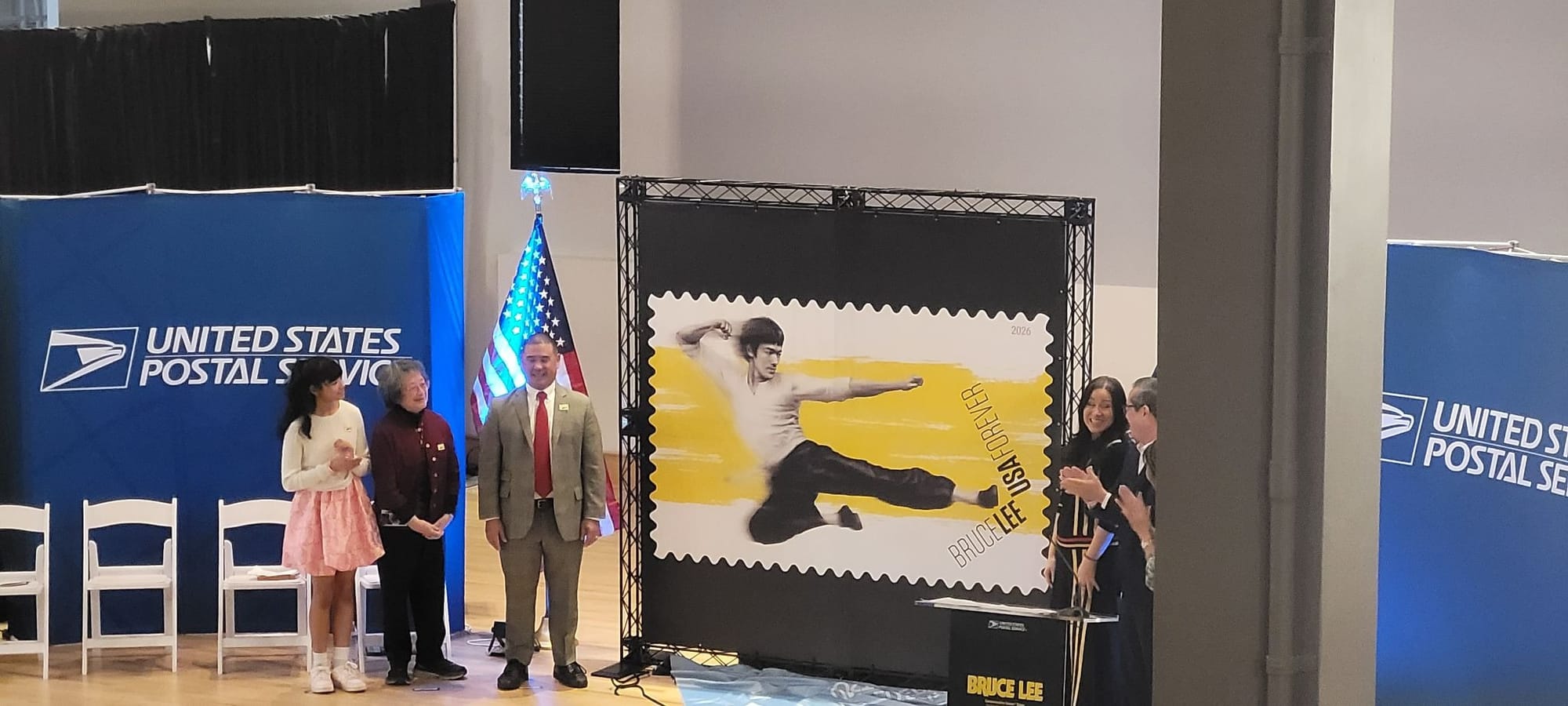
On February 18, 2026, the United States Postal Service released a stamp honoring Bruce Lee in the Nippon Kan Theater, located in the historic Japantown section of the International District. This event and location together prompted the idea of this story.
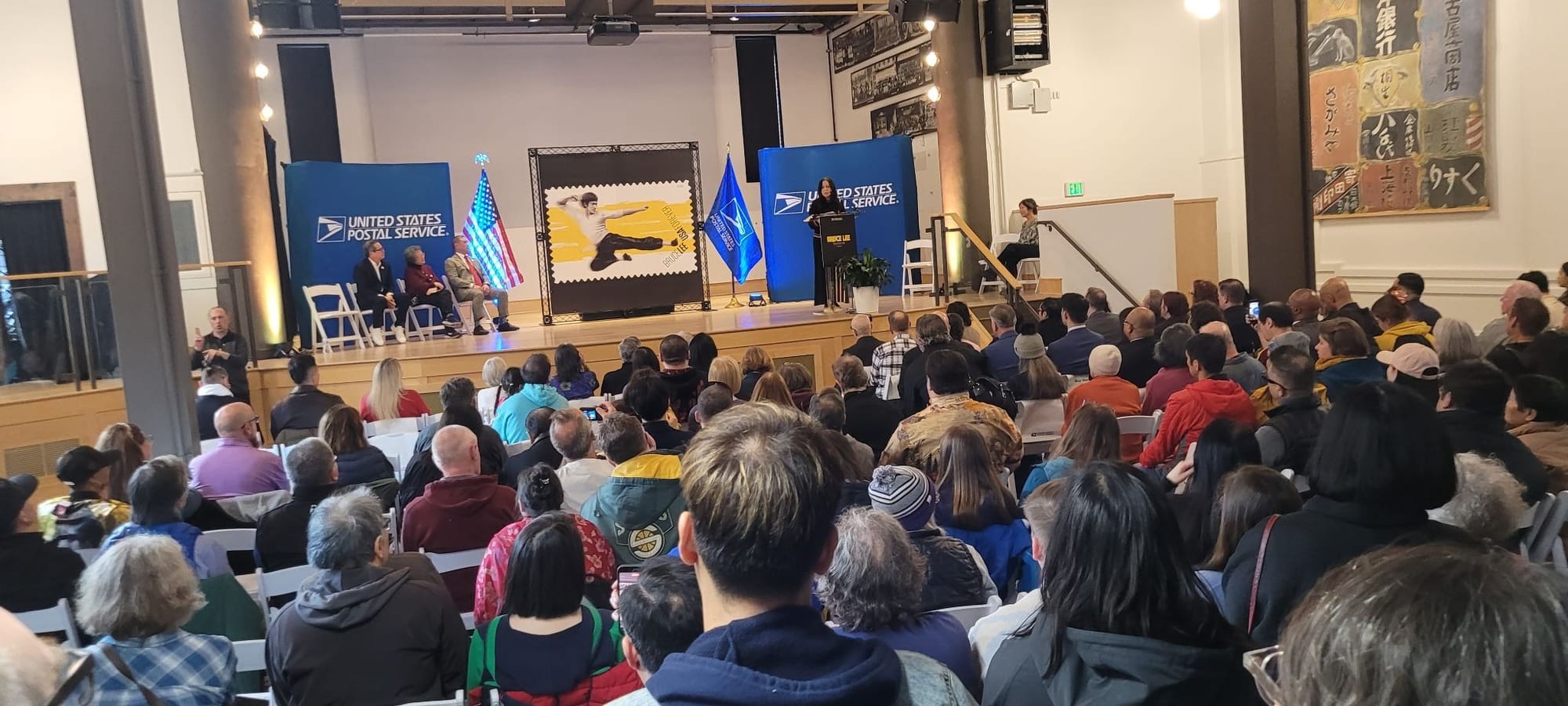
Bruce Lee’s daughter Shannon speaking in the launch ceremony at Nippon Kan Theater
Bruce Lee was born in San Francisco in 1940, so was an American citizen by birth. He moved to Hong Kong as an infant, acted in movies there in his youth, then came to Seattle in his teens. He finished high school, washed dishes in a restaurant to earn money for tuition at the UW, and studied there for a few quarters. In 1961, he started teaching a combination of martial arts, philosophy and meditation. He moved to Hollywood and the rest is history.
Looking Deeper at our Northwest Heritage
A major point of the Highline Journal’s The Northwest Lens: Celebrating America at 250 series is to look beneath the surface. The Chinatown International District is a perfect place for reflection.
While growing up in the Seattle area, I thought I knew and understood the Chinatown International District area. I’d seen shops, eaten in Chinese restaurants and driven through the area on Jackson, the main street.
So I didn’t think I would learn anything new when going to the Bruce Lee stamp ceremony. However, the nearest parking I could find was several blocks west of the ceremony site in an area I thought was Pioneer Square.
The Eye-Opener…
A sign on Second Avenue South Extension, near South Washington street, points to a darker side of Seattle history. The sign highlights a nearby building that was important in the Chinese community and the role Chinese workers played in building Seattle and the region.
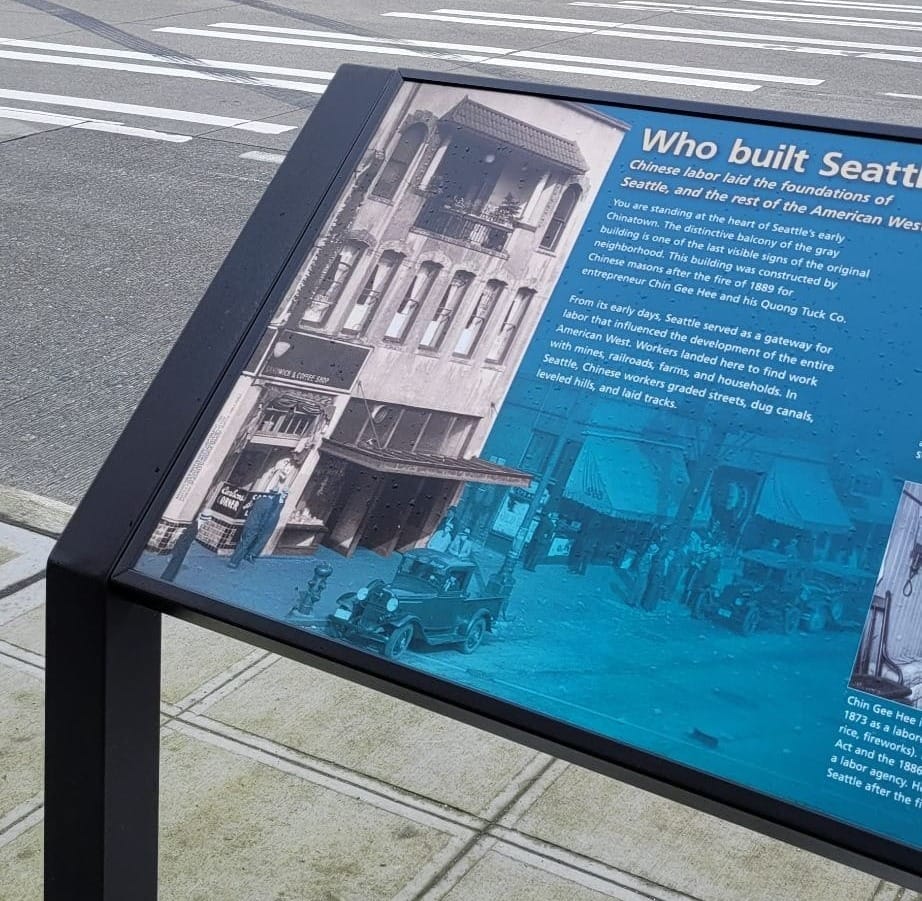
The sign had additional information that points to the darker side of Seattle history: in 1886, some residents of Seattle forced Chinese residents to leave Seattle. Literally, they marched the Chinese down South Washington street to a dock where a boat “just happened” to be available to take them away. But what were stories of the residents and of buildings since replaced by offices and high rise apartments in recent years?
I thought about my mental map of the area. “Most of these buildings look like anywhere else in Seattle, am I really in the International District? What is its size? Was this older building an island separated from the rest of the district then, or now?
I walked east on South Washington street. This area was flat, at one time mudflats filled with sawdust and sluiced dirt. Suddenly the street gets very steep! Eventually I saw some street banners for Japantown. I continued thinking “what are the stories …?” I recalled something about a love story set in the area during World War II. The Panama Hotel featured in the book Hotel on the Corner of Bitter and Sweet is about the romance of two people of Japanese and Chinese ancestry, impacted by Executive Order 9066 that sent Japanese Americans to internment camps.
Just like the Chinese expulsion, this shows a dark side of this neighborhood’s history.
But there’s a lighter side, too. The Nippon Kan Theater, site of the first day ceremony, was built by the Japanese-American community as a place for gatherings and events. This is an example of grass-roots initiatives, one of America’s real strengths.
USPS Unveils Bruce Lee USA Forever Stamp
The first-day stamp ceremony was eye-opening. The Seattle Times has a comprehensive write up of the first day ceremony. The event featured a lion dance, a color guard from the American Legion Cathay Post (founded in 1946 by area residents who had fought in World War II), and participation by family members. Bruce Lee’s student from 65 years ago, Sue Ann Kay, shared the impact he had on her life. She told how he taught her and other teens a combination of Martial Arts, Philosophy and Meditation in a nearby building’s basement dirt floor.
At a deeper level, have you ever known someone who has a unique approach to life that makes you think “they keep doing these odd things, they’ll never amount to anything.” Well, in the early 1960s, that someone could have been Bruce Lee. He definitely had a very unconventional life journey. A focus on Philosophy and Meditation are NOT what I’d expect from an action figure in movies. Yet these proved to be building blocks in his incredible success in Hollywood as a role model for both Asian-Americans and people from Asia. No wonder his grave at Lakeview Cemetery is a pilgrimage site for people from all over the world.
How else does this stamp and a visit to the Chinatown International District help celebrate America at 250? To me, this stamp illustrates two key American traits: perseverance and creativity. The stamp project took nine years. The stamp artist mentioned challenges with photos and the creativity of having Bruce in his famous flying pose literally kick the words “Bruce Lee USA Forever” from a horizontal line into a sideways V.
Lessons Remembered and More to Explore
This visit made me think of resilience - of overcoming obstacles to build a future together. It made me think of how unexpected life journeys can be. From teaching on a dirt floor to pioneering a new category of acting in Hollywood in just a few years is truly remarkable.
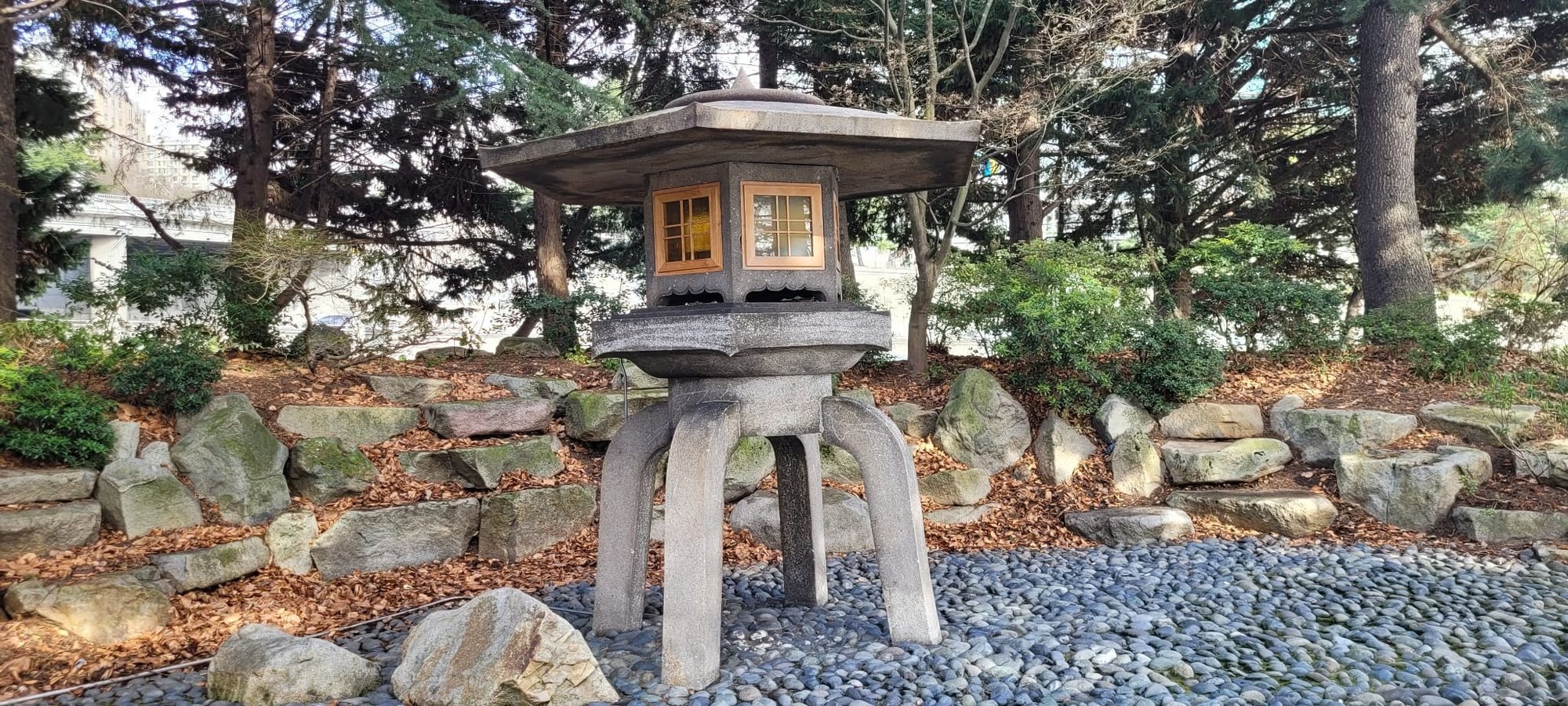
While researching for this story, I became aware that there are many other stories to hear and places to experience in the Chinatown International District neighborhood. Besides the Panama Hotel, with its basement of items left behind by WWII internees, there’s the Wing Luke Museum, and its seasonal neighborhood walking tours. Look beyond restaurants and shops for quiet spots of beauty, such as the Kobe Terrace Park, honoring Seattle’s sister city in Japan.
My hope is readers can celebrate America’s heritage by exploring the Chinatown International District and can be inspired when they see the Bruce Lee stamp and think of his remarkable life.
Members Discussion
Highline Journal Comment Guidelines
We believe thoughtful conversation helps communities flourish. We welcome respectful, on-topic comments that engage ideas, not individuals. Personal attacks, harassment, hateful comments, directed profanity, false claims, spam, or sharing private information aren't allowed. Comments aren't edited and may be removed if they violate these guidelines.