Education
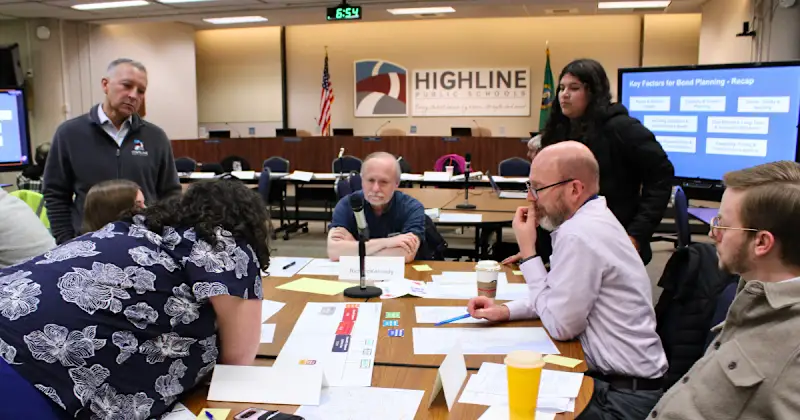
After approving a levy in November 2025, Highline voters could face a $450–$650 million school construction bond in 2026.
Members of Highline School District’s Capital Facilities Advisory Committee met Monday, February 2, to continue shaping a potential school construction bond expected to go before voters in the near future.
The volunteer committee, known as CFAC, advises the Highline School Board on long-term capital needs. Its work is expected to result in a recommendation identifying priority projects and a proposed bond amount ranging from $450–$650 million, which will be presented to the board in spring 2026.
The February meeting built on groundwork laid in January, when members first began testing possible bond package combinations.
Understanding the Bond Process
CFAC members are actively reviewing a wide range of potential construction and major improvement projects across the district. The process is guided by equity considerations, the condition of aging facilities, and the district’s long-term educational goals. If all identified capital projects were completed, costs would exceed $800 million.
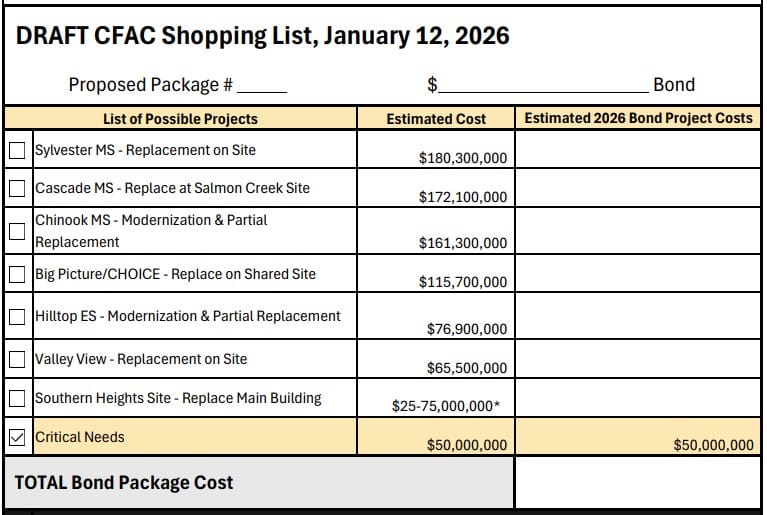
Rather than advancing a single all-or-nothing proposal, committee members are developing scaled options that could realistically be placed before voters. A central question driving the work is what dollar amount is most likely to pass. In Washington, school construction bonds require approval by 60 percent of voters, a higher threshold than educational levies.
Lessons from the 2025 Levy
Bond discussions continue to be informed by lessons from the district’s most recent levy. In November 2025, Highline voters approved a levy by 63 percent, despite it representing a significant tax increase.
District messaging during that campaign emphasized an expected tax rate rather than the total dollar amount. Since then, property values have declined, and resulting tax rates have increased, highlighting the volatility of rate-based messaging.
During the meeting, Chief Financial Officer Jackie Bryan emphasized that voters approve a fixed dollar amount, not a guaranteed rate, which can fluctuate depending on the district’s tax base. CFAC members acknowledged that many families are financially stretched, making moderation and clarity increasingly important as the committee works toward a recommendation.
Schools Under Consideration
Projects under discussion include potential replacement or major improvements for three aging middle schools: Sylvester, Cascade, and Chinook. Committee members are also evaluating needs at Choice and Big Picture programs, Valley View, and Hilltop Elementary School.
District leaders provided budget and enrollment updates as part of the discussion. Based on the district’s demographics analysis, enrollment is expected to remain relatively stable over the next several years.
Community Volunteers at Work
During the meeting, CFAC members worked hands-on with project lists and calculators to “pencil out” how different combinations fit within potential bond levels. About 30 community members attended and participated in the exercise.
The next CFAC meeting is scheduled for March 9, when members will continue refining options and work toward consensus on a bond package recommendation to bring to the Highline School Board.
💡
How bonds and levies affect your household:
A school levy funds day-to-day operations and is collected annually, while a school bond funds major construction and is repaid over many years. Homeowners repay both through property taxes, though bonds commit voters to a fixed construction cost over time. Renters may feel indirect effects if higher property taxes are passed on through rent. In Highline, voters approved a levy in November 2025 and may be asked to consider a construction bond in November 2026, together shaping the overall tax picture for households.
A school levy funds day-to-day operations and is collected annually, while a school bond funds major construction and is repaid over many years. Homeowners repay both through property taxes, though bonds commit voters to a fixed construction cost over time. Renters may feel indirect effects if higher property taxes are passed on through rent. In Highline, voters approved a levy in November 2025 and may be asked to consider a construction bond in November 2026, together shaping the overall tax picture for households.
Bond vs. Levy: What This Means in Highline
School Bond A school bond in Highline would pay for major construction projects such as replacing or renovating aging schools, including middle schools like Sylvester, Cascade, and Chinook. Voters would approve a fixed dollar amount, currently under discussion at $450–$650 million, which the district would borrow and repay over time through property taxes. Bond approval requires 60 percent voter support in Washington.
School Levy Highline’s levy pays for day-to-day operating costs such as staff, classroom programs, transportation, and student services. Levies do not fund major construction. In November 2025, Highline voters approved a levy by 63 percent, exceeding the simple majority required.
Why This Matters Locally Highline voters approved an operating levy less than a year ago and may be asked to consider a large construction bond in November 2026. While levies are renewed regularly, a bond commits the district to repaying a specific construction cost over many years.
Members Discussion
Highline Journal Comment Guidelines
We believe thoughtful conversation helps communities flourish. We welcome respectful, on-topic comments that engage ideas, not individuals. Personal attacks, harassment, hateful comments, directed profanity, false claims, spam, or sharing private information aren't allowed. Comments aren't edited and may be removed if they violate these guidelines.