Port of Seattle
Editor’s note: An earlier version of this article incorrectly identified Karen Veloria. The article has been corrected to reflect her proper name. We regret the error.
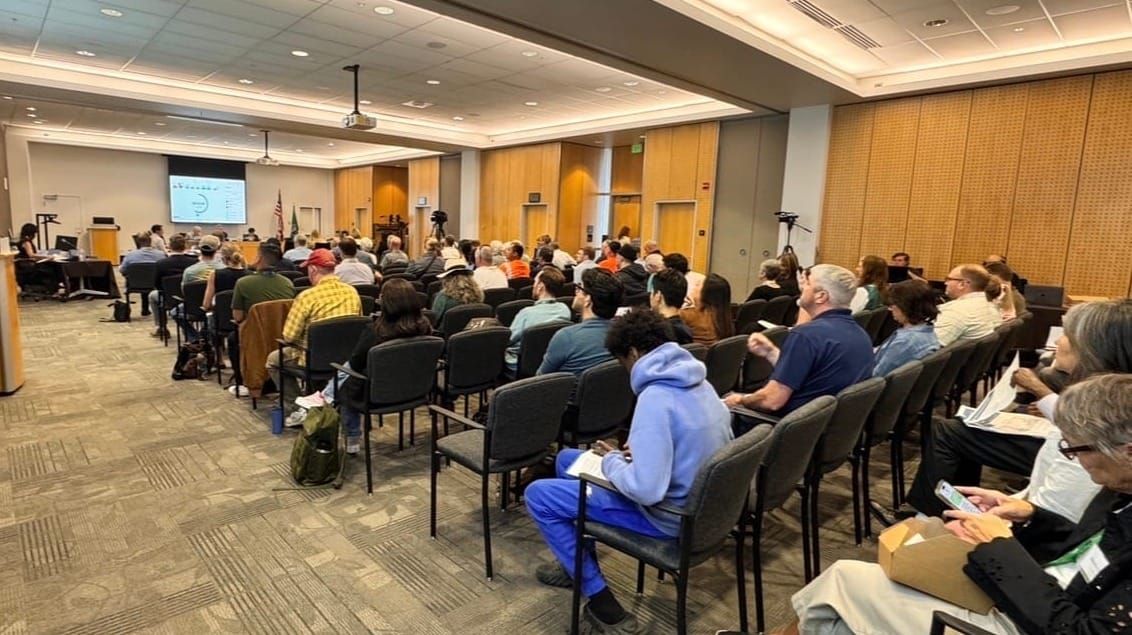
On July 9, 2026, the Port of Seattle commissioners held a hearing for anyone to give two-minute comments about the SeaTac Airport Master Plan (SAMP) Environmental Impact Statement. The hearing started at 4:30 PM and concluded at 6:15 PM, with about 80 in-person attendees and another 20 online. There were a total of 44 speakers. All five members of the commission were present. They were joined by Port of Seattle Executive Director Steve Metruck.
The commission listened, but there was no dialogue. This was only a hearing, with comments entered into the public record regarding the Draft Environmental Impact Statement (DEIS.)
Full recording is available here. The hearing was also covered by KOMO.
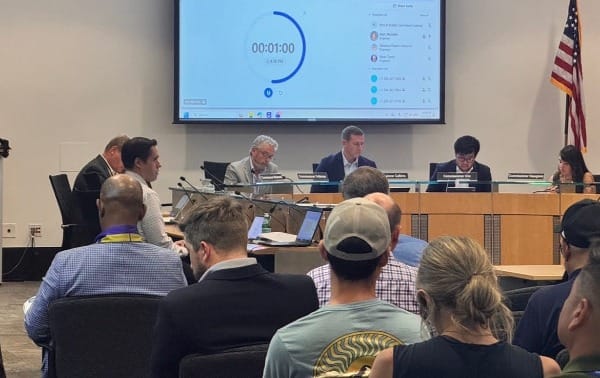
In general, speakers fell into four groups: two opposed and two in favor. Here are a few highlights from the meeting.
Opposed
The biggest group of speakers was 30 residents from Seattle and South King County. They were joined in opposition by several elected officials and city staff from the airport communities.
These two groups raised many concerns about the airport's expansion, including air pollution, health impacts (for example, who pays for cancer caused by airport pollution? It isn't the Port), reduced tax base, the complications of planning a city's future, road congestion, and many other costs.
No people who live in the area or work for the nearby cities spoke in favor of the expansion. Several have interacted with the Port as a part of the various roundtables the Port has set up. Specific comments are below.
I want to highlight comments by Dr. Breck Lebegue from Washington Physicians for Social Responsibility and a former U.S. Air Force flight surgeon. He mentioned the consequences of the particulates that will increase according to the Port's plans, including heart and lung disease, dementia, and premature deaths. He stated, "The real costs are shifted and there's no informed consent."
In Favor
There were also people who spoke in favor of the expansion projects. Several members of the carpenter and other unions spoke about how more expansion means more construction jobs. They emphasized agreements that every project needs a certain number of apprentice slots.
An employee of Alaska Air noted how excited Alaska was at increasing its number of flights, for example to Europe, and they looked forward to more expansion (side note: the cost for a couple to fly on their new flights is more than the monthly rent many families pay).
Finally, various chambers of commerce and tourism groups from outside the Highline area talked about money and other benefits they and their stakeholders get from the airport, and how a bigger airport means more money for them. Specific comments are below.
💡
Reminder: July 21 is Comment Deadline
Several speakers reminded everyone of the importance of submitting comments for the draft EIS by July 21 at 4 PM, as noted on the SeaTac Noise Info page, which links to the Port's page.
City officials and others mentioned how hard it is to provide comments in 60 days, but as noted in our recent story, Commissioner Felleman and apparently others seem to think Environmental Justice and Cumulative Impacts are a small addition to the previous versions of the EIS and that no one really needs more time to provide comments.
Several speakers reminded everyone of the importance of submitting comments for the draft EIS by July 21 at 4 PM, as noted on the SeaTac Noise Info page, which links to the Port's page.
City officials and others mentioned how hard it is to provide comments in 60 days, but as noted in our recent story, Commissioner Felleman and apparently others seem to think Environmental Justice and Cumulative Impacts are a small addition to the previous versions of the EIS and that no one really needs more time to provide comments.
Neighbor Comments
There was a mix of community members who have been involved in airport issues for many years and some new voices who have new perspectives. Here are some of their comments:
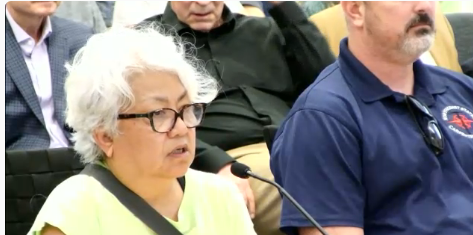
Karen Veloria, a Burien resident, spoke of how many of her neighbors are first-generation Americans. She stated many have limited English skills, are busy with two jobs, children, and caring for parents. They don't know what's going on, they are going to be harmed by the expansion, who's speaking for them? How do their voices get heard? They don't have time to navigate this EIS process.
Several people spoke of participating in the airport roundtables. Uniformly, they said how they did not trust the airport, the EIS process, and other airport community outreach.
State Sen. Tina Orwall spoke of the scientific research about ultrafine particles, and how these health concerns are trivialized in the draft EIS.
Burien Mayor Sarah Moore, Des Moines Mayor Grace Matsui, and City of SeaTac Planner Zachary Shields each spoke separately, but made similar points about the negative impacts, and how the airport avoids any recognition of these costs in their analyses and pronouncements about how wonderful the expansion plans are. Matsui mentioned how analyses are usually done for projects in isolation from each other, but in reality there's a compounding effect the Port chooses to ignore. Shields mentioned the traffic impacts and road costs from spillover traffic.
Des Moines City Manager Katherine Caffrey pointed out that less than one percent of capital project budgets by the airport go to mitigation of the damages and harms of those projects.
Des Moines Councilmember Gene Achziger mentioned a lesson from camping trips: "Pack it in, pack it out." He stated the airport does not do this.
Ann Krager, a resident of Des Moines, commented midway through the hearing, "This sounds like the haves and have-nots." She mentioned how she used to live in Bellevue, and how the residents of the Eastside (and speakers from the business and tourism groups) have no understanding of the challenges in the airport area that are a direct result of the Port's choices.
Abdi Omar spoke of the health challenges for members of the African diaspora. He pleaded, "Don't jeopardize the health of our community."
Several speakers mentioned the high number of trees already removed for SR 509, "safety" hundreds of feet away from the airport, and cargo warehouses. They pointed out the EIS calls for paving over more ground, but that there's no big-picture look at all these impacts.
Debi Wagner, a longtime activist, mentioned the Port has not complied with the loss of a lawsuit brought by Quiet Skies and the City of Burien, where the FAA had to do a full review of the impacts of new flight paths and other projects. Debi also stated that the EPA models have very different measurements than the airport's use of the models because of data the Port has removed from their models that are used in the draft EIS. The result is a risk analysis that shows no problems when there really are big problems with air quality now, and even more so when additional capacity is added.
Proponent Comments (Non-Local)
Comments from Issaquah Mayor Mark Mullet. He grew up in Tukwila and said he understands airport challenges because of his childhood and because of hearing from former Sen. Keiser when both were serving in the Legislature. He also highlighted how Costco, which is headquartered in Issaquah, needs airport access because Costco requires all vendors to appear in person at their headquarters when pitching products. So, to help Costco and drive tax revenue for Issaquah, he advocated in favor of the airport expansion.
Maria Rendoza of MSC Cruises spoke with great pride about the sustainability initiatives of her company, including a goal of net-zero carbon by 2050. But she then said how great it was that SeaTac would expand. She made no attempt to explain the stark contrast between her company's goal of reducing air pollution and the airport's plans—which will increase pollution.
Observation/Analysis
Some of the comments were confusing. Several people acknowledged concerns raised by airport-adjacent cities, but then followed by expressing support for airport expansion despite those very concerns.
In Rendoza's comments, she praised sustainability, but then pushed for the airport expansion, which would lead to more negative community impact.
On Mullet's comments: Costco is located on the site of the former Pickering Farm, which included the Issaquah Skypark. It was a recreational airport closed down in 1987, which "conveniently" was when the region was in the early stages of looking at alternatives to SeaTac. It was a very small site, but still, by closing it, there was no chance it could be expanded into a reliever airport with nearby Lake Sammamish providing takeoff and landing paths.
Instead, the Pickering Place development provided space for major retailers, generating high levels of sales tax revenue, business taxes, and high-paying corporate jobs from Costco and others for employees who, in turn, can afford to pay high property taxes on expensive homes to live in a top-rated school district.
I was hoping during Mullet's talk he would acknowledge the health impacts and the costs the airport sticks to airport neighbors, but to no avail.
Everyone who spoke in support of the expansion plan wanted all the benefits but indicated a complete lack of awareness of or responsibility for the health and other impacts of the airport.
No speaker adjusted their comments after hearing from neighbor voices.
While the union speakers came in person, most, if not all, of the other speakers delivered their comments online, meaning they could avoid seeing or hearing from people who are impacted by the airport. Most logged off as soon as they were done speaking.
RELATED ARTICLES:
Port of Seattle Commission Meeting July 9 Postgame | Sea-Tac Noise Info
More than 40 speakers addressed Port commissioners July 9, with most urging stronger health protections, mitigation, and environmental review of airport expansion.
 Guest Writer
Airport Coalition Renews Request for Longer SAMP Review
STACC4J has renewed its request for a 90-day public comment period on the SAMP DEIS, citing concerns raised during July 9 testimony.
 Admin
Admin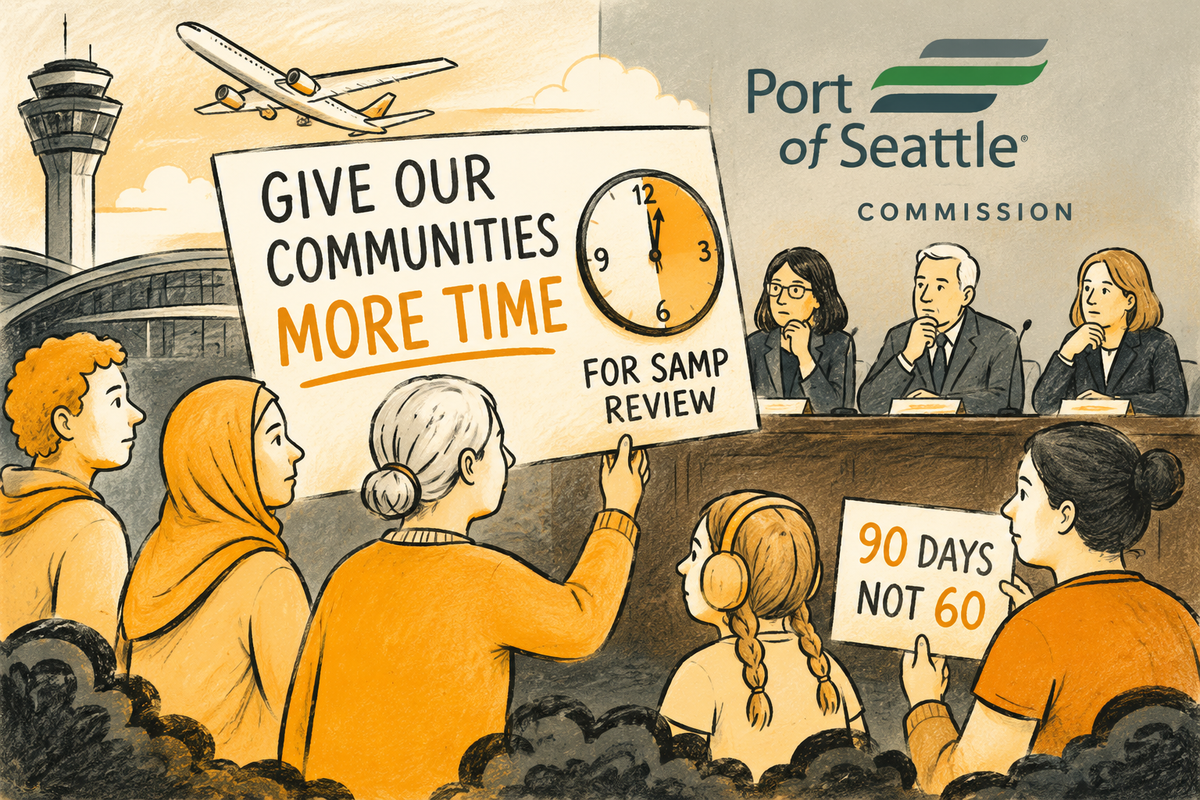
Community Invited to July 18 Airport Impact Forum with Rep. Adam Smith
As the July 21 DEIS comment deadline approaches, residents can discuss airport impacts and ask questions during Rep. Adam Smith’s July 18 forum.
 Staff Writer
Members Discussion
Highline Journal Comment Guidelines
We believe thoughtful conversation helps communities flourish. We welcome respectful, on-topic comments that engage ideas, not individuals. Personal attacks, harassment, hateful comments, directed profanity, false claims, spam, or sharing private information aren't allowed. Comments aren't edited and may be removed if they violate these guidelines.