Dying in the Homeless Industrial Complex: Housing First in Burien
Marketed as compassion, Housing First in Burien's DESC has become a costly experiment leaving addiction entrenched, neighborhoods destabilized, and people unprotected.

Marketed as compassion, Housing First in Burien's DESC has become a costly experiment leaving addiction entrenched, neighborhoods destabilized, and people unprotected.
Guest Editorial by Paul Glumaz, Seattle resident, Economic and Cultural Anthropologist, with a primary interest in ending global poverty.
[Editor’s Note: This article is Part One of a two-part series examining the “Housing First” model used by Burien’s Bloomside Downtown Emergency Center (DESC). Part Two will take "A Sobering Look at Housing First," as it explores humane reforms, focusing on accountability.]
Billions of taxpayer dollars are being spent on building and administering low-barrier Housing First projects to solve homelessness in cities across the nation. On helping the homeless, no greater lie has been told. Nor has greater damage been inflicted on once-vibrant cities and neighborhoods than by nonprofit-run Housing First facilities operating under the façade of compassion while producing disastrous results. While there are people involved who genuinely want to serve the homeless community and believe this model is effective, growing evidence challenges that belief.
Low Barrier Housing Becomes Housing First:
Public housing as a solution to the problem of homelessness transcends politics. The modern version of Housing First began to emerge during the George W. Bush administration as public housing expanded. As that expansion continued, placing the severely mentally ill and drug addicted into housing without treatment became an increasing problem. Earlier public housing models did not allow drug use. That changed as recreational drug use gained social and political acceptance.
Eight years after Washington State decriminalized marijuana in 2012, both the Seattle City Attorney and the King County Prosecutor declared the war on drugs lost. By then, most shelters and public housing in King County were housing active drug addicts and the mentally ill alongside everyone else. Two narratives emerged to justify this shift. One claimed addicts needed a safe place before their drug problems could be addressed. The other reframed addiction as childhood trauma, redefining drug use as a behavioral health issue requiring tolerance rather than treatment.
This is how low-barrier housing became Housing First, championed as the solution to homelessness. The cruel reality is that for a vast number of addicts entering Housing First programs, it functions as a drug death solution rather than a homelessness solution.
Today, Housing First is a multibillion-dollar industry in which the homeless are warehoused in environments that incubate crime, mental illness, cartel drug activity, and the expansion of addiction into surrounding neighborhoods. Burien’s Bloomside facility, operated by Downtown Emergency Service Center (DESC), follows this same model.
Inside a DESC Housing Facility:
A typical DESC Housing First facility contains over 100 small units of roughly 250 square feet. DESC operates numerous such buildings across King County, funded by city, county, state, federal, and housing levy dollars. Interviews conducted at other DESC facilities reveal what life inside these buildings looks like, and Burien residents increasingly report similar concerns around Bloomside.
Drug addiction predominates. A significant percentage of residents are convicted sex offenders, while others are disabled and highly vulnerable. Sexual assaults occur, including assaults against staff, and are rarely reported. Drug use is allowed in common areas, where residents are supplied with pipes, needles, and materials to smoke methamphetamine, cocaine, and fentanyl. Food service is limited and frequently runs out.
Elevators routinely break down, trapping disabled residents in their rooms for days. At night there is no effective security at entrances, allowing continuous traffic from drug dealers and buyers. Units are routinely used by non-residents, including for prostitution. Violence is common and seldom reported.
Hallways carry the unmistakable odor of burned fentanyl. Residents witness people in advanced stages of addiction suffering from open sores and infections such as MRSA. Dogs are allowed, with waste left throughout the building. Theft is constant. Break-ins occur even when residents are inside their units.
Those who enter not addicted are surrounded by active users and dealers who dominate life inside the facility and congregate outside on nearby streets. Drug cartels provide the supply and actively promote addiction among those not yet addicted. Nothing is done to stop it.
Meanwhile, DESC receives approximately $100 million a year, largely from taxpayers, to operate and expand these facilities. As the homelessness crisis worsens, more buildings are constructed, many already deteriorating after only a few years.
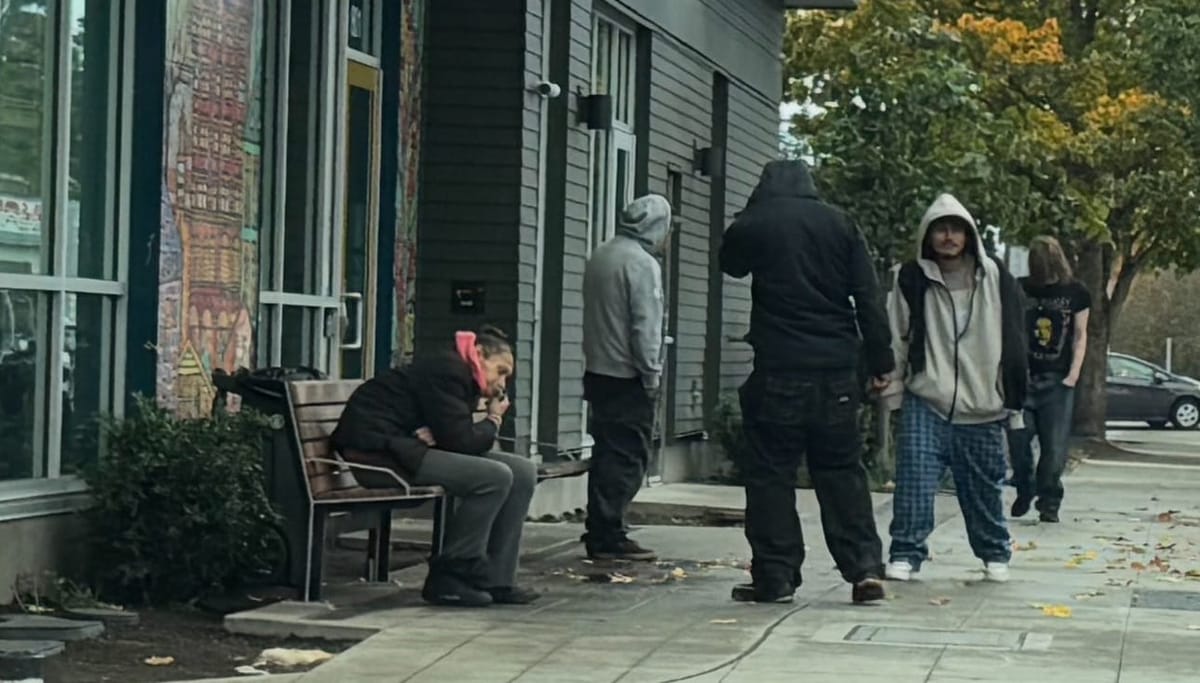
Burien residents living near Bloomside report rising calls for police and emergency services, increased disorder, and fear for their safety. Insurance rates climb. Businesses struggle or leave. Neighborhoods decline. City resources are drained while outcomes worsen.
Compassion without accountability is not compassion. Housing without treatment is not recovery. Burien must honestly confront whether Bloomside is helping people escape homelessness or institutionalizing addiction while exporting harm into the surrounding community.
This article is Part One of a two-part series examining Housing First as it is currently implemented. Part Two, “A Sobering Look at Housing First," will explore alternatives, reforms, and what a humane, accountable path forward could look like.
[NOTE FROM EDITOR: If you wish to submit an editorial, story, photo, article, or letter, please email us at info@thehighlinejournal.com Even if you wish to remain anonymous, please include your name and phone number so we may contact you privately. We look forward to hearing from you.]
Highline Journal Comment Guidelines
We believe thoughtful conversation helps communities flourish. We welcome respectful, on-topic comments that engage ideas, not individuals. Personal attacks, harassment, hateful comments, directed profanity, false claims, spam, or sharing private information aren't allowed. Comments aren't edited and may be removed if they violate these guidelines.