Education
$450 Million Proposed Budget; $26,602 spending per student; Drop in Reserves
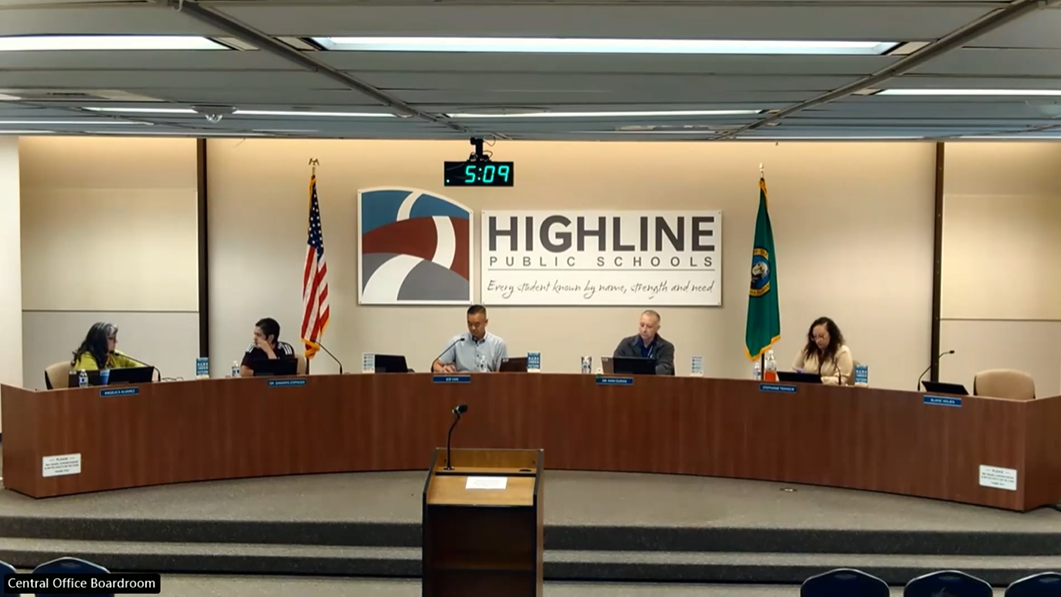
The Highline School Board is scheduled to vote on the 2026–27 budget at its Wednesday, July 1, Noon board meeting. To receive public input, the district held a 30-minute budget hearing on Wednesday, June 24.
During the hearing, the Board of Directors and Superintendent Duran heard comments from three citizens: parent and advocate Kristin Price, parent Josh Schumacher, and community activist and Highline Journal writer Stuart Jenner. Most of the testimony focused on the General Fund and Capital Projects Fund.
Full details are available in the 2027 budget book, available on the district budget book page that also contains past budget books.
Highline Schools Proposed 2026-27 Budget: Share Your Feedback
Highline Schools Budget Public Hearing on June 24. Public commentary is requested.
 Staff Writer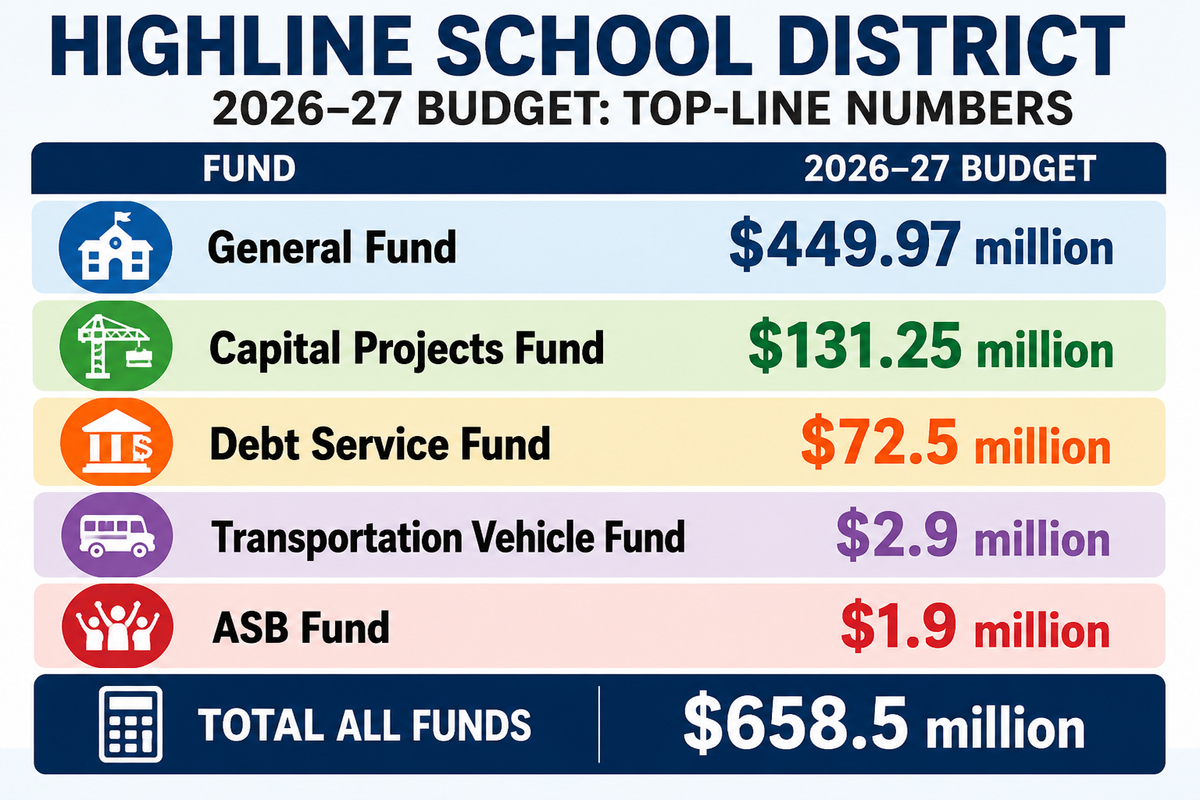
Summary of key points:
Transparency
Ms. Price particularly emphasized the need for transparency. According to Price’s testimony, Highline’s general fund cuts are actually far less than stated. Instead of cutting administrative funding, the district is forcing schools like Raisbeck Aviation to absorb the cost of vital student support. She decried the recent split board vote (3-1 in favor of Policy 6101) that reduced board oversight of capital projects up to $1,000,000, noting the board is “dismantling [its] own oversight… this Board has effectively signed a blank check for administrative spending.”
Jenner noted the Highline Board decision is following in the same steps that Seattle’s board took, and asserted those steps are a reason why Seattle could fund their general fund only by moving money, "temporarily," from their capital projects.
Reserve Fund to Drop, Despite Levy Increases
All three speakers noted the Highline District is using $6 million of reserves in the budget, leaving just $26 million at year-end 2027. This is the second straight year of major use of reserves, which would be down 44% from year-end 2025 reserves.
Schumacher noted in March 2026 that available reserves had dropped to just $1 million. This is because of the timing of cash receipts and expenditures during the year. Schumacher also pointed out that purchased services are increasing by $6 million in the 2026-27 year, to $48 million, compared to $42 million in the current year.
Reserves are forecasted to drop for the next four years, despite levy collection budgeted at $70.2 million in 2026-27, rising to a predicted $84 million in the 2029-30 school year. For context, the 2024-25 school year levy collection was $55.1 million, and the current year has a levy of $63 million.
Jenner noted English Language Learners, enrolled in the Transitional Bilingual program, comprise 40% of the student body. Will immigration policy changes reduce this number? Reserves could be needed if enrollment drops.
Where does the $450 million general fund spending, or $26,602 spending per full- time student, go?
The General Fund budget of $450 million is up from $400 million in 2024-25 and $428 million in 2025-26.
Jenner stated elementary schools are listed as spending $16,000 to $18,000, and middle schools $14,000 to $16,000 per student. This leaves $8,000 to $12,000 per student spent outside of the school itself. This does not include transportation, debt service, or capital spending. Where does the money go?
As Price noted, the budget book has a lot of labels, but very little explanation of what these categories actually include. Jenner noted that while a Kent school director posted a list of cuts in their district, there’s no such list for Highline.
Attendance
Director Holien participated via Zoom.
Price was allowed an accommodation to participate via phone.
Jenner and Schumacher commented in person.
Advocacy for Equitable Public Testimony Options
Kristen Price, who successfully testified by phone, advocated during her Transportation Budget comments that, in the name of equity, the board must reverse its current ban on remote public comment options. She said, “by refusing remote access, you structurally disenfranchised families who face transit barriers… remote access must become a permanent, standard option for every parent across this district, regardless of their transportation limits.”
The Board Votes on July 1
The Highline Board is scheduled to vote on the budget at the July 1 board meeting at the earlier time of 12 noon.
LINK to 20-minute testimony (last 10 minutes silent)
Members Discussion
Highline Journal Comment Guidelines
We believe thoughtful conversation helps communities flourish. We welcome respectful, on-topic comments that engage ideas, not individuals. Personal attacks, harassment, hateful comments, directed profanity, false claims, spam, or sharing private information aren't allowed. Comments aren't edited and may be removed if they violate these guidelines.