Cities
Fees on New Development Could Increase Sharply
The Burien Planning Commission meeting on May 13 focused mainly on two presentations: proposed updates to Transportation Impact Fees (TIFs) and an early look at a future development program called Transfer of Development Rights (TDR/LCLIP). While the presentations were technical, much of the discussion and concern centered around more familiar issues for residents: housing growth, zoning changes, mother-in-law units (ADUs), and questions about whether Burien has gone beyond what state law requires.
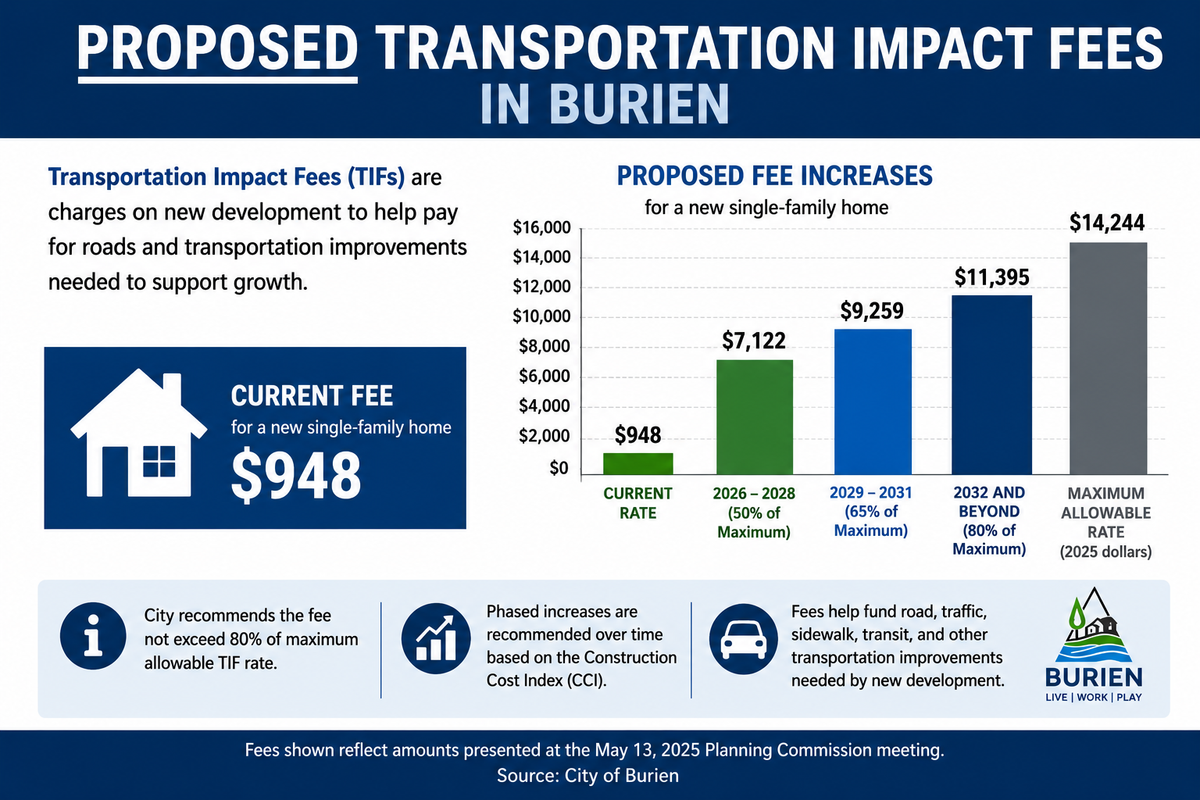
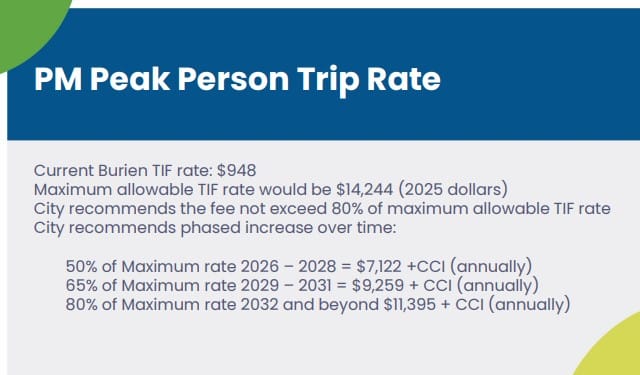
Transportation Impact Fees are charges paid by new development to help cover the cost of roads and transportation improvements. Burien currently charges relatively low fees compared with many cities. The current fee for a new single-family home is $948, but fees shown at the meeting propose that the amount increase significantly to more than $11,000 by 2029.
Questions Raised About Mother-in-Law Units or Backyard Cottages (ADUs)
The meeting also spent considerable time discussing Accessory Dwelling Units (ADUs), often called "mother-in-law units" or backyard cottages. ADUs are becoming an increasingly discussed topic in Burien as recent zoning changes allow for more housing units in areas that were traditionally single-family neighborhoods. Supporters view the changes as a way to create more housing choices, while critics have raised questions about neighborhood impacts, density and how the rules are being applied.
State law passed in 2023 limits fees on these smaller secondary homes to no more than 50% of the fee charged on a primary house. In contrast, Burien currently exempts ADU builds, with no Transportation Impact Fee on ADUs. Commissioners were asked whether the city should keep that exemption or begin charging a reduced fee.
The conversation quickly expanded into broader concerns over how Burien's ADU rules are working.
Some residents argue that certain projects being approved no longer resemble what many people think of as a traditional backyard cottage or mother-in-law unit. Some have pointed to examples where the secondary structure is larger than the primary house itself.
Critics questioned whether these larger projects should continue receiving fee exemptions or instead be treated more like primary homes, especially while the city faces transportation funding needs.
Residents Continue Raising Growth Concerns
Public comment also returned to ongoing questions surrounding Burien's broader housing and zoning changes. Some residents referenced previous responses from Senator Tina Orwall and state housing staff indicating parts of Burien's zoning overhaul may have gone beyond the minimum housing requirements required under state law and expanded into wider planning changes.
Additional concerns:
- Burien is considered a Tier 2 city based on its size, but some believe the city's growth plans are being shaped around rules and assumptions used for larger Tier 1 cities.
- Zoning changes near schools, homes, churches and daycare locations, including previous discussions involving a new beer garden across from a school.
- Transit-related zoning standards appear to change, creating confusion when different rules apply. The city has at times referenced properties within 1/2 mile of transit areas and in other cases 1/4 mile. Because zoning rules depend on how close homes and properties are to transit routes and stations, some residents said they would like to see more consistency and easier-to-understand information from the planning department.
During the meeting, city staff did not appear to directly address concerns raised about ADU loopholes or broader questions about overreach during meeting discussion or closing reports.
One concerned Burien resident wrote to the Council:
“Burien Planning should close the loophole on these kinds of ADU Projects or rename these projects and assess them at the rate of the primary structure. Instead, the Planning Dept. wants to give carve outs to certain types of projects/developments while the city is desperately starved for money to maintain its transportation infrastructure.”
Separate from the meeting, similar comments have appeared online community discussions:
"Welcome to the inevitable collateral damage from an activist planning staff and uninformed council who were intentionally mislead by the planning department on the process. People don't mind smart well-designed density... What Burien city staff have done is hit the entire city with an up zone hammer thinking it will make housing cheaper and solve the drug addicted, mentally ill homeless crisis."
While these comments were not made during the meeting itself, they reflect concerns that continue surfacing in broader community discussions around growth and city planning.
Second Presentation Looked at Feasibility of Future Development Incentives
The second presentation examined a possible program designed to encourage new construction, redevelopment and revitalization projects in certain areas of Burien. The discussion looked at whether the city could incorporate the Transfer of Development Rights (TDR/LCLIP) program that would give developers incentives while also helping generate funding for roads and other infrastructure improvements. The study identified some residential and mixed-use areas as possible locations and also explored whether these ideas could be tied to existing tax incentive programs used to encourage apartment and housing development.
City staff emphasized that no zoning changes or new programs are being approved at this time. No decisions were made, and the presentation does not change current development rules. Instead, it was presented as an early study to determine whether the city wants to continue exploring the idea.
Members Discussion
Highline Journal Comment Guidelines
We believe thoughtful conversation helps communities flourish. We welcome respectful, on-topic comments that engage ideas, not individuals. Personal attacks, harassment, hateful comments, directed profanity, false claims, spam, or sharing private information aren't allowed. Comments aren't edited and may be removed if they violate these guidelines.