Burien Beat
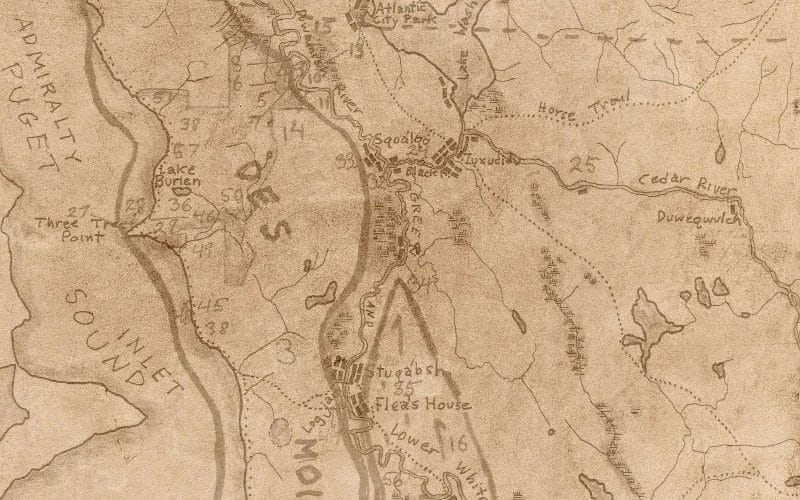
As the United States approaches the 250th anniversary of its founding, many communities are reflecting on the deep and diverse histories that shape the nation. Exploring both American and ancient American history offers an opportunity to appreciate the people, cultures, and traditions that existed long before modern borders and cities. Learning about these histories helps us better understand—and honor—the many layers of the land we call home today.
For those seeking a scenic Sunday walk close to home, Burien offers a lesser-known path rich in history and natural beauty. Tucked into the hills of the Three Tree Point neighborhood is a historic route commonly referred to as the “Indian Trail.” This quiet pathway provides both a pleasant local hike and a glimpse into the region’s Indigenous past.
A Trail with Deep Roots
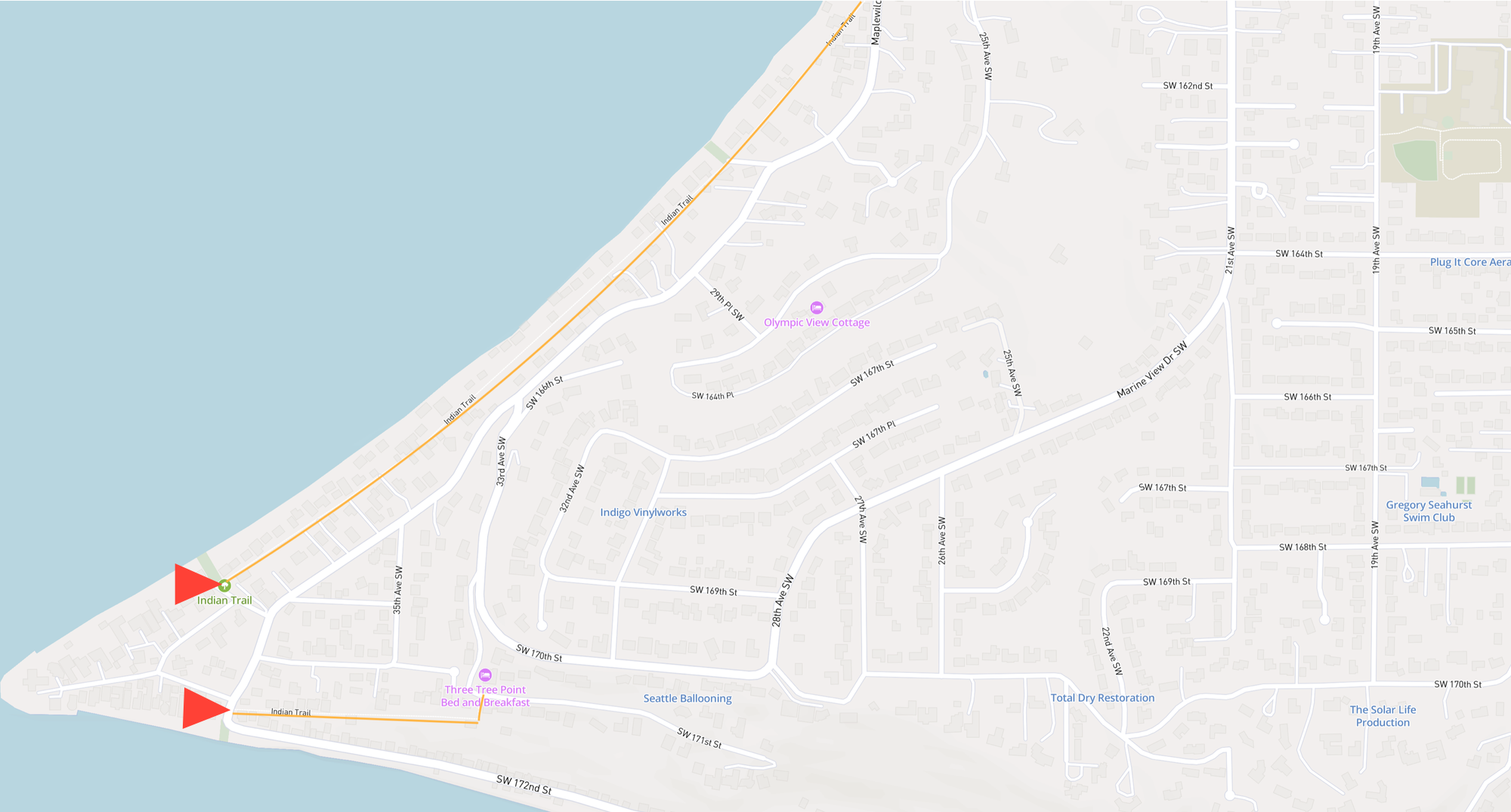
Tucked between two homes, the route meanders above the shoreline near SW 172nd Street along what is sometimes called the “Sunrise Trail.” Then from a small parking lot, the path continues northward, running roughly parallel to Maplewild Avenue SW along what is known as the “Sunset Trail.” Together, these segments create a roughly three-mile roundtrip walk with minimal elevation gain, making it accessible to most hikers.
Local history suggests that the path follows remnants of a much older trail used by Indigenous peoples who traveled along Puget Sound. According to historical accounts, the route connected communities along the southern and northern reaches of the Sound, allowing for travel, trade, and communication among tribes in the region.
Indigenous Peoples of the Burien Area
The incorporated city of Burien lies within the ancestral lands and waters of Coast Salish peoples. For thousands of years, these lands were home to communities whose cultures were closely tied to the natural rhythms of Puget Sound.
The Puget Sound tribes—including the Duwamish, Nisqually, Puyallup, and others—belong to the Coast Salish language group and are part of the broader Northwest Coast cultural region. These societies formed what anthropologists consider one of the most sophisticated non-agricultural cultures in the world.
Three Tree Point in particular played an important role in this network of communities. Seasonal villages once stood in the area, and people from around the Salish Sea traveled there to trade and harvest local resources. The route now known as the “Indian Trail,” sometimes also called the “Moonlight Trail,” once connected Three Tree Point with other nearby villages and camps.
The historical significance of this region was further acknowledged in the Treaty of Point Elliott, which guaranteed hunting and fishing rights and established reservations for the tribes represented by the Native signers.
A Place of Gathering—Past and Present
Burien and the surrounding Highline area remain an important gathering place for Indigenous peoples today. Residents represent more than 100 different Native tribes, corporations, villages, and Indigenous communities. Many individuals belong to multiple tribes or come from multi-ethnic backgrounds, reflecting the complex and diverse nature of Indigenous identity in the region.
As Burien resident Charley Ganong wrote in Highline Heritage (2015):
“It is within this framework that prehistoric Three Tree Point, long a traditional site of human gathering, might reasonably be placed. The Duwamish, Muckleshoot and other tribes likely camped here, drawn by the area’s rich fishing, clamming and berry-picking grounds. Because of its geographical prominence, central location in Puget Sound and nearby freshwater springs, Three Tree Point would have also made a natural stopping-over place on long canoe trips.”
https://highlinemuseum.org/fire-and-ice-the-anvil-of-creation/
Ganong’s description highlights how geography and natural resources shaped human movement and settlement in the region for centuries.
Learning More About Local Indigenous History
Those interested in learning more about the Indigenous history of the Burien and Highline areas can visit the Highline Heritage Museum, which continues to expand its collection and interpretation of local Native history. Additional resources are available through the Duwamish Longhouse and Cultural Center and the Muckleshoot Indian Tribe, whose members remain the most important narrators and stewards of their own history and traditions.
Hiking the Indian Trail Today
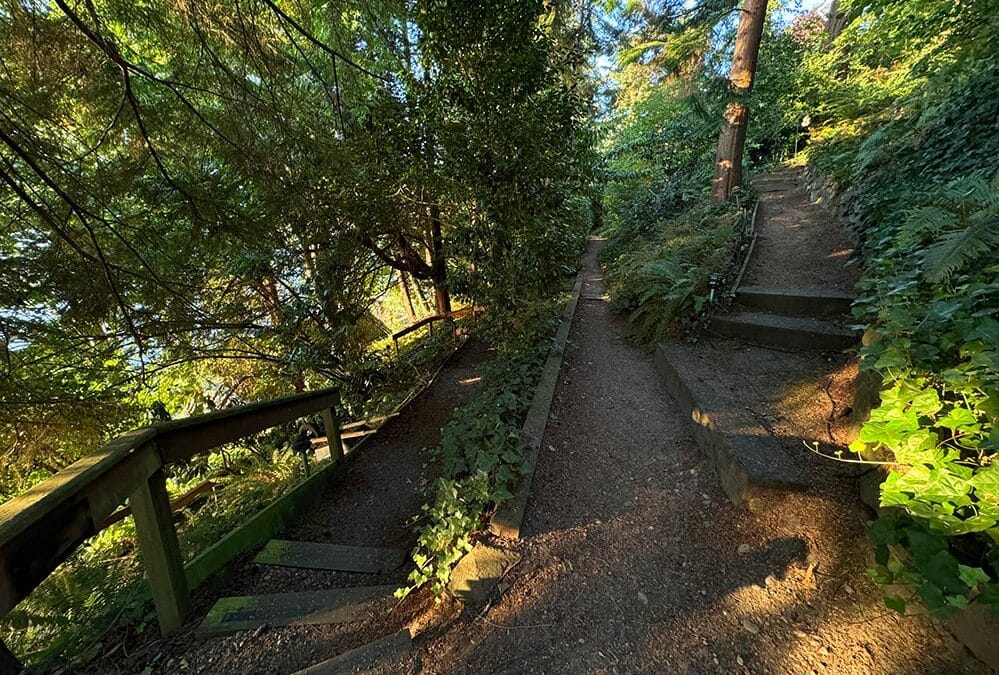
Today, the Indian Trail offers a short but rewarding walk through a quiet residential neighborhood. The path weaves between backyards and wooded spaces before reaching an overlook with views of Puget Sound.
Local residents help maintain the trail and ask visitors to respect the neighborhood by keeping dogs on a leash and cleaning up after pets.
Trail Details
· Length: 3.0 miles roundtrip
· Elevation Gain: 32 feet
· Highest Point: 320 feet
· Difficulty: Easy
Getting There
From Burien, head west on SW 152nd Street, which becomes Maplewild Avenue SW. Continue until you reach SW 170th Place; this marks the trailhead for the north section of the trail. Parking is available in a wide area on the south side of Maplewild. The southern portion of the trail begins just west of this spot, shortly before the road makes a sharp left near Three Tree Point.
Walking with Awareness
A walk along the Indian Trail is more than a neighborhood hike—it is an opportunity to move through a landscape shaped by thousands of years of human presence. As the nation approaches its 250th anniversary, places like Three Tree Point remind us that American history extends far deeper than the founding of the United States.
By exploring and learning about these places with curiosity and respect, we can better appreciate the rich and enduring histories embedded in the landscapes around us.
Members Discussion
Highline Journal Comment Guidelines
We believe thoughtful conversation helps communities flourish. We welcome respectful, on-topic comments that engage ideas, not individuals. Personal attacks, harassment, hateful comments, directed profanity, false claims, spam, or sharing private information aren't allowed. Comments aren't edited and may be removed if they violate these guidelines.