Opinion: Vote YES on I-638
Thousands of female athletes have had to compete against males in Washington State. It’s time to restore fairness to girls’ sports in Washington.

Thousands of female athletes have had to compete against males in Washington State. It’s time to restore fairness to girls’ sports in Washington.
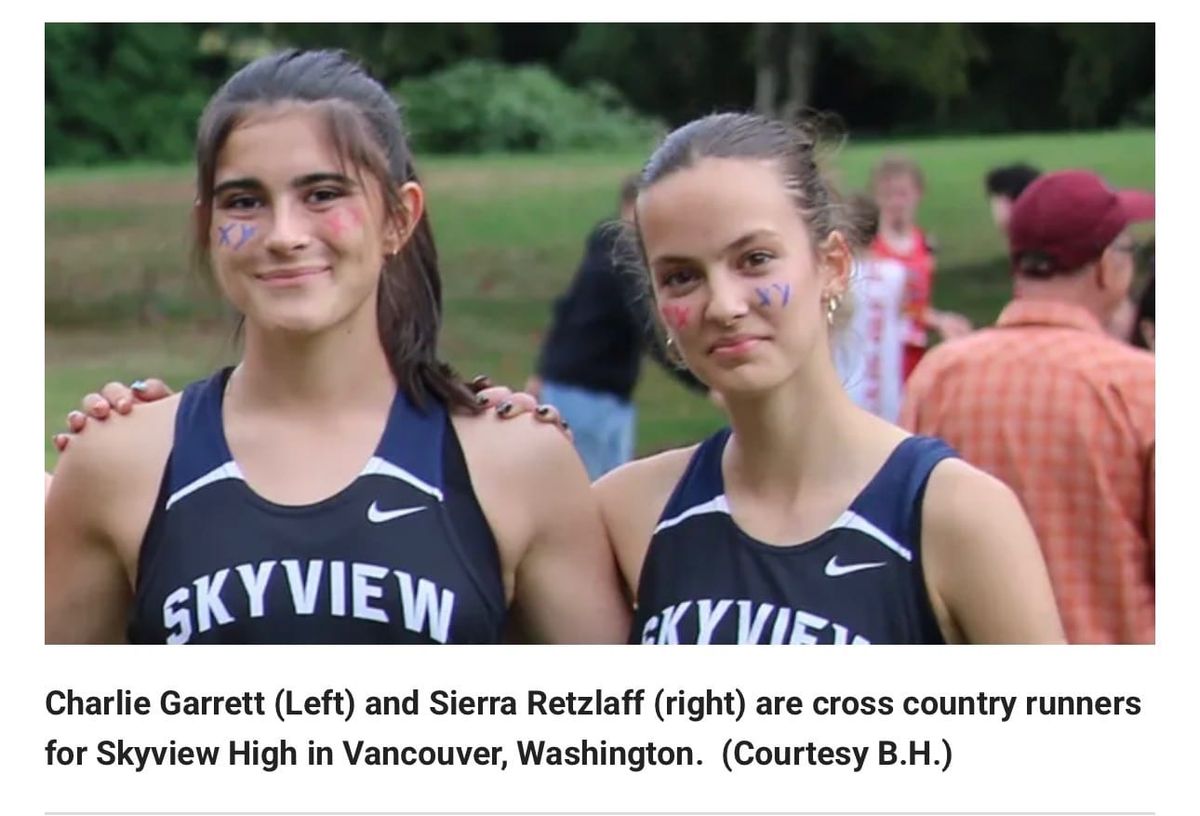
By Brian Anderson, DIAG (Democrats for an Informed Approach to Gender)
I-638 will restore fairness and integrity to girls’ sports in Washington State by restricting girls’ sports to biological girls (i.e., females).
Here are just a few examples of how Washington State’s transgender sports policy undermines safety and fairness for female athletes.
A small number of male athletes have taken at least 75 first-place and 158 top-three finishes in Washington State girls’ sports. Just three males competed against 2,559 unique female runners, 2,397 of whom finished behind at least one of the male competitors.
Opponents of I-638 ask us to ignore the supposedly “tiny” number of males in girls’ sports, but these athletes are robbing thousands of girls of their rightful accolades and opportunities. Girls’ sports are important for building leadership and teamwork skills, and they are where college and professional athletes develop their skills. These girls are the invisible victims of our state’s policy.
The few girls brave enough to complain about competing against males or having males in their locker rooms have faced intimidation and retaliation. How many girls have dropped out of sports altogether because of our state’s policies? Even one is too many.
Most states, along with the NCAA, NAIA, the International Olympic Committee, and many other organizations that govern athletic competition, have studied the science of male and female athletic performance and have adopted policies that protect women’s sports from male competition. But we don’t need studies to tell us that most males are bigger, stronger, and faster than most females. This is why we have separate categories for women’s and girls’ athletic competition.
Most athletics experts entrusted by our state to regulate K-12 sports, the Washington Interscholastic Activities Association (WIAA), don’t want males competing in girls’ K-12 sports. Last year, a majority of the WIAA Representative Assembly voted on an amendment that would have restricted girls’ sports to females. Despite a letter from State Superintendent of Public Instruction Chris Reykdal warning that implementing the amendment would violate state law, it fell just one vote short of the 60% needed to pass.
Not only is Washington State’s current girls’ sports policy unfair, but it is also a violation of rights granted to female athletes through Title IX, which grants females the right to equal sporting opportunities “on the basis of sex,” not gender identity. I-638 would align Washington’s K-12 policy with Title IX requirements.
Polls show that the vast majority of voters oppose males competing in sports intended for females. Nationally, 79% of Americans, including 67% of Democrats/Lean Democrat, agreed with not allowing males in women’s sports, a 2025 NYT/Ipsos poll found. About half of the 444,434 people who signed the petition to protect girls’ sports are either Democrats or Independents. We need a citizen’s initiative to correct this injustice because Democratic politicians are out of touch with their own voters on this issue.
But don’t take my word for it, or believe the misinformation put out by the misnamed “No Hate In Washington State” group; read the initiative for yourself.
I will finish with a question for the opponents of Initiative 638.
Why should female athletes be asked to give up their right to fair play and opportunities in girls’ sports?
Brian Anderson is a Washington State resident who supports “Democrats For An Informed Approach To Gender” (DIAG) and contributes to the DIAG Washington Substack.
DIAG is a group of lifelong Democratic voters working to restore the sex-based rights of females and prevent harm to children from unnecessary medical treatments. DIAG is a registered 501(c)(3) nonprofit organization.
[EDITOR’S NOTE: Views expressed by guest authors do not necessarily reflect those of The Highline Journal. If you wish to submit a story, photo, article or letter, please email us at info@thehighlinejournal.com Even if you wish to remain anonymous, please include your name and phone number so we may contact you privately.]
Highline Journal Comment Guidelines
We believe thoughtful conversation helps communities flourish. We welcome respectful, on-topic comments that engage ideas, not individuals. Personal attacks, harassment, hateful comments, directed profanity, false claims, spam, or sharing private information aren't allowed. Comments aren't edited and may be removed if they violate these guidelines.