Perspectives
Editor's Note: Letters to the Editor and Editorials reflect the views of their author and do not necessarily reflect the opinion of The Highline Journal. If you wish to submit a story, photo, article or letter, please email us at info@thehighlinejournal.com.
Editorial submitted by Dr. Breck Lebegue MD, MPH,
Co-Chair, Climate and Health Task Force
WA Physicians for Social Responsibility
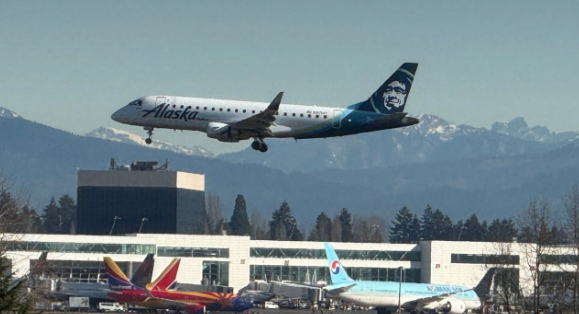
The Seattle Sustainable Airport Master Plan will determine airport health consequences for decades. Facts can help us plan wisely. Transport is the largest source of carbon emissions in WA; aviation is the highest particle emitter per passenger mile (ppm). Short flights are the most polluting ppm because of the excessive fuel energy required to climb to cruise altitude, only to then descend to land. Two dozen flights go from SEA to Portland and Vancouver, BC, daily. Many small commuter planes go from Boeing Field to those cities and Spokane. Travelers who value their time will fly rather than drive. Alternatives are sparse.
Transport policy is often deadly health policy, because burning fossil fuel produces
microscopic PM 2.5 particles that are inhaled but not exhaled, then travel through the blood to cause heart and lung disease, dementia, and premature death. And the noise! At least 6 hours per night of uninterrupted sleep is essential for health. Disrupted sleep is associated with poor student school performance and numerous adult health problems. A UW study found that SEA area residents have a 2-5 year shorter lifespan than those living farther away. Health harms of air travel are borne by SEA airport communities, and the costs of illness are silently shifted to
health care and insurance systems. This occurs without the informed consent of any of those affected. How can we stop poisoning our neighbors and accepting the bills?
Washington law and climate science requires us to reduce carbon emissions from all transport, especially from aviation. The European group Stay Grounded negotiated a ban on short-haul flights between city pairs that have fast, frequent daily train service and a night flight ban between 11:00 and 6:00. If SEA accepts these limits, we won’t need to expand it. The best travel option? Trains are the least energy-intensive and lowest emitter ppm. Night trains are common in Europe and can be here. WA Physicians for Social Responsibility says, “More trains, not more lanes, not more planes.” Rather than expand airport operations to increase flights, WPSR advocates rapid mode shift to rail: more fast, on-time Amtrak Cascades trips from Vancouver BC to Eugene OR, and restored Seattle to Pasco passenger trains as we had until 1980. The Climate Commitment Act carbon emitter tax can fund passenger rail expansion on current lines.
Will we keep driving, flying and dying, or choose clean fast healthy trains? We need transport policy that supports public health. You hear their noise; now raise your voice.
Breck Lebegue MD MPH
NOTE FROM EDITOR: If you wish to submit a story, photo, article or letter, please email us at info@thehighlinejournal.com. Even if you wish to remain anonymous, please include your name and phone number so we may contact you privately. We look forward to hearing from you.
Members Discussion
Highline Journal Comment Guidelines
We believe thoughtful conversation helps communities flourish. We welcome respectful, on-topic comments that engage ideas, not individuals. Personal attacks, harassment, hateful comments, directed profanity, false claims, spam, or sharing private information aren't allowed. Comments aren't edited and may be removed if they violate these guidelines.