Education
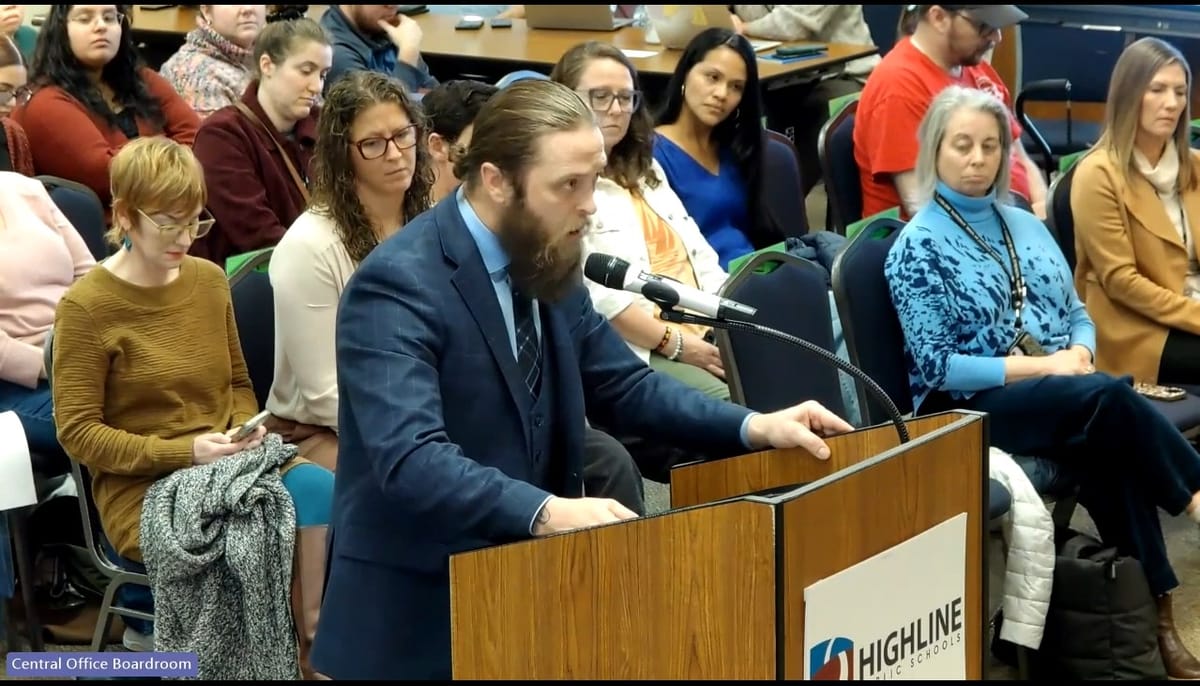
Security was highly visible at the entrances to the Highline School Board Feb 11th meeting; not a typical sight…
The meeting was standing room only, as parents, teachers, students, staff, and community members filled the room to address recent student walkouts across the district.
More than 20 speakers addressed the board. What unfolded was not a simple disagreement about protests. It exposed a layered conflict involving student free speech, parental authority, district liability, and community trust.
A Night of Competing Perspectives
Before public comment began, Jeb Binn, President of the Highline Educators Association (HEA) spoke as a guest of the Superintendent. During his time, he spoke in support of student-designed and student-led walkouts protesting ICE and the treatment of immigrants in our community.
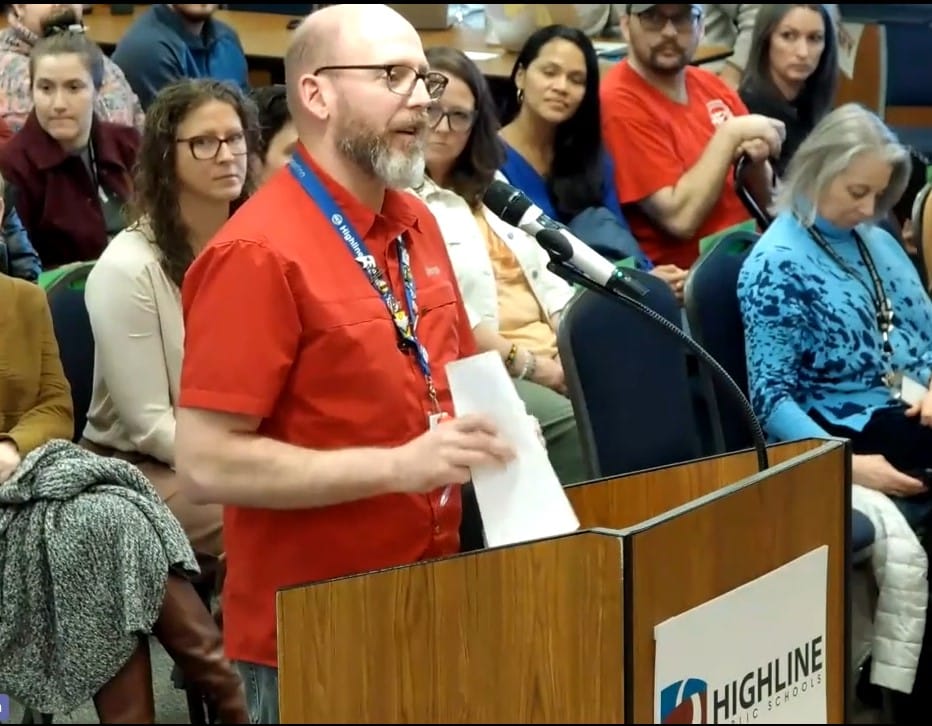
“Let me be clear from the outset - this isn’t about policy…” Instead, he claimed, it is about supporting freedom of speech and constitutional protections, later emphasizing “our role as educators isn’t to direct student activism. It’s to support student voice… We can provide guidance without directing the content.”
Binns added, “you may hear claims that teachers told students what to do...what to say, (and) that educators forced or coerced participation. Those claims are false.”
When public comment opened, Katie Kresly who recently ran for the Highline School Board, now a The Highline Journal citizen writer, was the first speaker.
She stated, “In Washington state, students retain constitutional rights - freedom of speech and assembly…I agree. At the same time, Washington law also recognizes parents as the Primary Stakeholders in the care, custody, and upbringing of their children.
“From a parent’s perspective… Not being notified or asked for permission, especially when staff is accompanying students or allowing them time off before protests to create posters during instructional time… is confusing and concerning.”
Kresly proposed that Highline improve trust and reduce confusion surrounding student-led civic activities by updating district policy.
Looming Lawsuit
Vance Glawe, a Cascade Middle School parent, announced plans to sue the district, alleging his 14-year old child was unwillingly taken off campus during a walkout without his parental knowledge or permission.
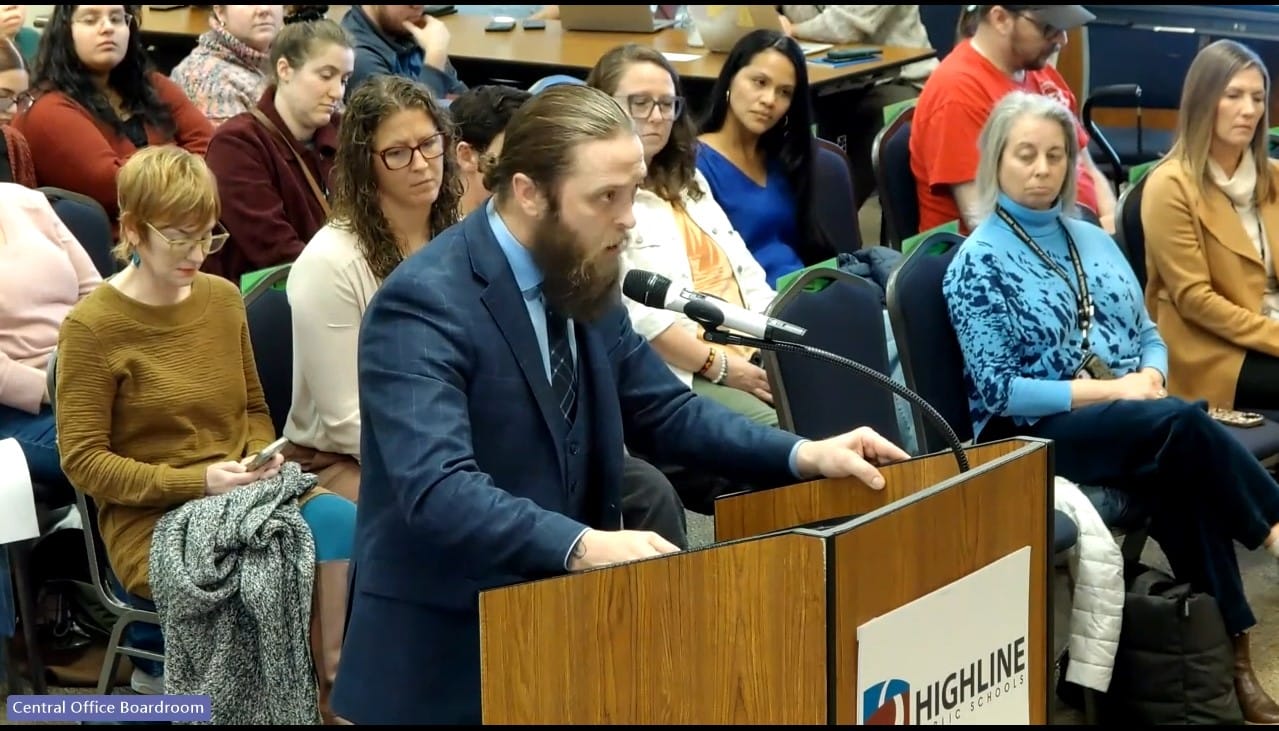
Glawe proclaimed, “I have the right to know where my child goes. That was taken from me. I was not given notice. I was not given an email. I was not given a call. You exposed him to real danger. That's neglect. And that's endangerment RCW 98.42.035 Criminal Negligence…”
“You call it policy; I call it abandonment.”
(Glawe's Instagram account that has gone viral)
Cascade Middle School Lawsuit - Glawe has raised over $10,000 so far on his GiveSendGo fundraiser.
The district confirmed that Cascade Middle School parents were not notified in advance of the walkout.
Teacher and Student Comments
Student organizer Nadia Poppas, a senior at Evergreen HS and founder of EHS Anti-ICE walkout, stated that their protest was “peaceful, non-violent, and successful.” She was upset about Vance’s viral video as “full of misinformation.” She reiterated that “our protest was strictly student led,” and this is student advocacy, “our movement, our voice.” She advocated for kids in politics, “our youth is our future.” She finished by stating, “all the stories that are being fabricated against the organization, execution, and presentation of this protest are all mistruths.”
Highline teacher Ben Folgers shared that he is proud of students who staged walkouts, congratulating them for “standing in your power.”
Retired teacher Patricia Bailey offered a contrasting view. She argued that if the school had prior knowledge of the walkout, it functioned similarly to a field trip and therefore should have required parental permission.
“For teachers, this is the stuff nightmares are made of. I know how carefully I planned for off-campus events with my class, and how critical it was to have sufficient chaperones, an emergency kit, and epipens. And of course, I had signed permission slips from parents, so they would know where their child was. Sending an email to parents the evening before the walk-out, that they may or may not have read, is not legal, professional, safe or respectful.”
District leadership did not directly address how parental involvement should be balanced alongside student expression.
Fear and Social Pressure
Outside the boardroom, tensions remained high. Glawe’s videos have circulated widely online. Several parents told the Highline Journal reporters they are hesitant to speak publicly. Some said their children begged them not to draw attention to their families, out of fear of losing friends or becoming social targets. One mother told us that her child’s friends have distanced themselves because the child chose not to walk out.
Students have reported strained friendships based on participation. Others said they followed classmates outside without fully understanding what was happening.
One hispanic parent told us immigration enforcement was not their family’s primary concern. They were more worried about local backlash if they or their child voiced opposition.
These social pressures have become part of the broader debate and go against the stated mission of Highline as being "inclusive."
Who Is Responsible?
At the center of the controversy is a fundamental question: when students leave campus during instructional hours, who is responsible for them?
Students retain constitutional rights. However, if protest signs are created during class time and teachers accompany students off campus, families question whether the event remains purely student-led.
Some parents say notifications were sent, but advance consent was not requested. For many, that distinction is significant.
The duty of care becomes more complex for students with special needs. Federal law requires heightened supervision and individualized protections. Some students reported they did not fully understand what the protest involved. Others said they felt pressure to participate.
One student who wanted to go home rather than participate was reportedly required to remain in class.
District communication described the walkouts as orderly and without incident. However, we are investigating local contrary allegations and will follow up with those reports.
Unresolved Questions
Several key questions remain:
- Could repeated off-campus protests affect the district’s future liability exposure, particularly as insurance costs are already rising?
- How should these events be defined? If they are classified as student led protests, responsibility may differ from events viewed as district supported activities.
- If the issue is not political but about student rights and a culture of belonging, as district leaders have stated, how are parents incorporated as primary stakeholders in their child’s upbringing?
- How can inclusivity protect students across the spectrum, including those who choose not to participate?
Wednesday’s meeting made one point clear: this is a complex issue with legal, social and emotional dimensions.
In the coming weeks, The Highline Journal will examine these elements in greater depth, including legal standards, special education obligations, and alleged student misbehavior during walkouts.
Community Online Feedback Opportunity Ends Friday, February 13
Superintendent Ivan Duran reminded community members if they wish to make comments on the Strategic Plan updates, they have until the end of the week.
Community members may also participate through a ThoughtExchange survey, which remains open through February 13. The survey takes about five minutes to complete and is shorter than previous ThoughtExchanges because participants are not asked to rate others’ comments.
Full recording of Feb 11 2026 board meeting:
Members Discussion
Highline Journal Comment Guidelines
We believe thoughtful conversation helps communities flourish. We welcome respectful, on-topic comments that engage ideas, not individuals. Personal attacks, harassment, hateful comments, directed profanity, false claims, spam, or sharing private information aren't allowed. Comments aren't edited and may be removed if they violate these guidelines.