Education
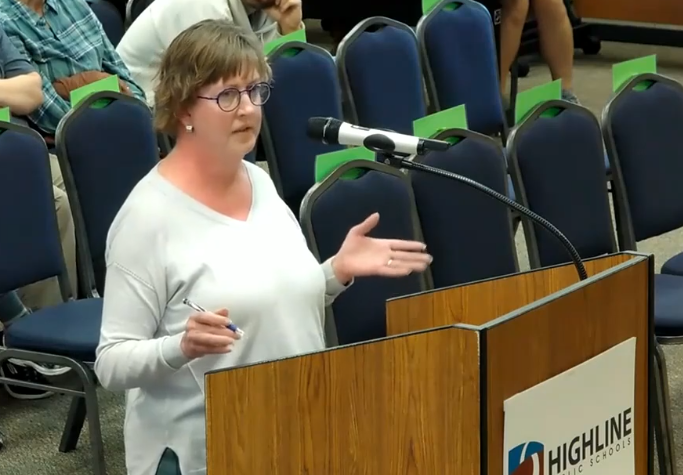
Highline Public Schools’ proposed 2027 Legislative Agenda seeks more state funding, easier bond passage and relief from inactive public records requests. Three parents who spoke at the Oct. 21 board meeting supported more help in classrooms, but also asked about academic results, voter accountability and transparency.
President Joe Van and directors Damarys Espinoza and Blaine Holien attended in person. Vice President Angelica Alvarez joined virtually for part of the meeting.
Three Highline parents used public comment to question the proposed agenda. Directors and Chief Policy and Strategy Officer Holly Ferguson then spent about 20 minutes discussing it. The board is set to vote Nov. 18.
Here is what Highline is asking state lawmakers to do:
- Send more funding for operating costs, special education, Transitional Kindergarten, career and technical education (CTE), and substitute paid leave.
- Let school bonds pass with a simple majority instead of the current 60% requirement.
- Let districts pause a public records request after 30 days without communication from the requester.
Espinoza, the board’s new legislative liaison, said she heard from students, staff, families and other districts while preparing the agenda. She said students wanted more CTE funding, staff emphasized early learning, and families spoke up for special education.
She also said future agendas need a stronger process so students, staff and families can help shape priorities from the beginning.
More funding, but where is literacy?
Literacy was Highline’s top legislative priority last year. The 2026 agenda called for universal reading screening, teacher preparation aligned with the Science of Reading, and ongoing training and coaching.
Those items are gone from the proposed 2027 agenda.
Instead, the district is focused on five funding requests. Highline says the state does not fully cover basic obligations, forcing districts to use local levy dollars. The agenda identifies a $20 million gap between state special education funding and Highline’s 2026–27 expenses.
Holien reiterated that the five funding items are all directed “to better the students and our school district,” but did not mention literacy or other academics-related funding.
Parent Josh Schumacher agreed that special education needs full funding. He urged the board to put “every ounce of Highline’s lobbying weight behind full state funding,” then asked for an honest assessment of classroom conditions.
The Highline Journal asked Superintendent Ivan Duran why literacy was dropped, what “fully funded” means in dollars, and what it would cost to help at least 40% of students meet state reading and writing standards within five years.
Making school bonds easier to pass
The proposed agenda again asks lawmakers to lower the bond approval requirement from 60% to 50% plus one vote. Current law, established in 1940, requires a 60% supermajority to protect property owners from excessive taxation and ensure broad community agreement before taking on long-term public debt.
That request comes as Highline voters consider a $595.4 million construction bond. Changing the law would affect future measures, but not the bond now on the ballot.
Parent Jeff Paulson opposed lowering the threshold. He urged directors to “sharpen your pencil and give the voters a bond package that we can say yes to.”
Public records: staff time and transparency
Highline expects to receive about 300 public records requests this year, up from 50 in 2016. The district says it spent more than $500,000 responding to requests in both 2024 and 2025.
Ferguson said the proposed change would allow the district to pause inactive requests, not close them. She described staff spending hours digitizing 2005 cassette tapes for a requester who stopped responding.
“I don’t have time to spend an hour doing something that’s never going to be looked at,” Ferguson said. “And I know the rest of my colleagues don’t either.”
Parent Kristen Price said the district should examine its own records process before asking the Legislature for more flexibility. In a written follow-up, she asked what part of Highline’s roughly $4,000 average cost per request comes from outside legal fees and executive review.
We asked Ms. Ferguson for additional clarity on public records requests.
The district has not yet responded to our questions. We will update this story if we hear back.
Members Discussion
Highline Journal Comment Guidelines
We believe thoughtful conversation helps communities flourish. We welcome respectful, on-topic comments that engage ideas, not individuals. Personal attacks, harassment, hateful comments, directed profanity, false claims, spam, or sharing private information aren't allowed. Comments aren't edited and may be removed if they violate these guidelines.