Community
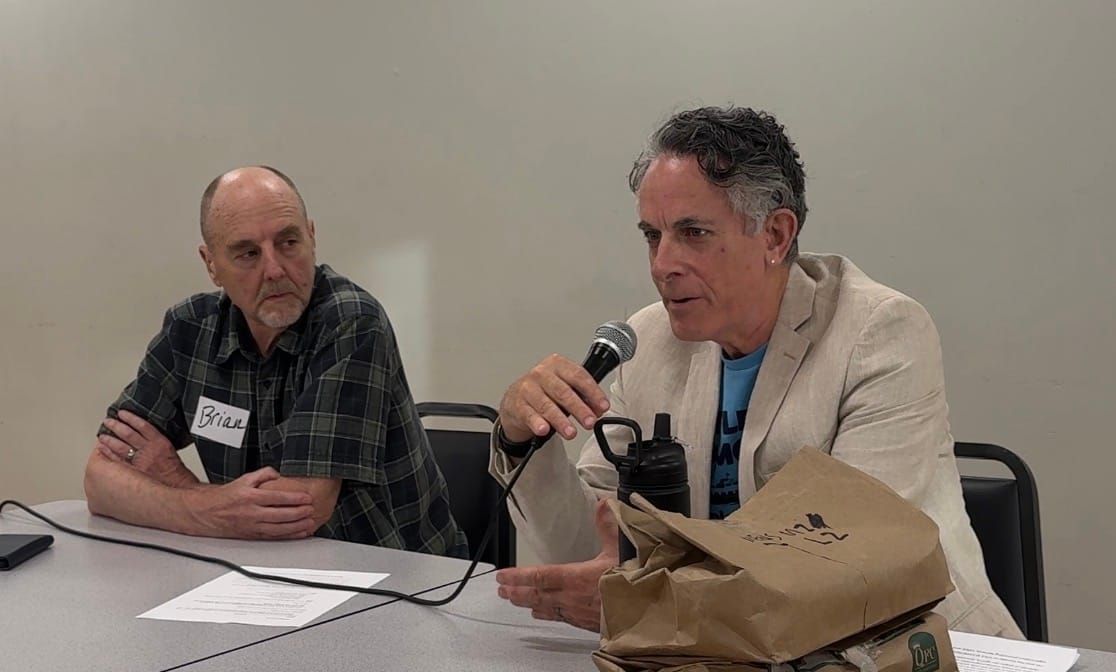
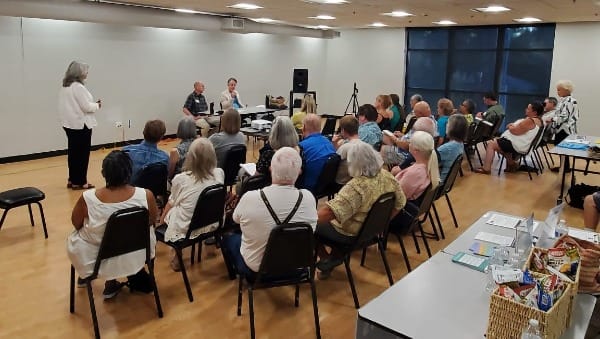
Nearly 30 community members gathered in late June in Burien for another Highline Neighbors Community Conversations event, this time focusing on one of Washington's most debated public policy issues: protecting girls' sports.
The discussion came as voters are preparing to consider several citizen-led initiatives this fall. Awareness on the topic has been further heightened by the U.S. Supreme Court's recent ruling allowing states to enforce laws restricting participation in girls' sports based on biological sex.
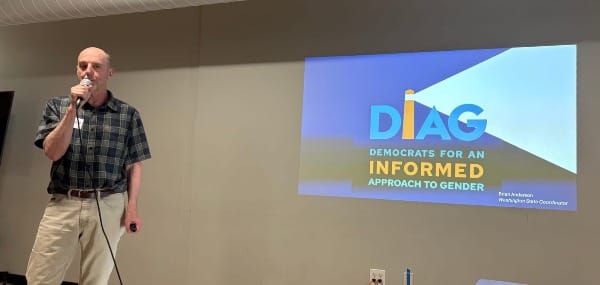
The evening featured two longtime Democratic activists who have become leading voices in support of restricting girls' sports to biological females: Brian Anderson, Washington state coordinator for Democrats for an Informed Approach to Gender (DIAG), and Jess Grant of TITLE IX EDMONDS.
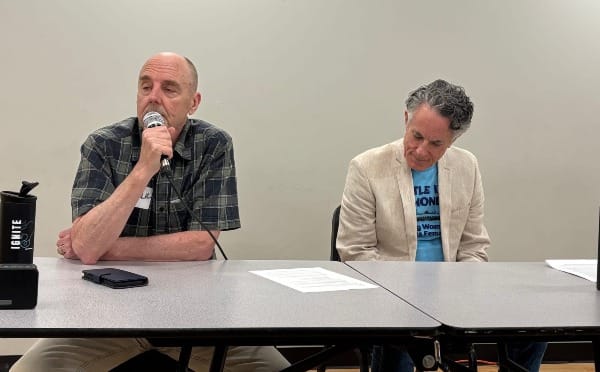
Organizers said they also invited Highline School Board Director and district WIAA liaison Blaine Holien, Highline School District Athletic Director Phillip Willenbrock, and other local leaders to participate. According to organizers, none accepted the invitation.
Superintendent Ivan Duran previously responded on behalf of the school board president and board members. He wrote:
Highline Public Schools would not participate in this event or future events organized by Community Conversations because the district believes "important conversations about Highline students and schools are best held through direct engagement with our students, families and staff through established opportunities for dialogue and feedback."
The guest speakers said they believe the issue has become one where many Democratic voters disagree with their party's current leadership. Citing national polling, they said approximately 67% of Democrats support maintaining separate athletic divisions for girls based on biological sex.
Throughout the evening, Anderson and Grant organized their presentation around three themes they believe are central to the debate: fairness, safety, and dignity.
Fairness
Throughout his presentation, Anderson shared examples both locally and around the country that he said illustrate those concerns, saying these cases underscore his belief that Washington's current WIAA policy should be reconsidered in order to better protect girls' safety while preserving opportunities for all students to participate in school athletics.
Anderson provided a comprehensive overview of state initiative IL26-638 (Protecting Fairness in Girls' Sports), especially focusing on what would be required for sex verification and sports physical exams, should the initiative pass. He noted that opponents claim that the initiative would “require girls to undergo invasive genital exams to participate in sports.” Anderson countered that doctors already know their patients’ sex, explaining this would not require an additional exam.
Safety
Anderson said biological differences between males and females can create safety concerns in certain sports. He argued that allowing transgender-identifying males to compete in girls' sports can result in physical advantages that affect both fairness and athlete safety.
He said he believes those differences can affect fairness and, in some sports, raise safety concerns, citing three recent cases in which girls were reportedly harmed, injured, and sexually assaulted, by transgender-identifying athletes.
He shared a brief video created by Jennifer Sey and XX-XY Athletics, encouraging girls to “stand up.” It highlighted female athletes who have been adversely affected by boys participating in girls sports.
Dignity
Grant, a lifelong Democrat and women's rights advocate, focused on dignity, privacy, and preserving sex-based spaces for women and girls.
He said, "Women are entitled to their single-sex leagues and single-sex lockers, free from the male gaze. Their boundaries need to be respected," further arguing that biological differences matter when establishing policies for locker rooms, bathrooms, overnight accommodations, and athletic competition.
On the topic of political division on this topic, Grant said, "I refuse to concede the point that free speech and women's rights are now exclusively Republican talking points." Grant told attendees.
Grant referenced the recent Puyallup case involving an alleged sexual assault by a transgender-identifying athlete, describing it as an example of why he believes Washington's current policy, which allows students to compete in girls' sports based on their gender identity, should be reconsidered.
Both Grant and Anderson praised girls and young women who have spoken publicly about their experiences, saying he believes it takes courage to raise concerns about fairness, safety, and privacy in today’s political climate. He was frustrated that girls had to advocate for themselves because adults are not protecting them.
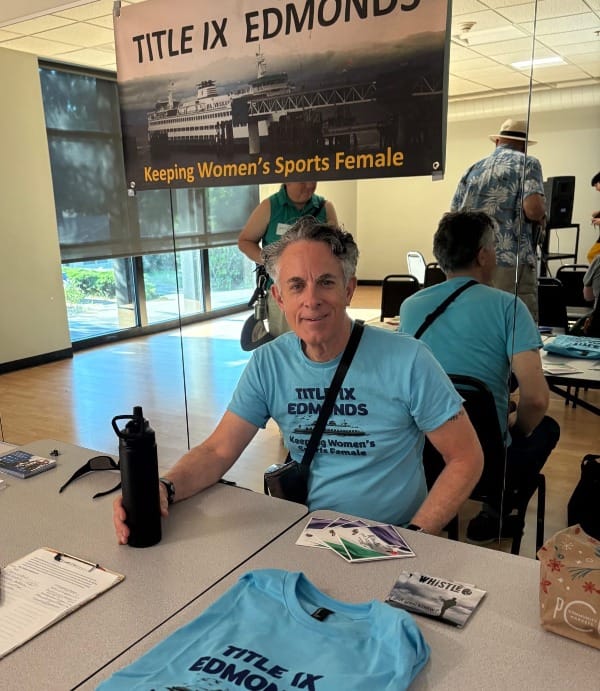
Grant also shared concerns about the increasingly personal nature of the debate, saying strangers have insulted and threatened him because of his views. He said he worries political polarization is contributing to greater hostility and political violence.
💡
Grant's full presentation and music video "She's a Boy" here: https://jessgrant1.substack.com/p/burien-conversation-girls-sports
The discussion took place amid a broader statewide debate over several citizen-led initiatives. Opposing the girls' sports initiative is No Hate in Washington State, a coalition formerly known as Washington Families for Freedom, which supports policies allowing students to participate in school sports consistent with their gender identity and has campaigned against the proposed initiatives.
Community Discussion
Following the presentations, a half-hour Q&A session took place.
Many attendees who spoke expressed support for the initiative to protect girls and noted its cross-partisan appeal, particularly given that both speakers were Democrats. Several participants said they appreciated hearing perspectives from lifelong Democrats and felt the issue was framed in terms of fairness, safety, and dignity rather than partisan politics.
While perspectives varied, many attendees expressed interest in continuing these conversations in the lead-up to several Washington State citizen initiatives.
A mental health professional raised concerns about the long-term effects of puberty blockers and other gender-related 'health treatments' for minors, citing research and emphasizing the importance of protecting all children under 18.
Another attendee, who said she was deeply familiar with the perspectives of transgender advocates, spoke about the challenges of maintaining respectful dialogue across political differences. She encouraged continued engagement despite disagreements and said she was hopeful that conversations like this could help people better understand differing viewpoints.
Community Conversations leaders hope future events will include an even broader range of perspectives and acknowledge that some individuals may have hesitated to speak. They emphasized their commitment to fostering a respectful environment where everyone feels comfortable sharing their views.
Even half an hour after the formal presentations concluded, about half of the attendees remained, continuing conversations with the guest speakers and one another. Some participants said they would have appreciated more time for discussion.
The Highline Neighbors Community Conversations team said future events will continue to feature diverse speakers while expanding opportunities for audience discussion. They also plan to continue inviting elected officials, community leaders, and subject matter experts representing a broad range of viewpoints.
Have a topic you want to talk about? Send a message to info@TheHighlineJournal.com.
Members Discussion
Highline Journal Comment Guidelines
We believe thoughtful conversation helps communities flourish. We welcome respectful, on-topic comments that engage ideas, not individuals. Personal attacks, harassment, hateful comments, directed profanity, false claims, spam, or sharing private information aren't allowed. Comments aren't edited and may be removed if they violate these guidelines.