Washington State
This article is part of The Highline Journal’s America at 250: Northwest Stories series exploring local history as the nation approaches its 250th anniversary.
Dale Chihuly, one of America’s most famous and innovative artists, was born in Tacoma. His hometown is blessed with many installations of his unique glass creations. On a recent visit to see some of his glass art, and also to visit the Washington State History Museum, I was struck and appreciate by how Chihuly and the museum both illustrate three core traits of America at 250: Creativity, Entrepreneurship, and Revisiting the past to build the future.
Chihuly Glass
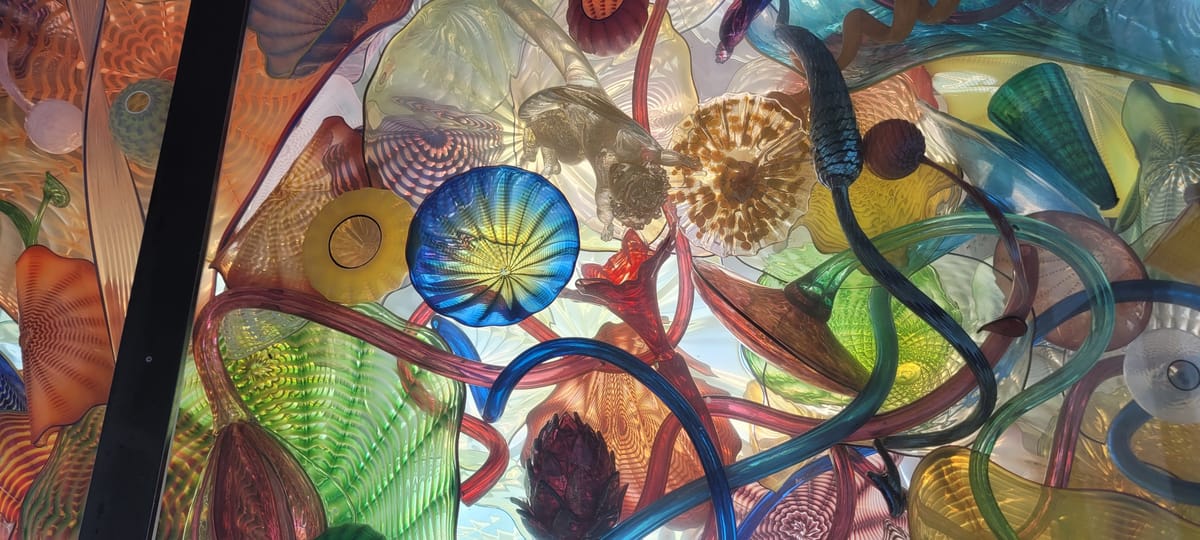
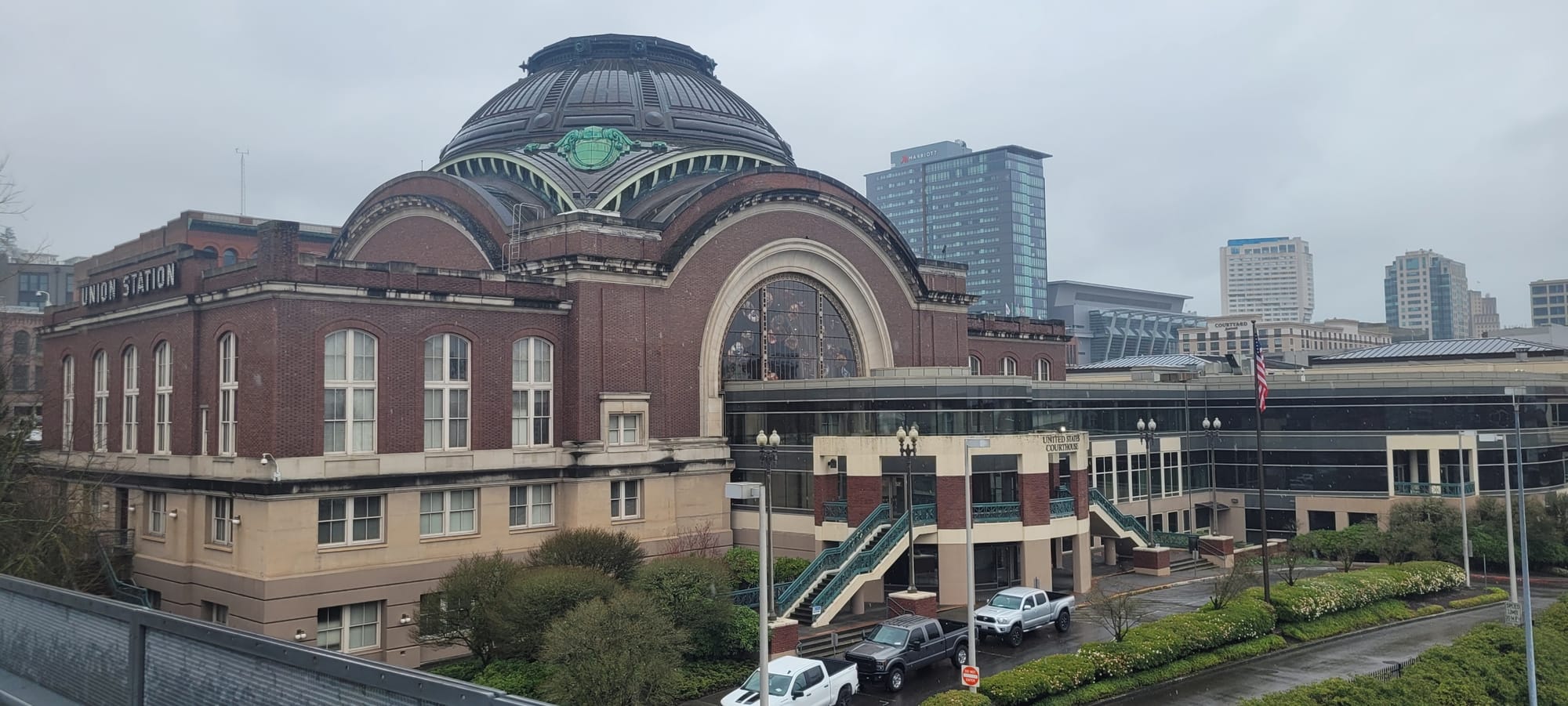
Mr. Chihuly’s glass creations are displayed in many locations of Tacoma: the Tacoma Art Museum, the Federal Courthouse (formerly Union train station), the Museum of Glass (though there’s much less of Chihuly’s art than in the art museum), and also the pedestrian-only Bridge of Glass over Highway 705.
I especially like the pedestrian bridge, which is free of admission. The bridge has two sections.
- An overhead display where clear glass holds the art as you walk underneath the exhibit. The glass is shaped to look like coral, shells and sea life, so walking under the glass is like being in a tropical ocean.
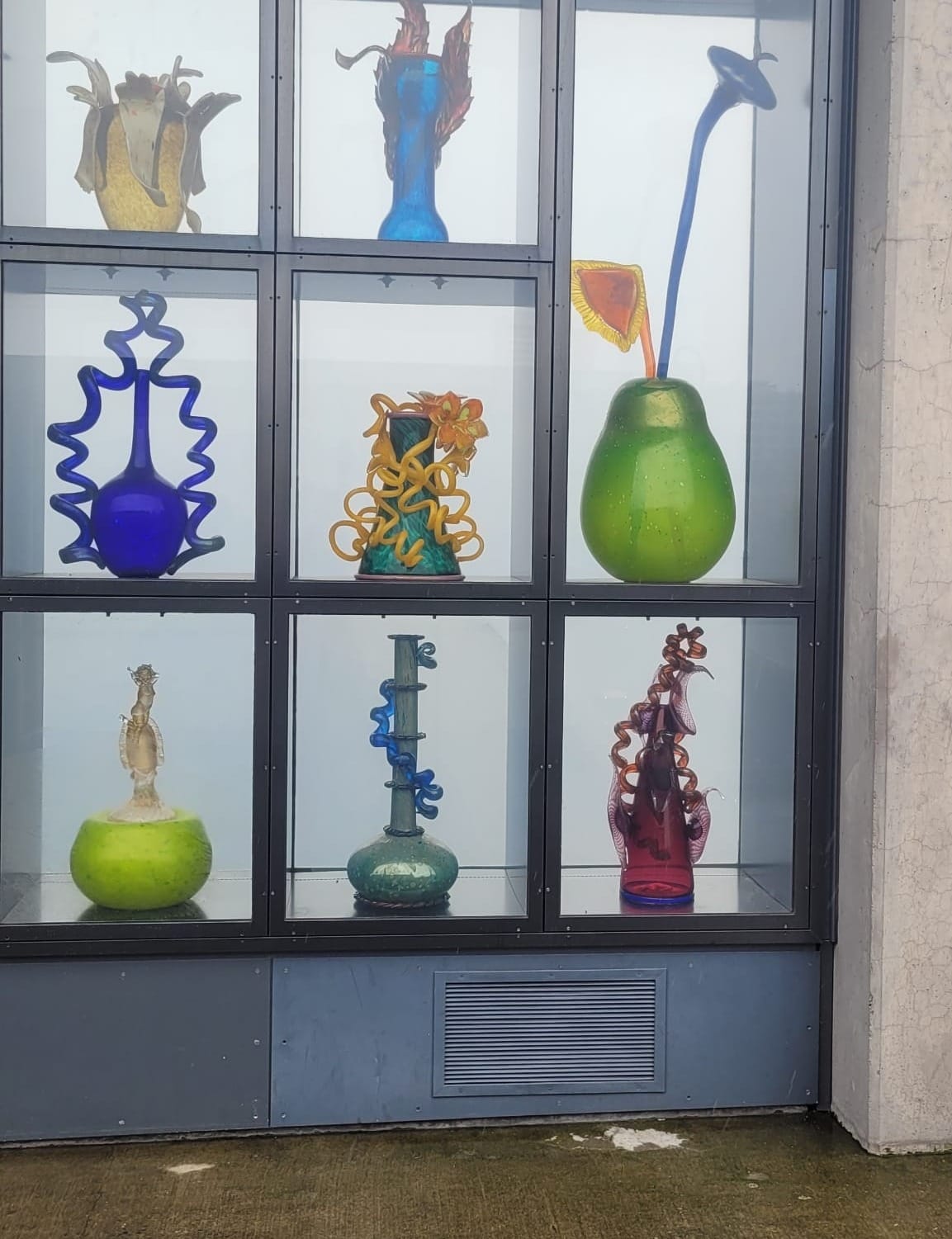
- The second section has dozens of individual glassworks, each in its own display case and uniquely shaped.
Mr Chihuly is more than a creator, he’s also an entrepreneur and mentor. He did his early work by himself, but later switched to apprenticeship training and supervising others so he could focus on his foundation, design and branding.
The Washington State History Museum
Close to the Chihuly bridge and the US courthouse, (formerly Union train station), is the Washington State History Museum, opened nearly 30 years ago, and was designed to be similar to the courthouse: (driving by on 705, they almost appear to be a single building.)
The history museum is as much about culture as it is about history. (Most museums start with objects, then discuss the people who owned or used the objects. Stories are an after-thought.) This museum is quite opposite in that it starts with descriptive stories, followed by personal objects and artifacts that support the stories or theme.
The impact: visitors are likely to feel connected to other past and present residents of our state.
While viewing the exhibits, my reaction was “I know someone just like the people whose stories are told here.” I thought about degrees of separation, and how many attendees might be just three people removed from the people highlighted in the exhibits. Current special exhibits highlight immigration from South-East Asia. Regular exhibitions highlight Native Americans from the area and the belongings people had when arriving in the area. There is also an area about the interment of Japanese-Americans during World War II.
Other highlights:
- A large room with a model train exhibit showcasing the Tacoma area, Auburn and the lumber town of Lester
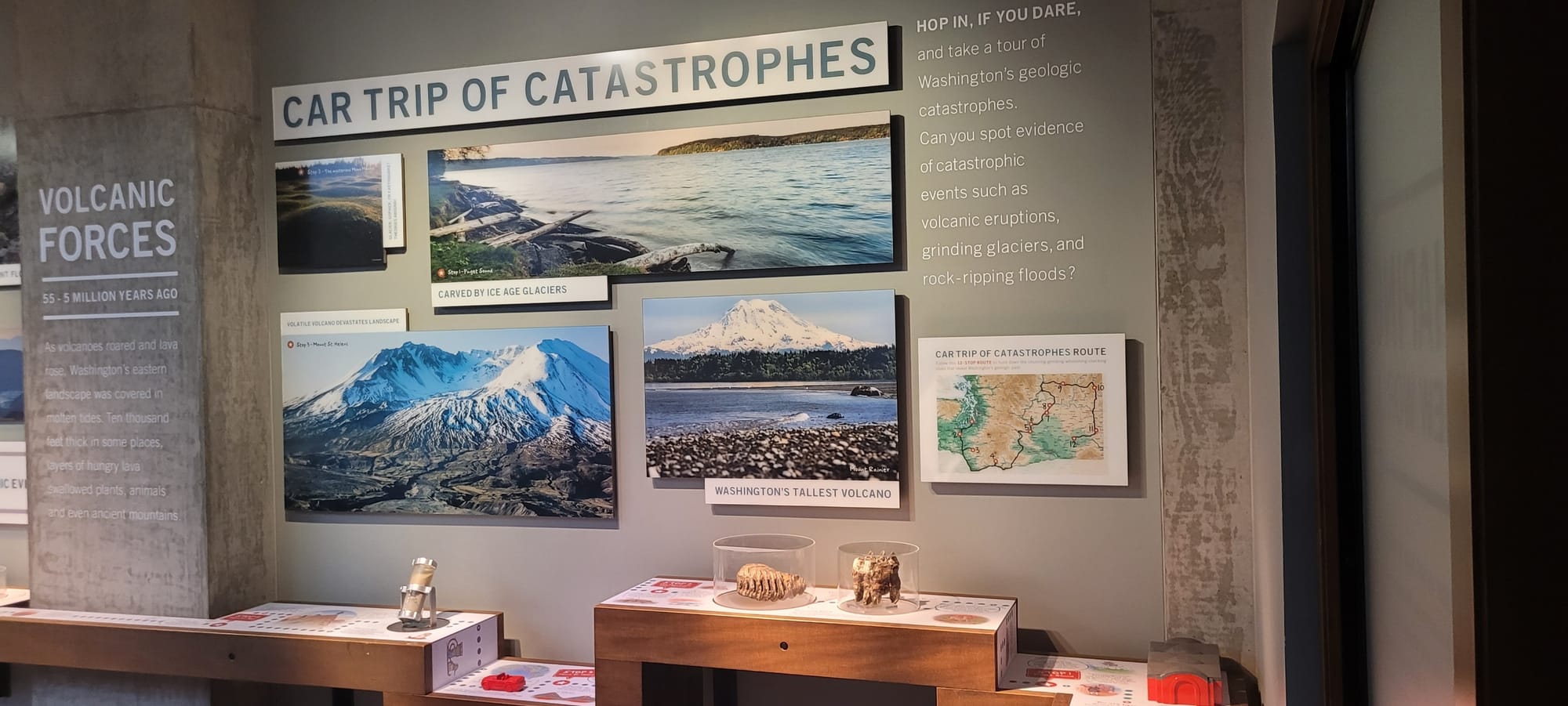
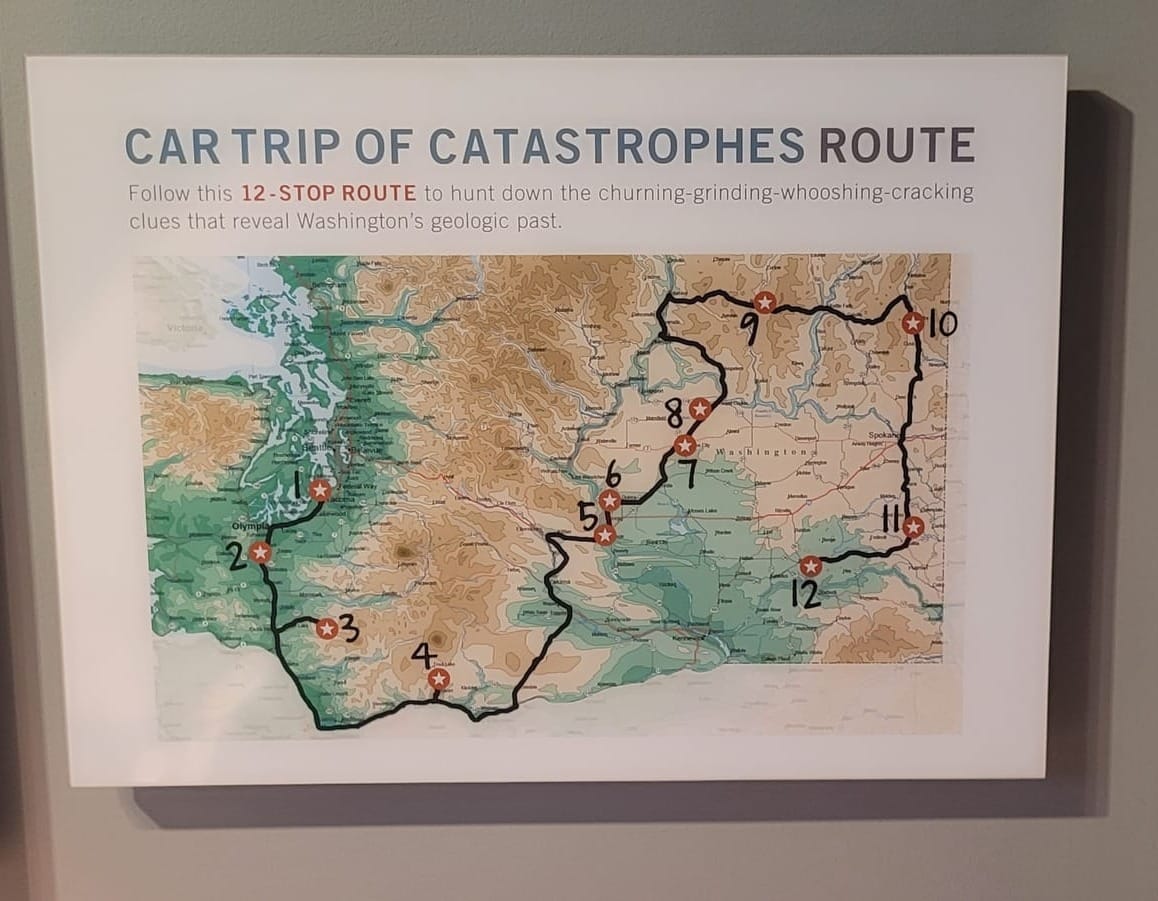
- A 12 stop road trip around the state highlighting geological wonders. The second stop on the tour is Mima Mounds, which we wrote about recently.
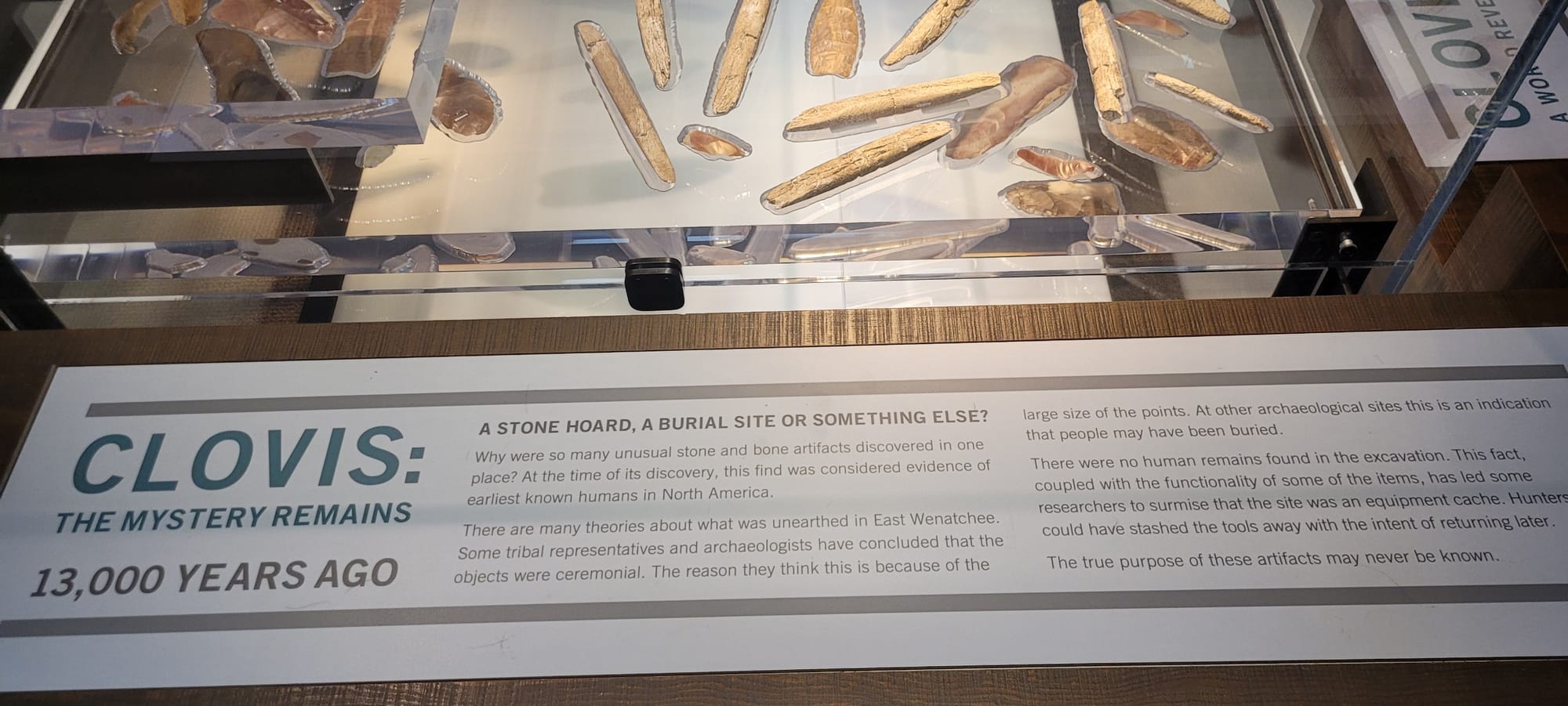
- Clovis artifacts from east Wenatchee. Clovis spearheads, arrowheads and tools have been around the US, but the artifacts in the museum are much larger than those found in other digs.
- Replicas of a mine shaft and a Hooverville shack with movie and audio explanations
Other exhibits commemorate business and entrepreneurship. There’s a display that includes Starbucks, Microsoft, Nintendo (did you know the Mario character is named after Mario Segale, owner of the Tukwila warehouse where Nintendo first set up US operations?), and then another display with a machinist working on a part of a Boeing plane.
Overall, the museum helps put history in perspective. Visitors get a sense not just of what happened, but of connections to today, or how the past helps set up the future.
Logistics
Check the website for hours and free admission opportunities. Public parking is available on street, (UW Tacoma have paid parking nearby, but during school days it is likely filled), or contact the specific museums to ask for suggestions. Make sure to stop at some local places to eat, (I can recommend Tim’s Kitchen as a great option to consider.)
We invite readers to be part of this series!
America at 250: Northwest Stories
Have you visited a Pacific Northwest site that deepened your understanding of our nation’s past? Do you have a personal story connected to a local landmark? Do you have recommendations?
As we approach America’s 250th birthday, we hope to tell the story of our country through the voices of our community — one place at a time.
Send your story to idea to us at info@TheHighlineJournal.com
Members Discussion
Highline Journal Comment Guidelines
We believe thoughtful conversation helps communities flourish. We welcome respectful, on-topic comments that engage ideas, not individuals. Personal attacks, harassment, hateful comments, directed profanity, false claims, spam, or sharing private information aren't allowed. Comments aren't edited and may be removed if they violate these guidelines.