Port of Seattle
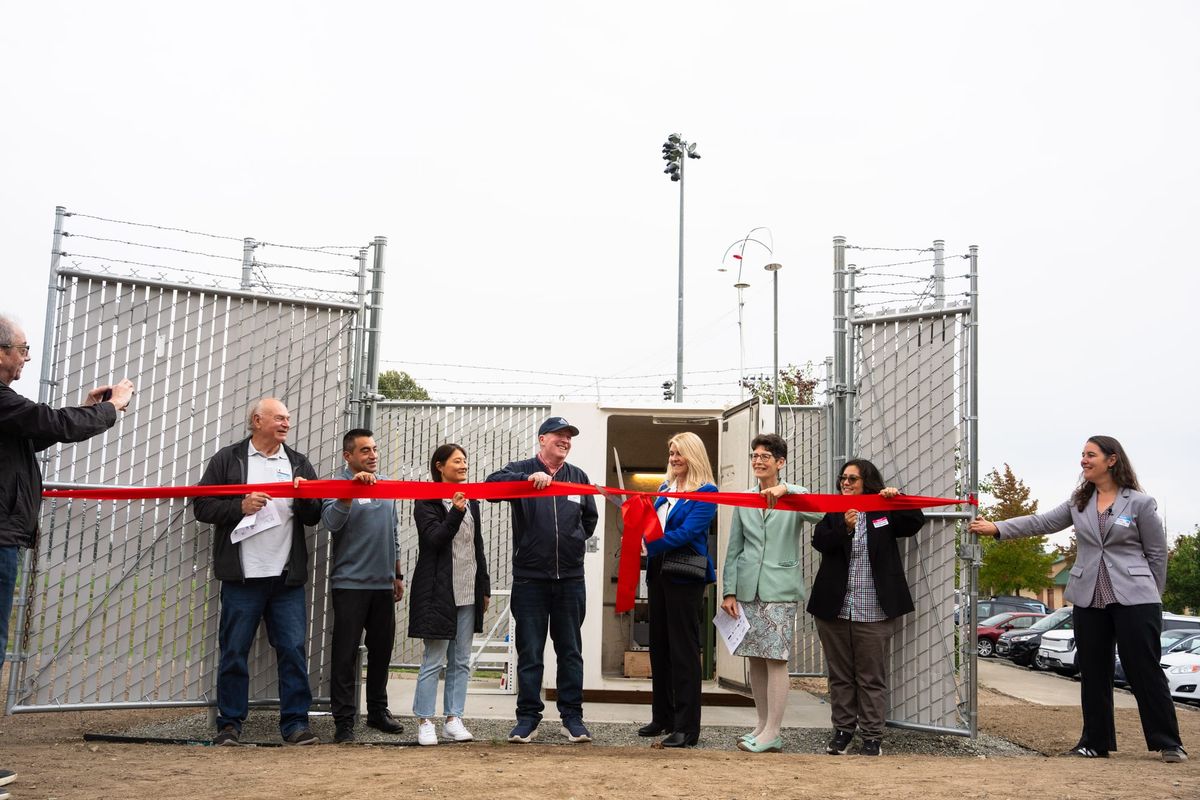
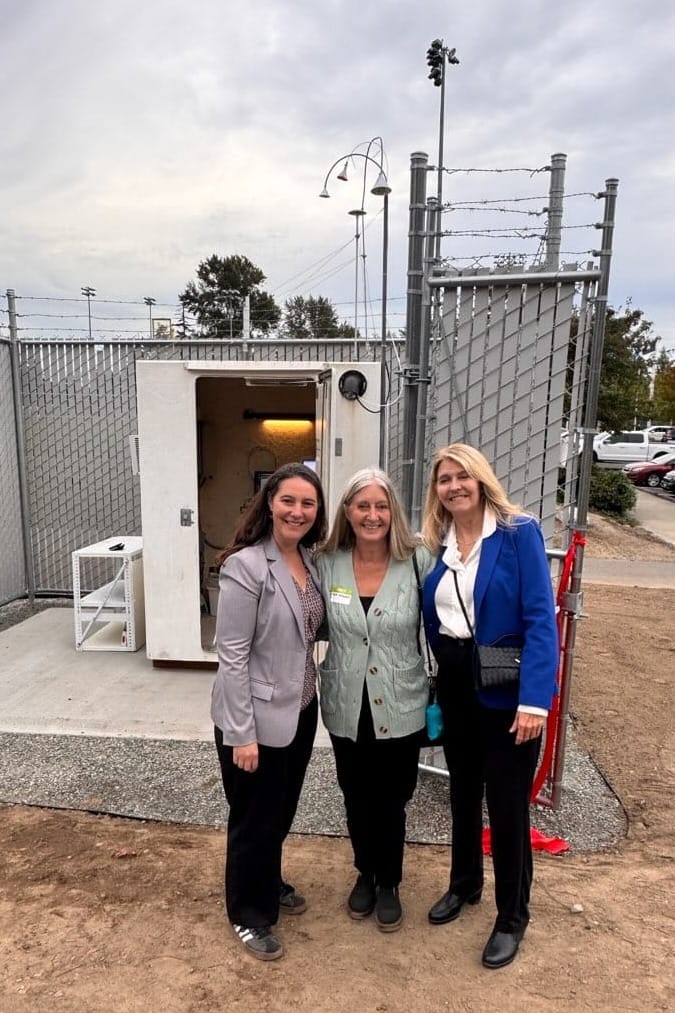
On September 24, 2026, a new air pollution testing location opened in Des Moines. The testing equipment is located in Officer Steven J Underwood Park, and is the culmination of work by concerned citizens and activists.
The event focused on the history of trying to understand airplane pollution through air quality monitoring programs, the uniqueness of having monitors at both the south end and north end of SeaTac, and the hope that data collected will lead to a better understanding of health impacts.
Washington State Sen. Tina Orwall, UW Professors Tim Larson and Elena Austin, along with many other researchers and staff members, and the Puget Sound Clean Air Agency also played a vital role in establishing the new testing location.
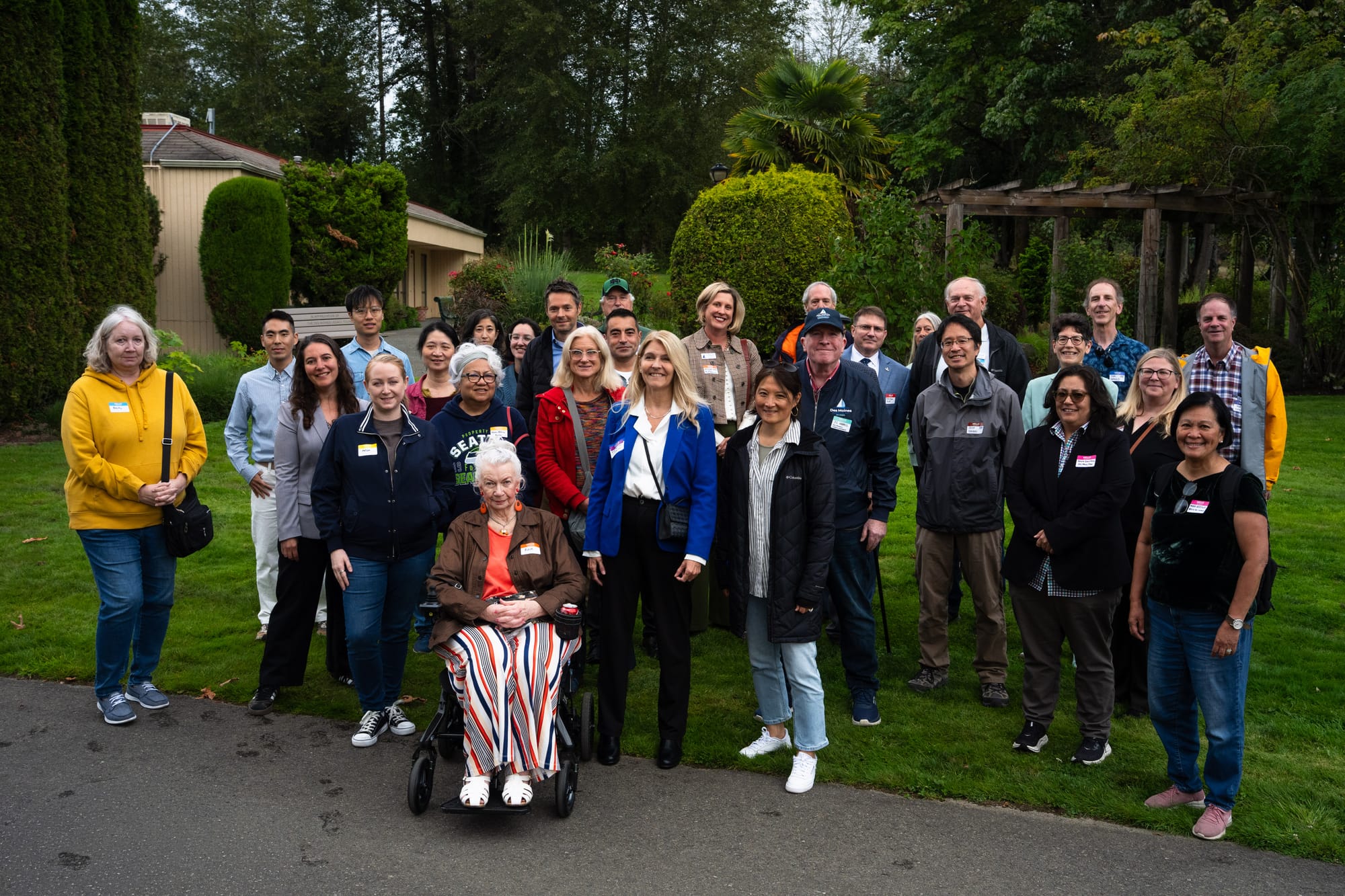
The project received funding from the state legislature for its initial two years of monitoring.
The City of Des Moines received special thanks for their work with wiring and other challenges involved in setting up the equipment.
The ribbon-cutting ceremony included five people who spoke to the needs of the monitors: long-time Highline activist Debi Wagner, Professor Elena Austin, State Senator Tina Orwall, Des Moines City Councilmember J C Harris, and Beacon Hill activist Maria Batayola.
Monitoring will provide the community with much more detailed information about local levels of six major air pollutants: carbon monoxide (CO), carbon dioxide (CO₂), black carbon (BC, or soot), nitrogen dioxide (NO₂), ultrafine particles—including particle counts and size information—and fine particulate matter (PM2.5).
The data is transparent: starting in a few weeks, there will be hourly updates that anyone can see. (We will post a story when the data is available, including more on the pollutants.)
The Back Story: Perseverance, Questions, Networking
It has taken years to get to this point. In her comments, Debi Wagner discussed the first air quality study conducted in the SeaTac area. It was at the home of local elected Paul Barden at his home on 12th South (under what is now the Third Runway). After the study’s results were available, he promptly moved. Debi also discussed other air quality studies conducted in later years. She mentions these in her 2011 book Over My Head. Debi’s perseverance and questions over the years certainly had an impact on many people.
A foundation for this was also a discussion I had many years ago with long-time friend Tim Gould, a researcher at the University of Washington. Over 20 years ago, Tim mentioned he was working on air quality studies, including a study of Ultrafine Particles at Los Angeles International Airport, in partnership with the University of Southern California. I said, “I wonder what we’d find at SeaTac.” He responded, “We could find out if we had funding.” I asked Rose Clark, former member of the Burien City Council and another long-time activist concerned with air quality, if she had some thoughts. Rose recommended we reach out to State Representative Tina Orwall. Tina was enthusiastic and succeeded in getting funding in the legislative session for the Ultrafine study.
This study established a working relationship between the state, the University of Washington School of Public Health, and the Department of Civil and Environmental Engineering. These collaborations have then led to partnerships with Beacon Hill and the monitoring locations.
The Future Story: What will the Data Mean for our Airport/Community?
One of the big questions is what happens if the monitors detect a significant amount of pollution? Is anyone going to act on the information?
As the website Seatac Noise Information recently pointed out, the US has never had a focus on reducing emissions from airplane engines, in stark contrast to efforts to reduce automobile engine emissions.
At the event, I asked Professor Austin if we could see data by aircraft model or type on the ultrafine particles of CO2 emitted from them. The answer was that getting the data connected would be a major challenge.
It was inspiring to see several grad student attendees who were engaged and actively working on air quality research. With AI, major advances in data science, and an interested public, maybe this type of analysis will be feasible and help make some meaningful progress toward reduced emissions and health-related concerns.
Members Discussion
Highline Journal Comment Guidelines
We believe thoughtful conversation helps communities flourish. We welcome respectful, on-topic comments that engage ideas, not individuals. Personal attacks, harassment, hateful comments, directed profanity, false claims, spam, or sharing private information aren't allowed. Comments aren't edited and may be removed if they violate these guidelines.