By Mark and Jan Yokers

Your marriage problems didn’t start in your marriage.

You’ve heard us say this before, but it’s worth repeating—especially when you’re quite certain your spouse is the problem!

Our patterns of relating and bonding—or not bonding—were developed very early in our families of origin. Long before we said, “I do,” we had already learned ways to deal with disappointment, conflict, closeness, fear, and unmet needs.

For us, our struggles with communication weren’t primarily the other person’s fault. Mark tended to avoid or please to escape the pain, while Jan tended to idealize what things should be or blame herself when they weren’t.

Most of us don’t even realize we’re doing this. These patterns become so familiar that they simply feel normal. They become part of what we call our “love style,” which we discussed in the last four articles.

So when tension or stress develops in our primary relationship, we tend to respond automatically according to our learned love style. We don’t usually stop in the middle of an argument and thoughtfully announce, “I believe my childhood attachment injury is being activated right now.”

If only we were that calm and self-aware!

Instead, we react.

Our love styles developed as children as we tried to get our needs met and protect ourselves from relational pain. We learned to avoid, please, vacillate, control, or submit and become a victim. Eventually, one or more of these ways of relating became our normal.

It’s important to understand that these love styles are not personality traits. They are love-style injuries. They developed for a reason, and the wonderful news is that they can be healed.

So What Does This Mean for Us as Adults?

Research has shown that much of the stress we experience—especially in our closest relationships—comes not simply from what the other person does, but from our own perceptions and responses shaped by our injured love style.

In other words, the issue may be more about what is happening inside of us than what is happening around us.

Now there’s a mental shift!

And actually, this can be tremendously comforting. If the entire solution depends on changing your spouse, you could be waiting a very long time. (Some of us have conducted that experiment. The results are not promising.)

But we can learn what is happening inside of us. We can understand our reactions, recognize our injuries, and begin to heal. There is great hope for every one of us who is willing to learn and grow.

Surprisingly, our primary relationship can be one of God’s greatest gifts in revealing the places in us that still need healing and growth.

It may seem strange to call the pain we experience in marriage a “gift.” But pain can be an alert that something needs attention. When the warning light comes on in your car, you may not appreciate it—but you’re much better off seeing it before smoke starts pouring out from under the hood!

The warning light isn’t the problem. It is telling you there is a problem.

Marriage can work much the same way.

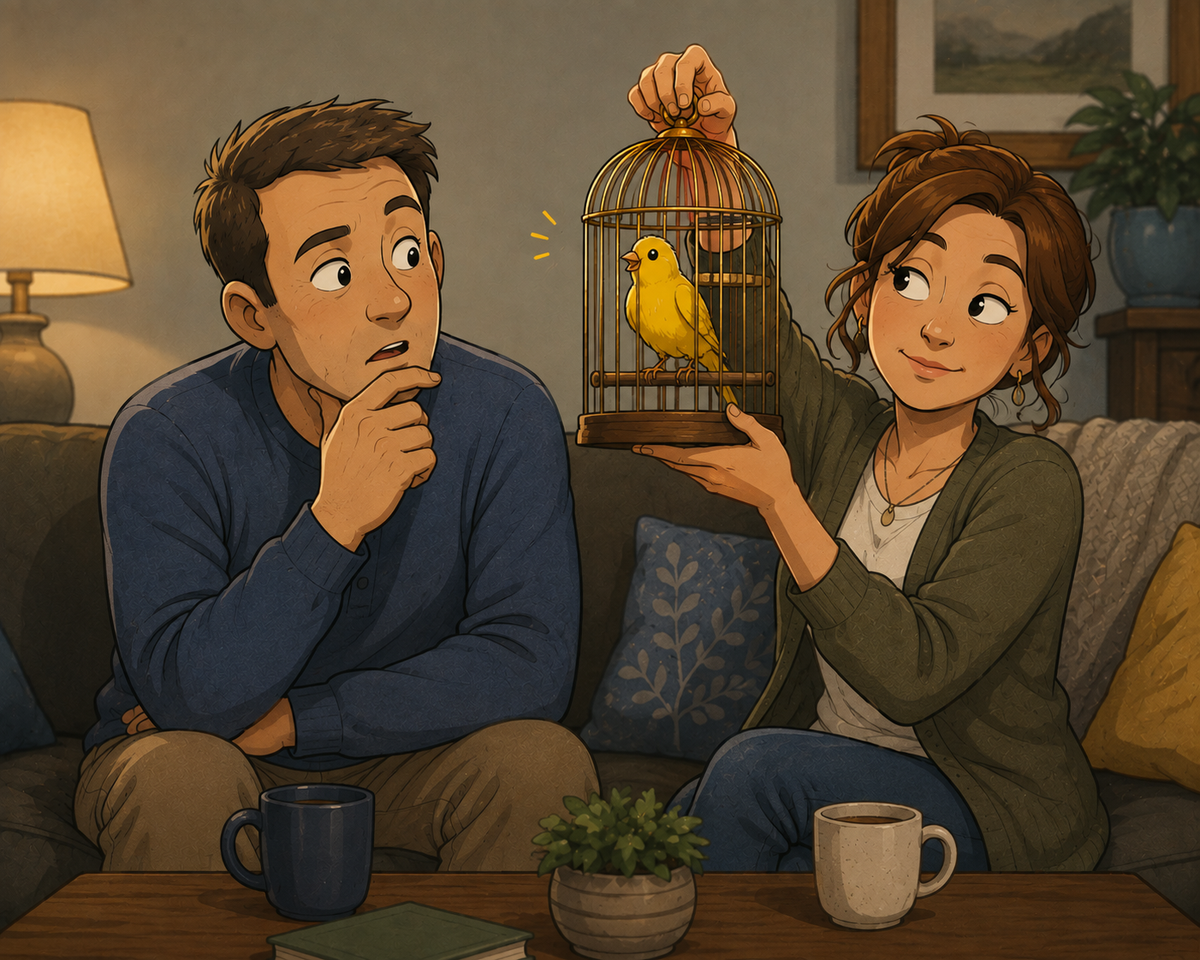
For Mark, Jan is sometimes like the proverbial canary in the coal mine, alerting him when toxic gases are present. Mark’s lack of love or impatience affects Jan more than almost anyone else. Because she is his closest relationship, her response can help reveal how he is doing in becoming a more loving and patient person.

Of course, Mark occasionally might prefer a canary with an “off” switch—but apparently that was not included in the marriage vows.

Milan and Kay Yerkovich, authors of How We Love, describe this as a law of attachment: when two people enter a primary attachment relationship, what each learned in their family of origin eventually rises to the surface. Marriage has a remarkable way of exposing what was already there.

Apparently, it wasn’t the wedding cake after all.

We enter marriage with expectations about love, closeness, security, communication, affection, and how our needs will be met. Then we discover that our spouse cannot possibly meet all those expectations—and neither can we meet all of theirs.

When expectations aren’t met, we experience pain or loss. Almost instinctively, we reach back into the toolbox we developed years ago: avoiding, pleasing, vacillating, controlling, blaming ourselves, or submitting.

Suddenly two childhood coping strategies are married to each other—and one is saying, “We need to talk about this,” while the other is thinking, “Why can’t we just let this go?”

That is why your marriage problems didn’t start in your marriage.

But that is also why there is such great hope.

Once we recognize our love styles, understand where they came from, and learn healthier ways to connect, we don’t have to remain trapped in the same old patterns. What was learned can be understood. What was injured can be healed. And relationships really can change.

For more information, visit HowWeLove.com.

And stay tuned. Opportunities for help, growth, and healing are coming.

—Mark & Jan Yokers


Marriage Matters is an ongoing series by Mark and Jan Yokers sharing practical lessons and vital communication skills from more than 56 years of marriage.

Share this article
The link has been copied!