Education
With all the swirling benefits and concerns around the use of technology and AI in the classroom, what do parents think? What does the district assert happens with technology and their stated goals?
Last week, we profiled concerns about i-Ready, a software product used nationwide for assessing and testing student growth. Kelly Stonelake, a former Meta employee, delivered comments to the Highline School Board as a follow up to previous request to take a deeper look before approving these programs.
Below, we have received a few additional perspectives from parents about their concerns and questions. These provide additional insights to the Substack post by Stonelake, from concerned Highline parents.
Having also reached out to the District and asked several questions over the past few months on this issue, we have some responses from the school district communications department about technology use in classrooms.
Here are some of the summarized points:
- Parents Say…they have limited visibility into how classroom technology is used, how much time students spend on screens, and what educational benefits the district is measuring.
- The District Says…technology is used intentionally, with devices serving as one tool among many in classrooms. But interviews with parents and responses from the district highlight unresolved questions about transparency, oversight, and student learning outcomes.
Important Factors to keep in mind for this story:
- Finding out what’s going on in the classroom is not easy because: different students have different experiences. It is up to parents to work with their children and their teachers and to take appropriate steps.
- Information at a high level is not yet pulled together. We hope the School Board will review and publish data before asking voters for a $48 million dollar Tech Levy. there’s a lot of research and compilation that needs to happen very quickly.
- There’s no evaluation about the effectiveness of learning outcomes, in contrast to what some districts like Los Angeles have done in moving away from tech in the classroom, as discussed in a recent story we wrote.
Parent Perspectives
Parent 1: What safeguards or parental controls exist when screens come home?
“My middle schooler brought home their laptop daily, but I felt there were little-to-no parental controls except to take it from them every evening because they could still access YouTube and other websites easily outside school. I am also concerned about data collection of my child’s laptop use and personal info, especially after the Highline Data breach in 2024.”
Parent 2: Concerns about classroom policy enforcements, but also lack of screen-time parameters.
“...At elementary school with our K-1 iPads, they do not come home. I assume that will change with laptops...So, at least for my child these devices are only used at school in the classroom. I only get brief windows into what that looks like. I do come in and help during small group/literacy lab time in my child's class, and iPads are being used during that time. I have heard directly from my child about what is 'not allowed' during the literacy lab, which includes Starfall and YouTube. Though my impression is that this is a classroom-specific rule and it is up to their teacher to enforce this policy. I have never seen any policy on the number of hours per day students are on screen.”
Parent 3: Why bring it home if they don't have homework, and will they be college ready?
“My child in 9th grade can bring home their computer, but they have no homework. Maybe that will change when they enter IB or go to Running Start the year after next? I can remember having a lot of homework when I was in 9th grade and am concerned for how ready my (child) will be. Just having a computer is not preparation for college.”
SAVE THE DATE |Community Conversation Series: Who Controls Our Children’s Digital Future? (May 27)
Parents and community members will gather May 27 to discuss student privacy, school technology, screen time concerns, rising costs, and accountability.
 Admin
Admin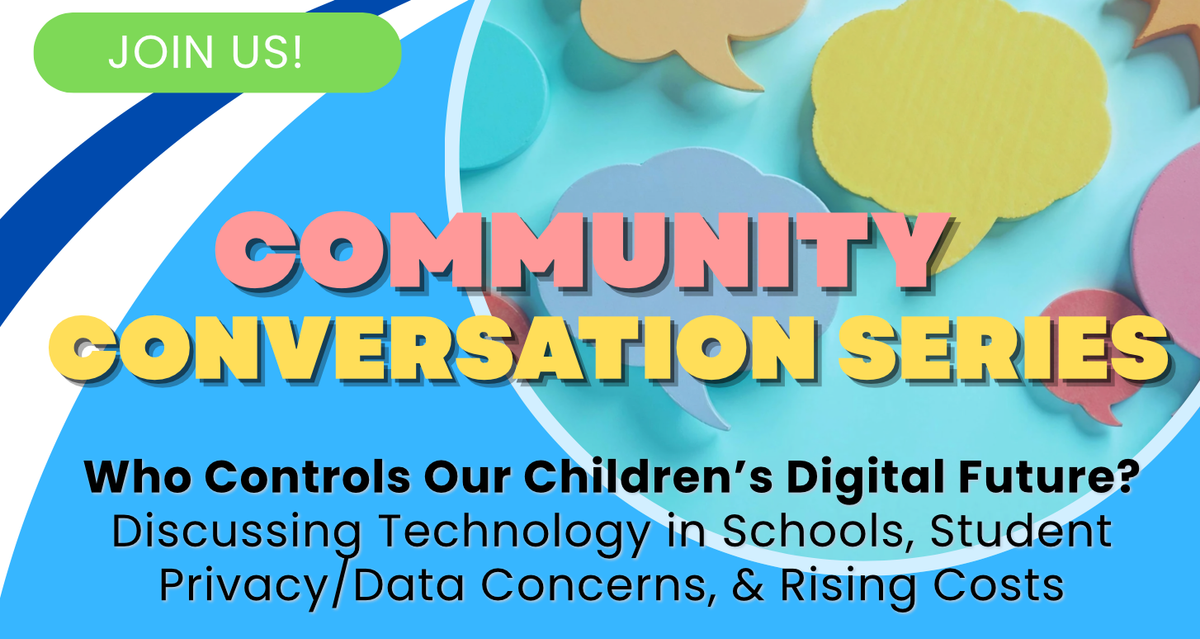
School District Answers to Our Questions
Tove Tupper, Director of Communications for Highline, answered questions asked in several different emails sent between February and May.
Q: What’s the overall goal for technology use by students in Highline?
A: Our approach to technology is intentional. We provide a 1:1 device-to-student ratio across k-12 to ensure equitable access, but technology is not the primary driver of instruction. Instead, it is one of many tools educators use to support learning. Students may use a device to write, research, create, and build projects, but the emphasis is not on passive consumption.
In our elementary schools (K–5), devices are kept at school and used in targeted ways during instruction. Classrooms have a shared cart, and teachers integrate technology when it adds value to learning. In secondary schools (grades 6–12), students take devices home to support learning both during and beyond the school day.
Q: How many hours a week are students using screens?
A: We do not set required or mandated screen time by grade level, nor do our vendor contracts require students to be online for a certain number of hours. Instead, technology use is guided by instructional purpose. Our teachers consider what students are learning, how they are engaging, and why the tool supports that work. Students continue to engage in hands-on learning, discussion, reading physical texts, and writing by hand as part of a well-rounded educational experience.
Q: If a parent says “I want printed materials, I want my kids to have books, I want my children writing by hand and not on a keyboard,” does Highline have a policy saying this needs to happen? Is Highline buying books for math, science, English, social studies and other subjects for students who want them? Is there a central place that will provide printed materials? Or is it up to each teacher to put together something?
A: We recognize that students and families have different needs. If a student has a medical need or a special education accommodation that limits device use, we would work closely with the family to support that need.
Q: How is Highline evaluating online tools? In the aftermath of nationwide articles of school districts moving away from technology because it appeared there might be more harm than good, was Highline re-assessing its use of technology?
A: We have a digital tool review process in place. When reviewing digital tools, the following is considered:
- Best Practices: Digital tools follow these best practices:
- Acceptable Use
- Equity Policy
- Equity Lens
- Highline Standards: Digital tools meet our instruction measures for:
- Standards-Based Instruction
- Culturally Responsive Instruction
- Inclusive Learning Instruction
- Data Safe: Digital tools must meet the Washington state and National requirements for:
- Archiving
- Data Security
- Student Data Privacy Agreements
- Digital Citizenship: Digital tools align with Highline’s Digital Citizenship standards by:
- Safe, Ethical, Effective Practices
- Support Lifelong Learning
- Promote Respectful Behavior
You can learn more on our Digital Learning webpage: Digital Learning - Highline Public Schools
Q: How does the district keep children safe?
A: We use a web filtering system that blocks content by category. We also follow state and federal requirements, including Children's Online Privacy Protection Act and Student Internet Protection Act, to guide student access to the internet and online tools. Specifically for YouTube, we have Age Restrictions, Block Sidebar, Block Comments, Block Live Chat turned on for all students.
Q: What information can parents see?
A: Parents would need to have their student login credentials to log into their accounts. We primarily use Google Classroom in grades 6-12 (which will be replaced by Microsoft Teams Classroom next year)
Q: Is there a list of technology vendors that Highline uses?
A: I don't have a comprehensive list of all of our technology vendors. Perhaps a public records request would be able to provide that to you. Our Board Agenda Archive webpage is where you can find any board action related to a technology vendor. The Board had a work session last school year on generative AI. In 2022, there was also a work session about digital learning. You can find copies of work session slides on our Board Work Session & Retreat Materials webpage.
As Highline prepares to ask voters to fund additional technology spending, questions about transparency, instructional effectiveness, and student screen time are likely to remain central for many families.
If you are a student, parent, teacher that would like to send your stories or perspectives to Info@TheHighlineJournal.com
Members Discussion
Highline Journal Comment Guidelines
We believe thoughtful conversation helps communities flourish. We welcome respectful, on-topic comments that engage ideas, not individuals. Personal attacks, harassment, hateful comments, directed profanity, false claims, spam, or sharing private information aren't allowed. Comments aren't edited and may be removed if they violate these guidelines.