Part 2: A Parents Guide on How to Help With Literacy Support at Home
A local Highline parent urges families to act early, offering practical pointers to close literacy gaps before they become long-term barriers.

A local Highline parent urges families to act early, offering practical pointers to close literacy gaps before they become long-term barriers.

By Guest Writer Lauren Schmidt
Current Parent of a Highline School student
[Don't miss out on Part 1: Elementary Literacy at Highline: Conference Questions That Matter]
All children are entitled to a free, appropriate public education, which should include equitable access to structured literacy materials at school. However, the reality is often a bit different; not all children and schools have access to the same resources.
For families who are aware, please do what you can to support strong literacy skills at home. This post contains a LOT of information, so to help from getting overwhelmed, pick one skill and routine to start with, and then build from there.

The single, most important piece of advice that I could give to other parents about early literacy is:
“Do not wait. Act quickly if you spot any red flags in your child’s reading progress.” -Chad Aldeman of Aldeman on Education
Early action is the best way of ensuring your child does not slip behind. Many parents may assume that if their child is behind in 1st or 2nd grade, they should be able to catch up.
Families might even be told to “not worry” or to “wait and see.” However, the statistics paint a much starker picture: if a child is far behind at the beginning of 1st grade, only 26% will catch up by the end of the year! By 2nd grade, that number drops to 13%. These numbers are based on a recent report by Amplify.
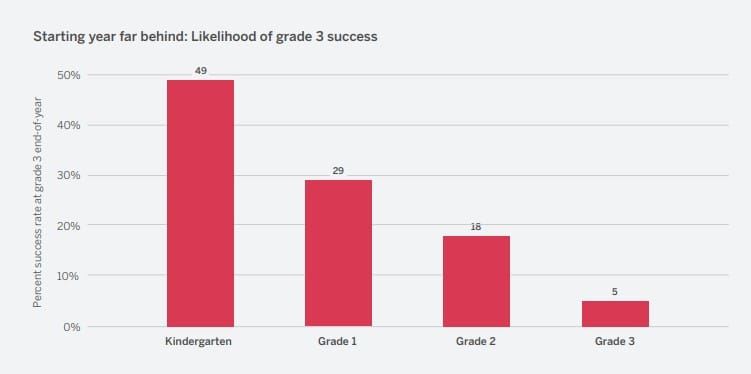
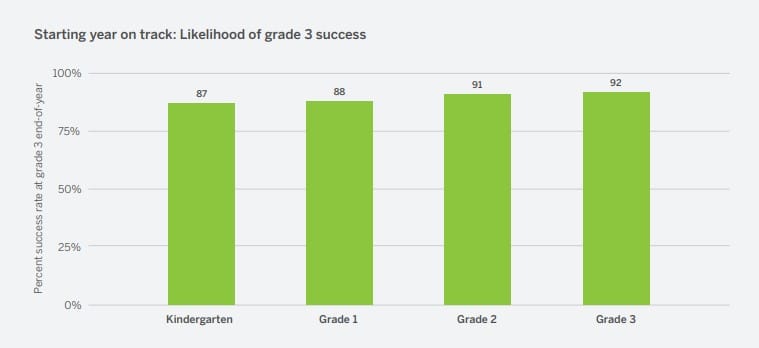
And based on the Highline School District’s iReady data from last spring, 69% of all 4th and 5th graders were below grade level for reading. With such significant numbers, it is clear that the district's resources will be stretched thin trying to bring students back to grade level. Families should be aware of this and may need to take matters into their own hands.
Before getting into specifics, here are a few useful tips for thinking about and framing the learning process. These concepts can be applied to teaching and learning in any subject, though they are not always widely known or emphasized.
💡Practice is Important
Practice and effort should be valued over the concept of “natural talent.” Learning new things takes a lot of repetition to get to mastery. And while some kids might resist anything that feels difficult, you can start small and with more support.
The type of practice is also important. Students need to be practicing correctly; so, someone should provide immediate, corrective feedback. This feedback is critical right after an error happens, so students don’t learn to do things incorrectly. Families should be aware of this and be wary of independent work and worksheets without any oversight.
💡Providing Support and Gradual Release
Parents and caregivers often don't know how much support is appropriate to give when working on foundational literacy skills. Adults might think that kids need to read independently in order to build their skills. However, this is not necessarily the best approach; you want to provide enough support so your child knows what to do and also feels successful. Gradually remove supports as they become more skilled and confident.
Another, more structured way to frame this concept is gradual release. This is where the adult/teacher should:
This concept of gradual release applies across almost anything, including: reading and writing, getting ready for school, and even chores around the house.

These reading and writing routines focus on foundational skills, since many schools in our district are still catching all students up on missed foundational skills.
If your child struggles with handwriting, they may need more practice with letter formation. It may seem old-fashioned, but there is a single, correct way to form each letter, and getting your child to be automatic in their letter formation will help with both reading and writing.
It is important to get this right from the beginning, as incorrect formation habits will only get harder to fix as they become more ingrained.
💡How to support handwriting:
💡Handwriting Resources:
Children who can spell a word can almost always read the word, but the opposite is not necessarily true. Encoding (or spelling) requires a much closer attention to each letter-sound correspondence.
Structured spelling practice should not just be memorizing lists of words; it should follow the same phonics scope and sequence, and reinforce recently taught phonics skills.
💡How to support spelling:
💡Spelling Resources:
If your child is just starting to read, we recommend that you start reading with decodable books. These are books that limit most of the text to words your child knows how to sound out (or decode). They start with very simple sentences, such as “The cat sat on the mat” and gradually get harder.
There are a few different places you can access free decodable books or texts:
💡King County Library
💡For free online
There are many more free resources available online. There are also many sets of decodable books that you can purchase. The Reading League and UFLI both have compiled lists of decodable texts (TRL Decodable text guide and UFLI decodable text guide).
💡How to support reading:
Fluency is the ability to read in a smooth and natural way, with appropriate accuracy, speed, and expression. If your child is a more experienced reader, but struggles with fluency, have their phonics/decoding skills assessed. Many fluency issues are from gaps in phonics knowledge, but there could be other underlying issues (see fluency resources, below, for more info).
💡How to support fluency
💡Fluency Resources:
Comprehension, or understanding and making meaning from text, is the purpose of learning to read. However, comprehension is not a skill that can be taught– it is a complex process. You can help by focusing on understanding smaller units (words and sentences) and building language skills and background knowledge.
💡How to support building language and knowledge:
💡Knowledge Resources:
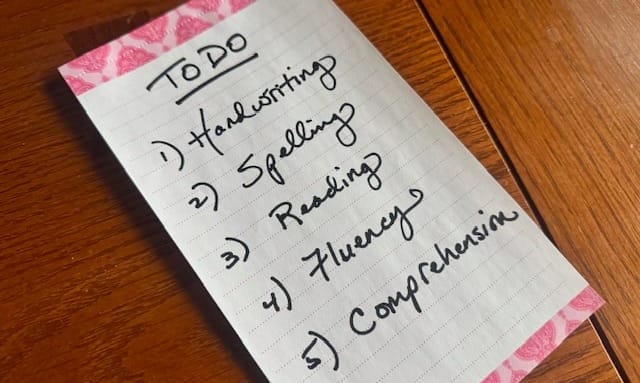
Taking action does not mean you have to do everything at once. Pick one skill and routine to start with and build momentum from there.
Literacy is a fundamental right, and while we must continue to hold our schools accountable for delivering equitable, evidence-based instruction, families should be prepared to help at home. The data on students catching up in later grades is sobering, so remember: Do not wait to act.
Successful learning involves: valuing practice over innate talent, providing immediate corrective feedback, and using the gradual release model (I do, We do, You do).
Learning is a journey, and we want our children to feel the reward of their effort. By deliberately supporting foundational literacy skills, you are setting your child on the powerful upward spiral of lifelong learning.
Note: this article makes many references to the UFLI Foundations program. I focused on this program because it provides a lot of free resources online, and it is also being used in many elementary schools in the district.
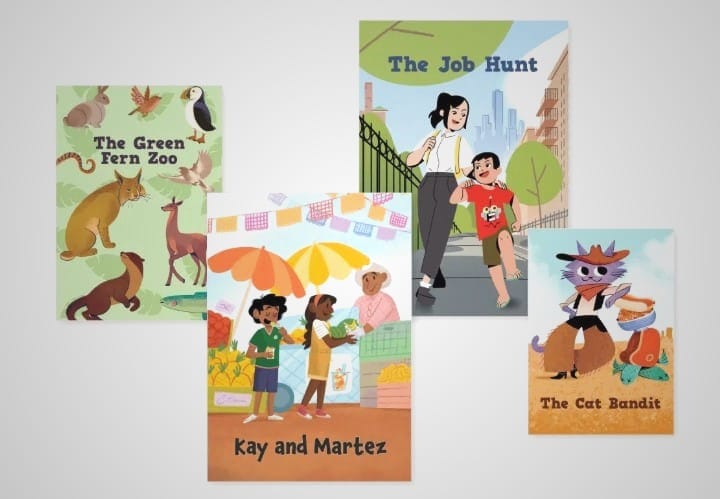
And lastly, if anyone is looking for a specific recommendation of decodable books to purchase, my personal favorite are Amplify’s readers (both English and Spanish). We like these for several reasons: the illustrations are lovely, they have a range of diverse characters, and they are still some of the most affordable you can find–a single, full K-1 reader set is only $52, plus shipping! The Spanish set of K-1 readers is slightly more at $65, but still a deal compared to many publishers. My only complaint is they don’t have a storefront, so the purchasing process is a bit old-fashioned.
If you have concerns about how foundational skills are being taught in your child’s class, please reference Part 1: Literacy Questions That Matter.
Highline Journal Comment Guidelines
We believe thoughtful conversation helps communities flourish. We welcome respectful, on-topic comments that engage ideas, not individuals. Personal attacks, harassment, hateful comments, directed profanity, false claims, spam, or sharing private information aren't allowed. Comments aren't edited and may be removed if they violate these guidelines.