Cities
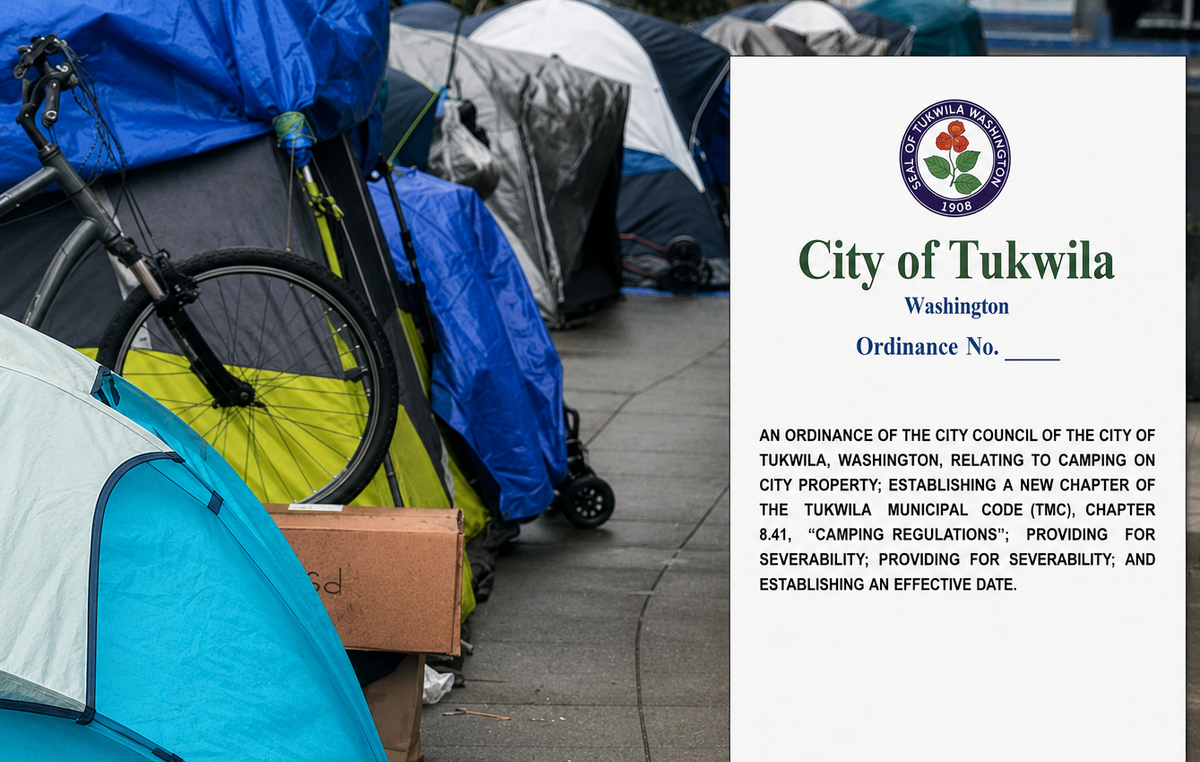
After public testimony and council deliberation, the Tukwila City Council voted 4–3 Monday to approve an ordinance making camping on city-owned property, including City parks, rights of way, and public utility property, a misdemeanor. The vote makes Tukwila the latest South King County city to adopt restrictions on public camping, joining neighboring Burien and SeaTac.
Residents, advocates and service providers offered sharply different perspectives before the vote. Some described the impacts encampments have had on neighborhoods, parks and businesses. Others argued that criminal penalties would make it even harder for people experiencing homelessness to find stability.
At a Glance
- Council vote: 4–3
- Approved by: Jane Ho, Kate Kruller, Armen Papyan and Dennis Martinez
- Opposed by: Joe Torres Camacho, Verna Seal and Hannah Hedrick
- What changed: Camping on city-owned property is now a misdemeanor.
- Regional context: Burien and SeaTac also have ordinances restricting camping on public property.
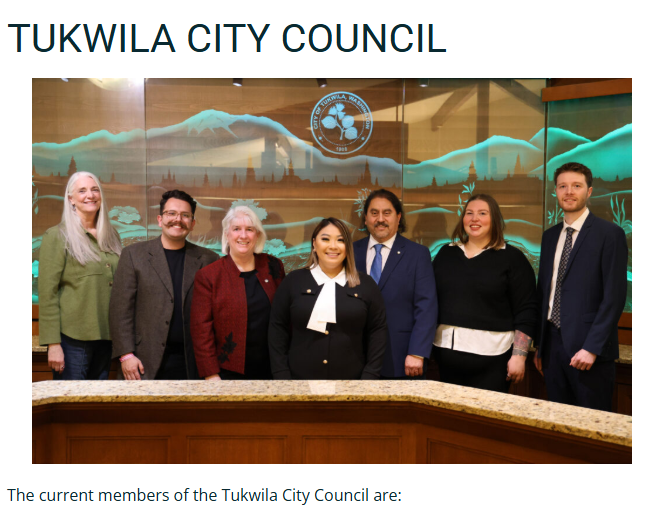
For the four councilmembers voting in favor, the debate was not about choosing enforcement over outreach. They took care to explain that their votes were not intended to reflect a lack of compassion for people experiencing homelessness. Instead, they said the city had reached a point where outreach, housing referrals and other interventions had not resolved every situation. In those limited circumstances, they believed police needed one additional option.
Opponents disagreed, arguing that involving police further criminalizes homelessness and shifts the response away from housing and services.
Interim Police Chief Eric Lund told the council the department would continue working with outreach providers and encouraging voluntary compliance before pursuing enforcement. He said officers would continue to use discretion and focus first on connecting people with available resources before issuing citations or making arrests.
Andrea Suarez, founder of We Heart Seattle, urged the council to approve the measure.
"We just need to make our parks equitable and safe for all... I ask you to pass the camping ban tonight. You will save lives."
Others urged the council to reject the ordinance.
Marta Kidane of the Low Income Housing Institute (LIHI), a nonprofit affordable housing provider, warned that
"there is no question that if passed, the law would have negative ramifications for the unsheltered population in this city."
Several residents also shared personal experiences, describing concerns about safety, neighborhood impacts and the challenges of balancing compassion with public use of parks and public spaces. Others urged the council to invest more heavily in housing and supportive services rather than expanding enforcement.
What will this mean for Burien?
Tukwila's decision may also raise new questions for neighboring Burien. The current Burien council majority was elected after campaigning, in part, on reversing the city's camping ordinance, yet the ordinance remains in place.
In Tukwila, the council majority concluded that while housing, outreach and shelter remain essential, they had not resolved every situation. In those limited circumstances, they believed law enforcement needed one additional option after other efforts had been exhausted.
Whether Tukwila's experience influences Burien's future discussion remains to be seen, but the vote adds another chapter to an ongoing regional debate over where outreach ends and enforcement begins.
Related
- Read the Tukwila City Council July 20 agenda packet (ordinance section beginning around page 280).
- Read our previous coverage of Burien's camping ordinance https://www.thehighlinejournal.com/what-happens-to-buriens-camping-ban-now-that-the-state-bill-failed/
Members Discussion
Highline Journal Comment Guidelines
We believe thoughtful conversation helps communities flourish. We welcome respectful, on-topic comments that engage ideas, not individuals. Personal attacks, harassment, hateful comments, directed profanity, false claims, spam, or sharing private information aren't allowed. Comments aren't edited and may be removed if they violate these guidelines.