Port of Seattle
[Editor's corrections: Jeff Bogen is on Des Moines Airport Committee - not Burien's; plus SeaTac and Normandy Park participation context was added below.]
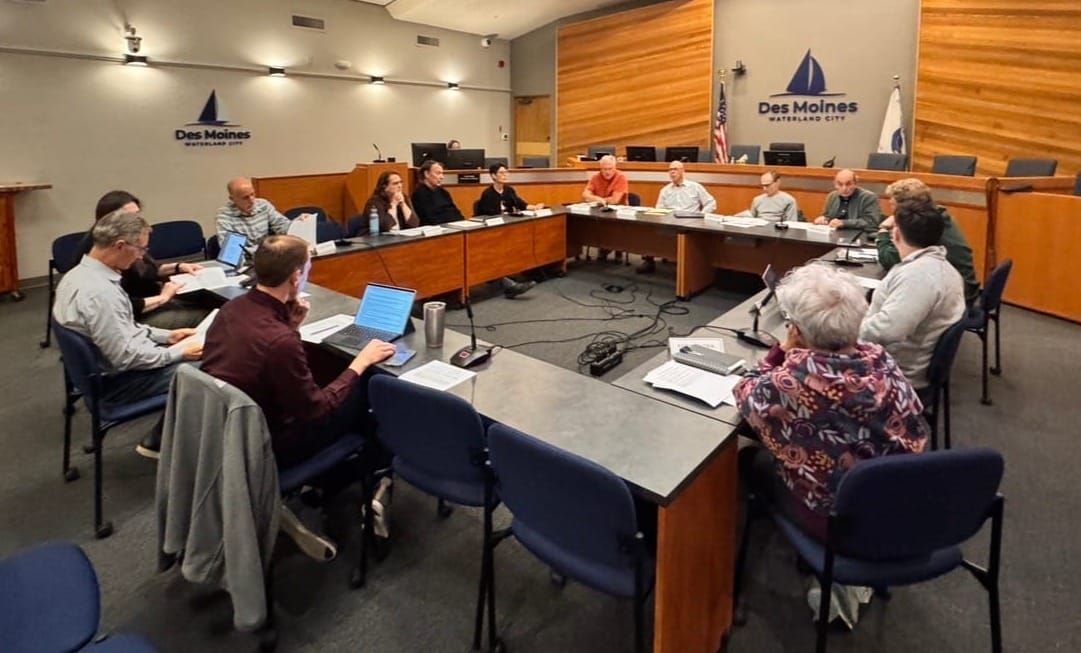
With the July 21 deadline for public comments on Seattle-Tacoma International Airport's Sustainable Airport Master Plan (SAMP) Draft Environmental Impact Statement (DEIS) fast approaching, members of the Burien Airport Committee (BAC) and Des Moines Airport Advisory Committee (DMAAC) gathered June 8 in the Des Moines City Council Chambers to discuss a common challenge: how airport-impacted communities can make their voices heard—and what they should ask for—as airport growth moves forward.
The joint meeting focused less on opposing expansion and more on identifying mitigation measures, compensation requests and public engagement strategies for communities that bear the impacts of airport operations.
"This isn't a Third Runway replay," said Burien Airport Committee Vice Chair Brian Davis. "We're not trying to stop anything. But we do expect proper compensation for our cities and our residents, for the disproportionate sacrifice we make so that the airport may grow."
Public Hearing Push
One of the evening's most urgent discussions centered on whether airport cities should formally request a public hearing on the DEIS.
Rebecca Demming, Community Development Director for the City of Des Moines, noted that under Washington administrative rules, a public hearing must be specifically requested by June 21.
Committee members agreed that a hearing would provide a formal opportunity for testimony and create a stronger public record of community concerns.
Joe Dusenbury, chair of the Des Moines Airport Advisory Committee, asked what steps should come next and whether submitting detailed comments on the DEIS would be a logical starting point. The group discussed a combination of city letters, committee responses and individual public comments.
Getting the Word Out
Several participants expressed concern that many residents remain unaware of both the DEIS and the limited time available to comment.
Karen Veloria of the Burien Airport Committee highlighted a June 17 community event at Glacier Middle School intended to help residents understand the more than 6,000-page environmental review document in plain language and learn how to submit comments before the July 21 deadline.
What Does Airport Expansion Mean for Your Neighborhood? Find Out June 17
Confused by the 6,000-page Sea-Tac expansion report? Attend a June 17 community event to learn what it means, how to give feedback, and what you can do.
 Staff Writer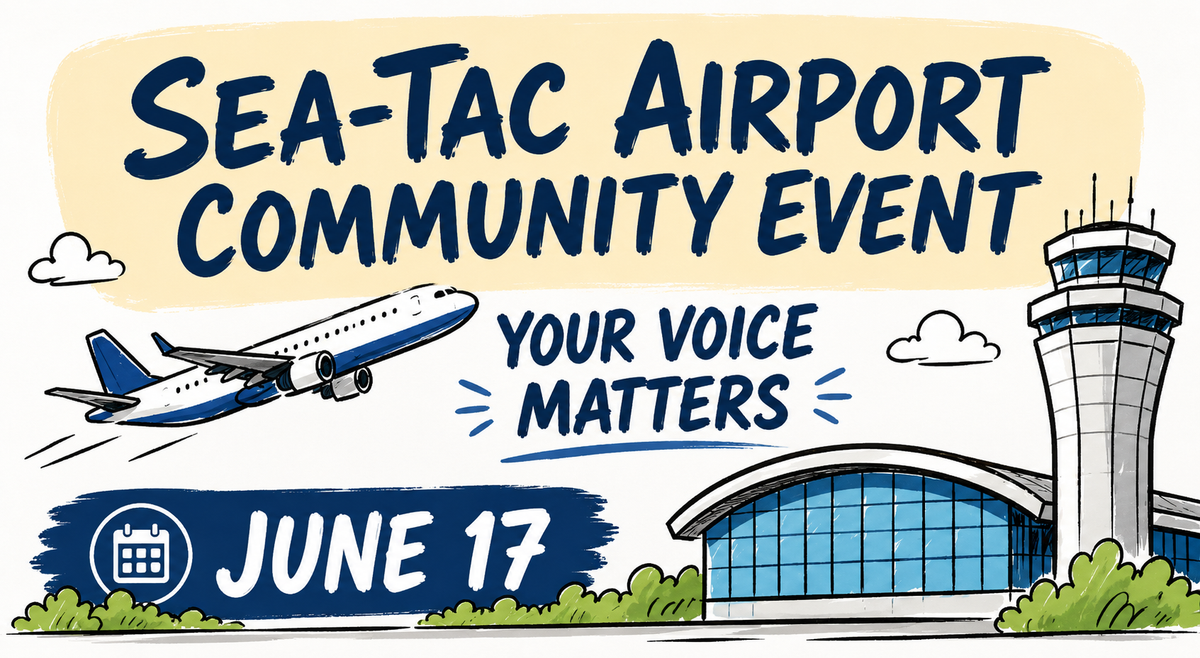
Burien Mayor Sarah Moore, who serves as chair of the Burien Airport Committee, suggested additional outreach efforts, including a possible press conference and continued coordination among airport-impacted cities.
The committees agreed to meet again on June 16 at 6 p.m. at Burien City Hall to continue discussing public engagement, outreach and strategies for increasing public participation. AGENDA HERE
What Should Communities Ask For?
Much of the discussion centered on what communities should seek from the Port of Seattle.
Davis argued that communities beneath the flight paths bear a disproportionate share of airport impacts while receiving relatively little direct economic benefit.
"My work on the BAC has left me with some firm convictions," he said. "One is that the Port of Seattle should provide direct compensation to the airport cities—especially to Burien and Des Moines."
Davis also called for expanded home repair and noise mitigation programs, broader eligibility for homeowners outside federally designated noise zones and additional research into ultrafine particle pollution.
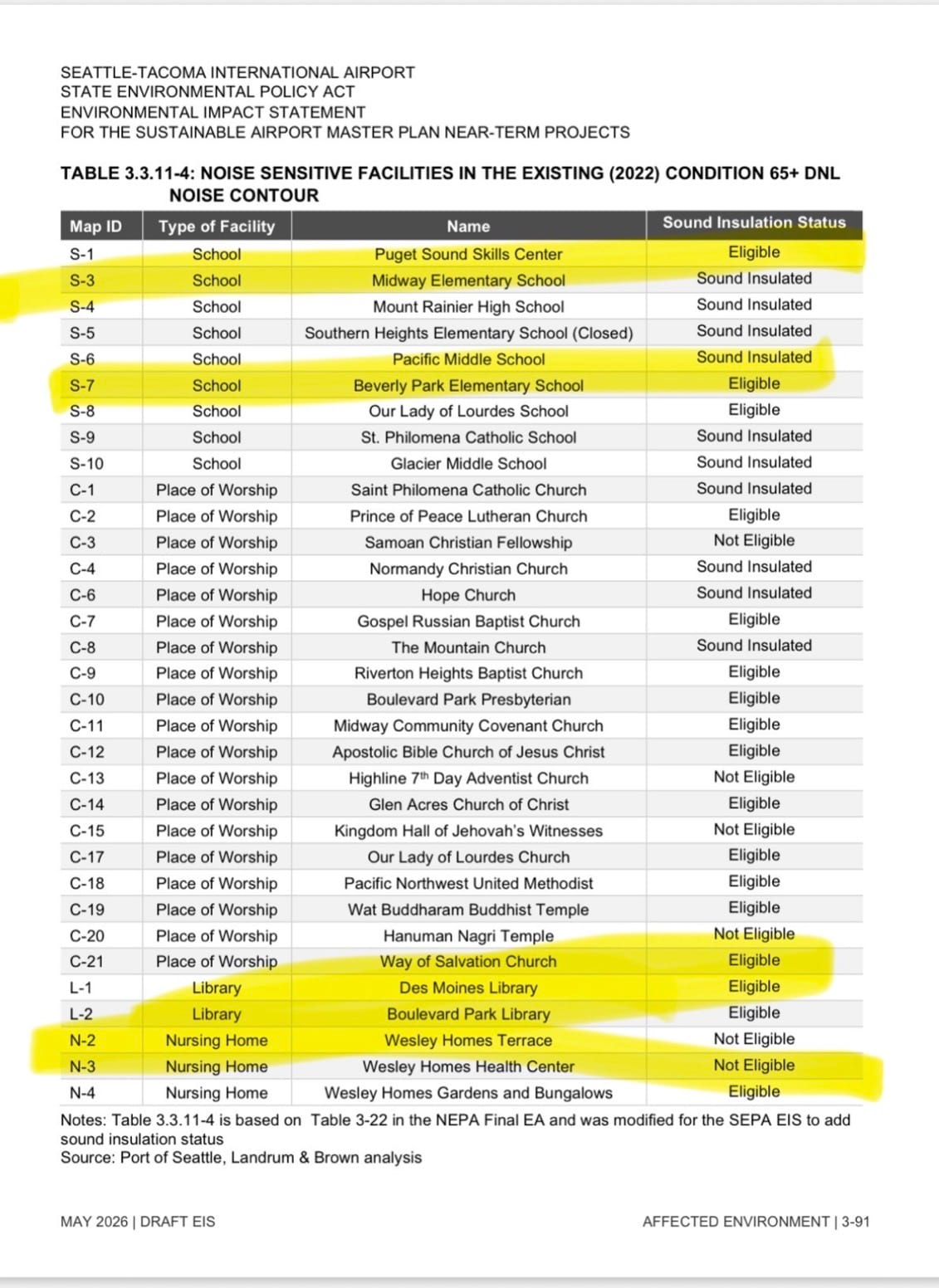
Emily Inlow-Hood, a member of the Burien Airport Committee, suggested involving Highline Public Schools in discussions about mitigation funding. She noted that several school buildings identified as eligible for airport sound insulation improvements have not yet received mitigation packages.
Questions About Data and Accountability
Jeff Bogen of the Des Moines Airport Committee discussed several technical comments and research papers he has submitted to the Port regarding the expansion proposal.
Bogen said he continues to identify gaps in the available data and believes those issues require additional explanation and mitigation. He also questioned whether public comments would receive individual responses or be grouped into broader categories.
Participants noted that previous environmental reviews generated hundreds of comments, but responses were often consolidated into broad themes rather than addressed individually.
Looking Beyond the Comment Period
Following the meeting, Des Moines City Councilmember J.C. Harris, who attended as an observer, emphasized the importance of clearly identifying mitigation projects and funding priorities.
Participants discussed examples of airport-related mitigation investments in neighboring communities and the need to develop specific requests tied to measurable community benefits.
Notably absent from the meeting were representatives from SeaTac and Normandy Park, two of the airport-impacted cities.
Additional context added after publishing:
Per BAC Vice Chair Brian Davis, "SeaTac is in the three-city group appealing the previous FAA ruling and is working closely with Burien and Des Moines. Seatac was not present because they do not have an airport committee. Normandy Park was primarily concerned with clean creeks/streams and are satisfied because the Port built a treatment facility to handle runoff from the airport pleateau."
As the meeting concluded, participants agreed that cooperation among airport-impacted cities will be essential not only during the current DEIS review process, but in future discussions with the Port of Seattle as airport growth continues.
For now, committee members are focused on helping residents understand the proposal, encouraging public participation before July 21 and developing a coordinated list of priorities for the communities most affected by airport expansion.
Watch the Meeting
Residents interested in hearing the full discussion can watch the June 8 joint meeting between the Burien Airport Committee and Des Moines Airport Advisory Committee on YouTube.
SAMP Timeline: Key Dates
June 16, 2026 – 6:00 p.m.
Airport committee follow-up meeting in Burien
June 17, 2026
Community information event at Glacier Middle School in SeaTac
June 21, 2026
Deadline to request a formal public hearing on the DEIS
July 21, 2026
Public comment period closes for the SAMP Draft Environmental Impact Statement
Resources
SAMP Draft Environmental Impact Statement (DEIS)
https://sea-samp.com/materials/
Submit Public Comments
COMMENT PORTAL LINK
June 8 Joint BAC/DMAAC Meeting Recording
YOUTUBE LINK
Sea-Tac Noise Info Website (STNI)
SAMP/SEPA 60-day window comment period ARTICLE LINK
June 17 Community Information Event
Glacier Middle School Cafeteria
2450 S. 142nd St., SeaTac
5:30 p.m. – 7:00 p.m.
Residents can learn about the DEIS in plain language and how to submit comments before the July 21 deadline.
What Does Airport Expansion Mean for Your Neighborhood? Find Out June 17
Confused by the 6,000-page Sea-Tac expansion report? Attend a June 17 community event to learn what it means, how to give feedback, and what you can do.
 Staff Writer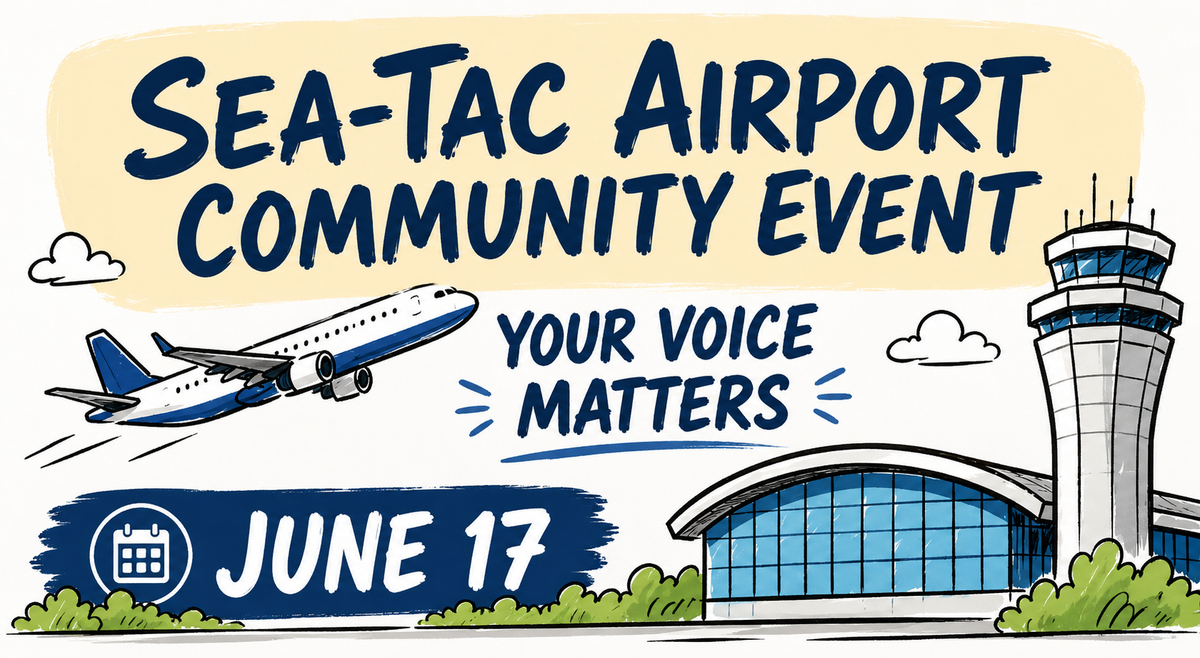
Members Discussion
Highline Journal Comment Guidelines
We believe thoughtful conversation helps communities flourish. We welcome respectful, on-topic comments that engage ideas, not individuals. Personal attacks, harassment, hateful comments, directed profanity, false claims, spam, or sharing private information aren't allowed. Comments aren't edited and may be removed if they violate these guidelines.