Education
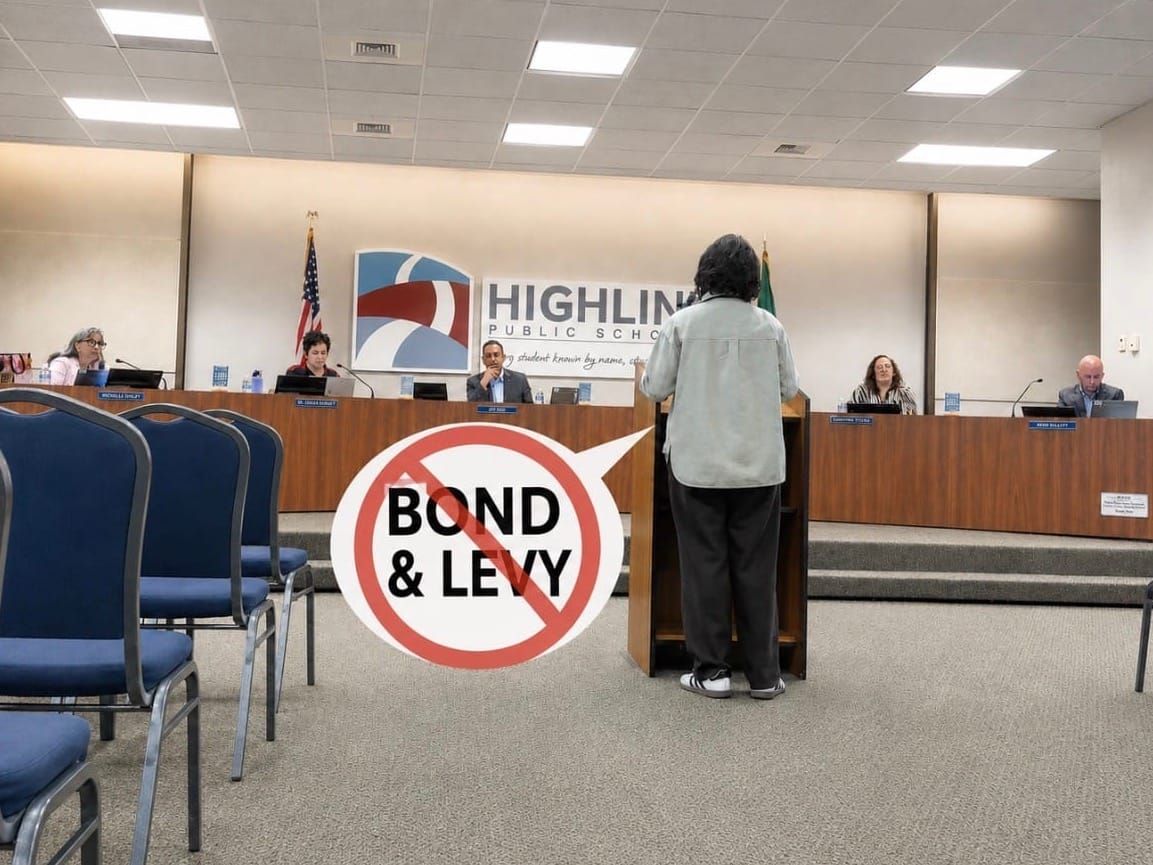
Highline Public Schools is changing how it handles public testimony about ballot measures during election season.
Before public testimony at the August 19 School Board meeting, Board President Joe Van announced that speakers may not use the district’s public-comment period to support or oppose a measure once it has been placed on the ballot.
“This means that, through the November elections, speakers may not use public testimony to advocate for or against Highline bond or levy, or other measures on the ballot,” Van said.
If testimony becomes advocacy, Van said he will interrupt the speaker and ask that person to move to another topic.
Change follows PDC warning to Kent
Highline Chief Communications Officer Tove Tupper said the district recently learned about a Public Disclosure Commission warning involving the neighboring Kent School District.
Like Highline, Kent had allowed members of the public to speak freely about district ballot measures during public meetings, including many speakers advocating in favor. The PDC warned Kent that regular public-comment periods cannot be used to support or oppose measures once they are on the ballot.
Highline has allowed similar testimony in the past. As recently as last fall, numerous speakers addressed a Highline levy already on the ballot, with most speaking in favor.
According to Highline’s new statement, that practice will not continue.
Tupper said the important distinction is between asking a board to take action and advocating for an election outcome.
Before a board places a measure on the ballot, residents may speak for or against the board taking that action. Once the measure is on the ballot, however, public testimony cannot be used to encourage people to vote for or against it.
The restriction also applies to other ballot measures and candidates.
PDC says the law is nuanced
In an email to The Highline Journal, PDC Communications Specialist Natalie Johnson said state law prohibits public facilities and resources from being used to promote political campaigns.
Johnson said this is not a new part of state law or limited to Highline and Kent. The PDC receives a handful of complaints involving the issue during each election cycle.
“We consider every situation on a case-by-case basis,” Johnson wrote. “The law is nuanced.”
Where will the district draw the line?
Highline has stated what speakers cannot do: encourage people to vote for or against a candidate or ballot measure.
What people will still be allowed to say is less clear. Can residents raise concerns about:
- The full annual tax cost
- Traffic or proposed school sites
- Project costs and construction schedules
- Information published by the district
Can they ask the board to provide more information or correct inaccurate statements, as long as they do not tell anyone how to vote?
The Highline Journal has asked the district to clarify where it will draw the line and whether its written public-testimony rules will change.
Members Discussion
Highline Journal Comment Guidelines
We believe thoughtful conversation helps communities flourish. We welcome respectful, on-topic comments that engage ideas, not individuals. Personal attacks, harassment, hateful comments, directed profanity, false claims, spam, or sharing private information aren't allowed. Comments aren't edited and may be removed if they violate these guidelines.