Education
Declines raise questions about funding, staffing and school construction.
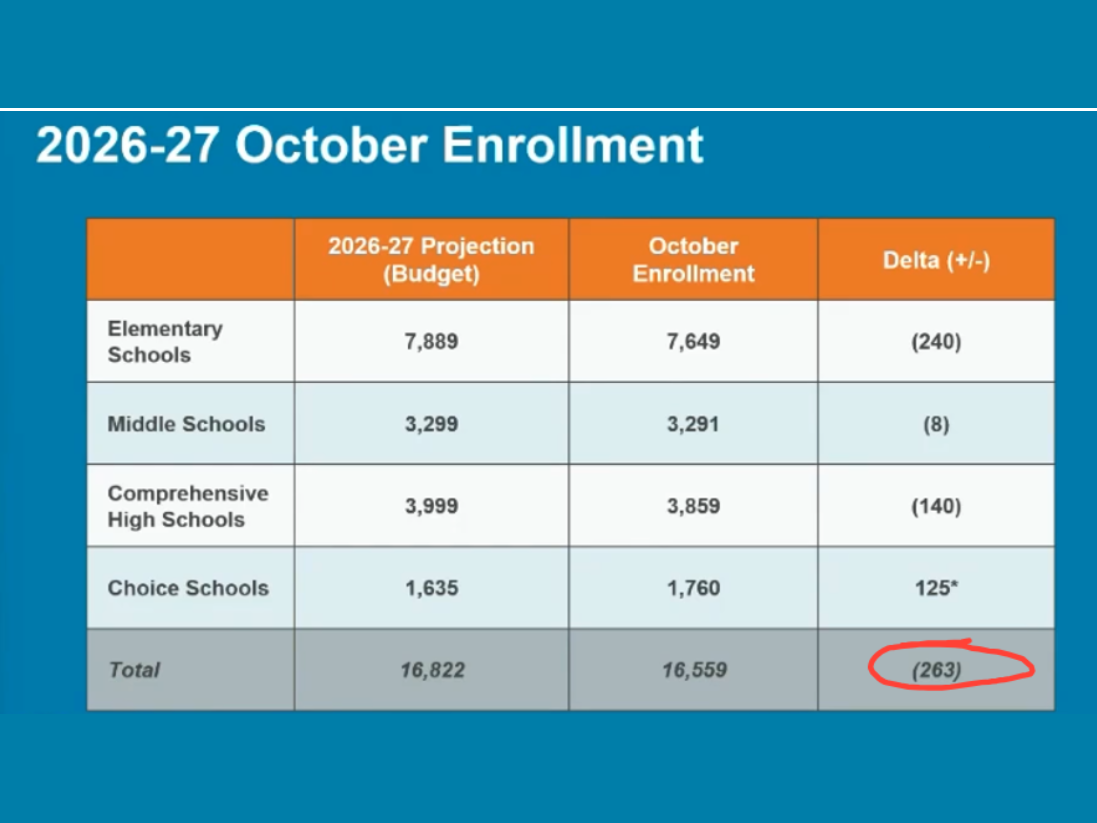
Highline School District enrollment is below budget and below last year, continuing a decline of roughly 10% since 2017-18.
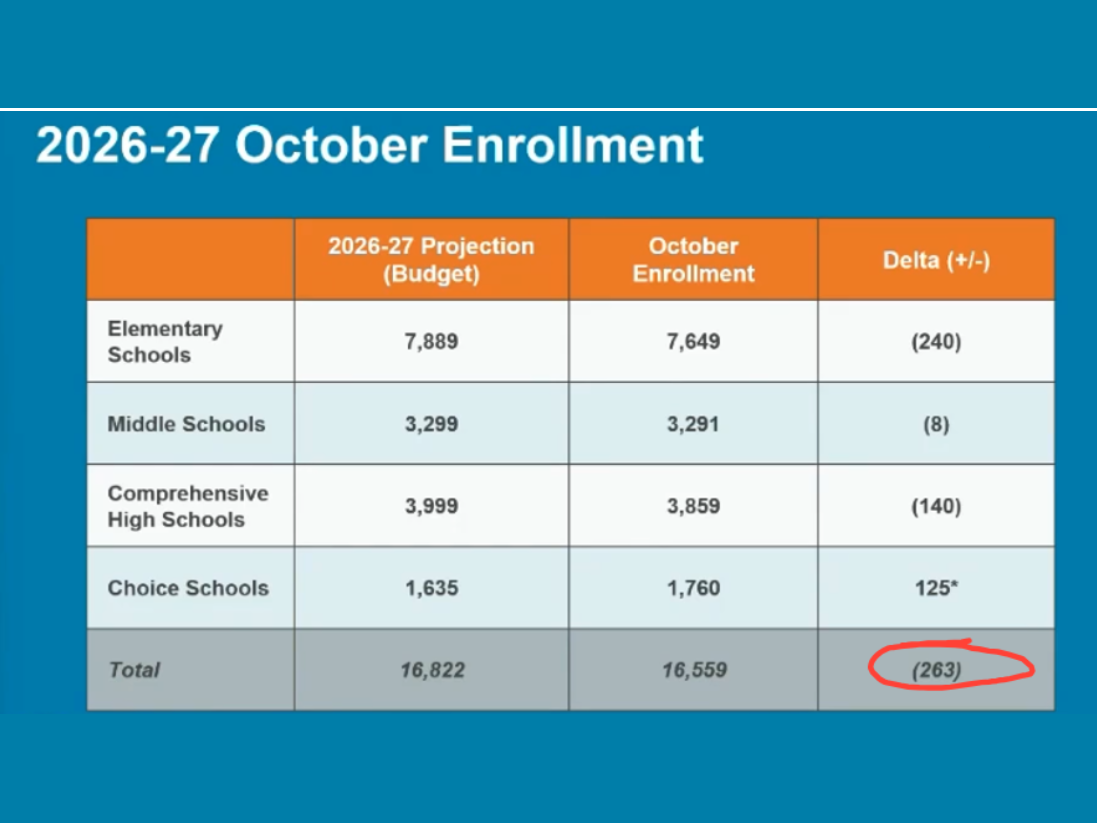
At the October 21 school board meeting, Chief Financial Officer Jackie Bryan reported 16,559 full-time equivalent students, or FTE. That is 263 below the district’s budget forecast of 16,822.
Separately, October state enrollment figures list 16,402 FTE, compared with 16,789 last year. This is a drop of 387, as noted in the official state reporting system, and those figures determine state funding.
Less funding, possible staffing changes
Board Director Damarys Espinoza asked about funding and staffing impacts. District staff said they are investigating and enrollment numbers can still change. Lower enrollment generally means less enrollment-based funding.
In prior years, enrollment shortfalls have meant changes of classroom assignments after the school year started. There has been no public mention of these type of shifts this year.
More information is expected at the November 18 budget work study session, using September, October and November data.
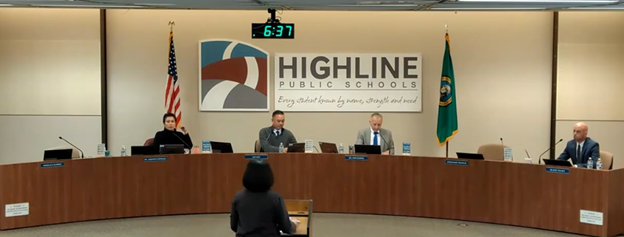
Bryan’s presentation is under agenda item 3.2. Her video presentation runs approximately 37:30–43:00.
Kindergarten and second grade lead the declines
State enrollment figures show these changes from last year:
- Kindergarten: Down 126, from 1,275 to 1,149, nearly 10%.
- Second grade: Down 95, from 1,345 to 1,250, about 7%.
- Elementary, K–5: Down 156 overall, with increases in other grades partly offsetting kindergarten and second-grade losses.
- Middle school: Down 67, to 3,495.
- High school: Down 164, to 5,325, excluding separately reported Open Doors/satellite enrollment.
Smaller kindergarten classes can carry forward into later grades, making these declines important for future planning.
Two notable changes over the past decade
Based on OSPI’s P223 enrollment reports, (which measure Full Time Enrollment -FTE- not to be confused with not headcount on the state Report Card)
Two trends stand out:
- Total enrollment fell about 10%. Highline reported 18,314 FTE in 2017-18, compared with 16,402 this October.
- Transitional bilingual enrollment increased. Enrollment in those services rose from 5,436 to 6,738 FTE. Its share of total enrollment grew from about 30% to 41%.
The district now serves fewer students overall, while a larger share receives transitional bilingual services. Both trends deserve attention in budget and staffing discussions.
Public records questions remain
The Capital Facilities Advisory Committee heard from the district’s demographer in November 2025. A spring update was expected before the bond proposal was finalized, but I did not see updated enrollment figures presented.
This summer, I requested public records seeking demographer-related communications from January 1, 2025 to August 18, 2026. The district initially estimated more than 11,000 records.
After I narrowed the criteria and dates to January 1, 2026 through August 18, 2026, the district reported zero responsive records and said further changes required a new request.
That response does not establish that no communication occurred. It leaves unanswered what updated enrollment information supported the final bond proposal and whether there were discussions before the operations budget was approved about enrollment forecast changes.
What about school construction?
If five rebuilt middle schools each accommodate 950 students, their combined capacity would be 4,750. Current middle school enrollment is 3,495, about 74% of that capacity.
Capacity alone does not determine replacement needs. But declining enrollment raises questions: Why build larger schools? Was consolidation considered? How would continued declines change construction plans?
The November budget discussion should help connect enrollment trends with funding, staffing and facilities decisions.
Members Discussion
Highline Journal Comment Guidelines
We believe thoughtful conversation helps communities flourish. We welcome respectful, on-topic comments that engage ideas, not individuals. Personal attacks, harassment, hateful comments, directed profanity, false claims, spam, or sharing private information aren't allowed. Comments aren't edited and may be removed if they violate these guidelines.