Community Connections

Our recent Community Conversation Series focused on growing technology in education, data privacy, some of the harmful consequences to our children's brains, and questions around what safeguards are in place. The event, attended by local community members, previous teachers, and parents, highlighted the growing chasm between massive spending on digital tools and the unintended outcomes that teachers and parents are seeing at school and home.
Presenting was Lauren Schmidt, a Design Technology Specialist and Highline Parent, and Stuart Jenner, a previous Microsoft employee and Marketing and AI Optimization and Parent Alum.
Declining again to attend community concern meetings were Elected School Board Directors (President Joe Van, Vice President Angelica Alvarez, Dir. Holien, Dir. Espinoza, and Dir. Tidholm) from the Highline School District, Superintendent Ivan Duran, and the Department head of Technology Services, Teshon Christie for Highline SD.
💡
SAVE THE DATE: June 24th for our next Community Conversation - 'Protecting Girls Sports, a Bi-Partisan Discussion'
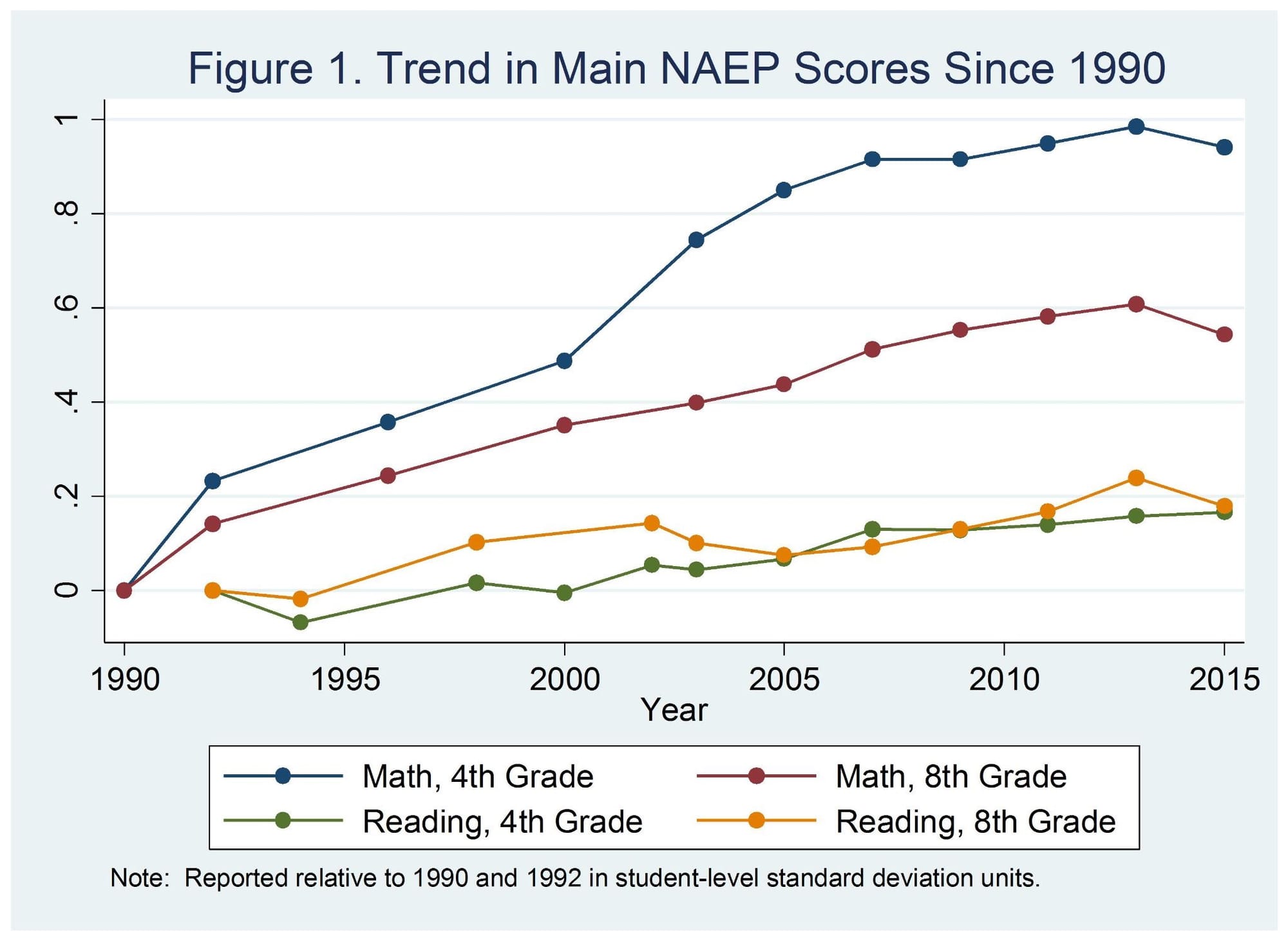
The presentation began with some sobering data from the National Assessment of Educational Progress (NAEP), which showed that national math and reading scores were generally improving over a 30-year period until 2010–2013, after which they began to fall and have continued to fall ever since. The presenters noted this decline coincided directly with major cultural and technological shifts, including the widespread rise of smartphones, social media, and increased reliance on student screens and digital tools in the classroom.
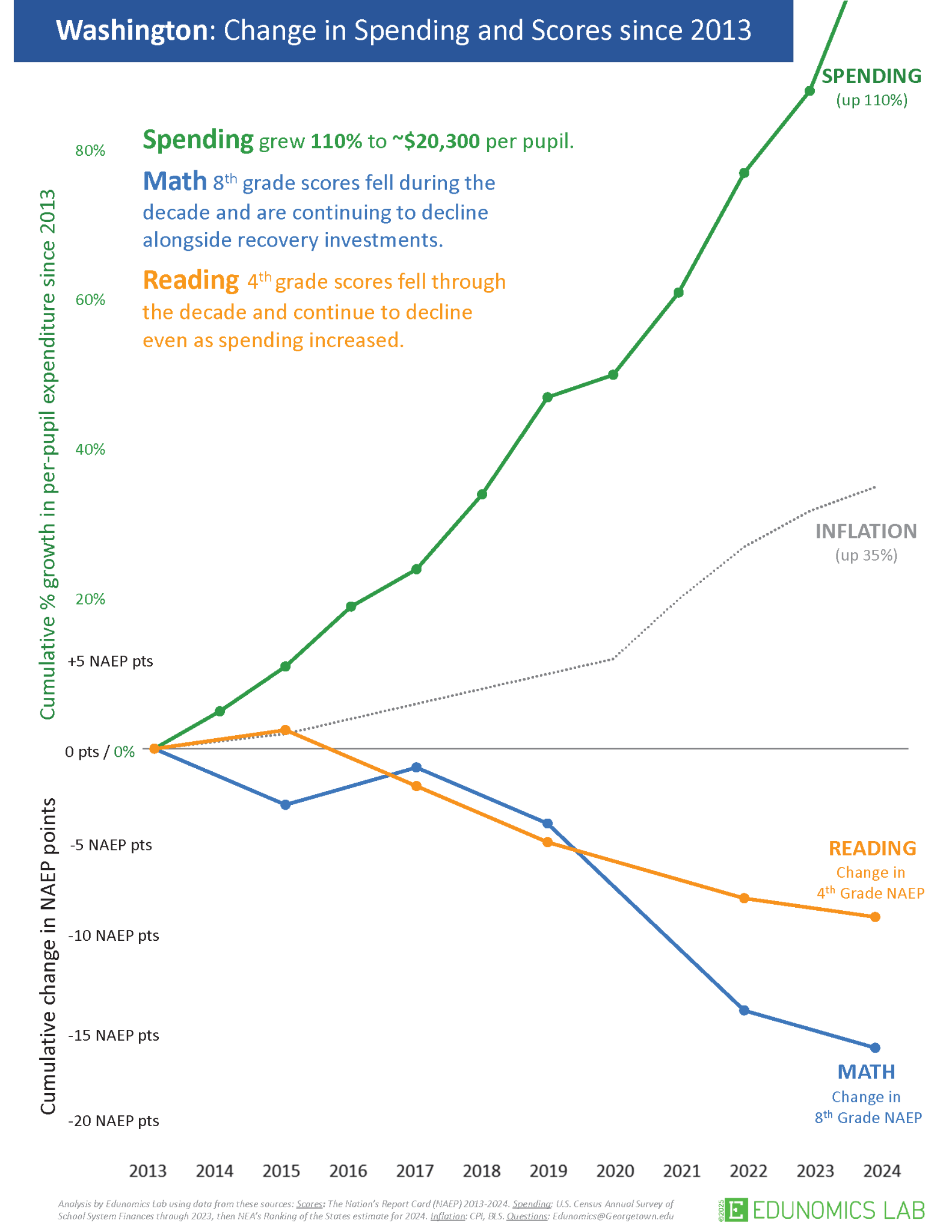
The figures for Washington State were particularly striking: from 2013 to 2024, our educational spending grew by 110%—far outstripping the 35% inflation rate—to an average of $20,030 per student. Yet, during that same period of explosive investment, math scores dropped 15 points and reading scores fell 8 points.
Lawsuits, Backlash, and Policy Action
The conversation quickly moved to the concerns of survey and data breaches, walking back tech trends to focusing on core concerns like instructional quality, mental health, exposure to inappropriate content, and data privacy. One notable discussion centered on the lawsuit filed against Curriculum Associates (i-Ready) regarding real-time data sharing and collection without parental permission. Despite these concerns and the program’s $532,000 annual contract with the Highline School District (HSD), the HSD board voted to adopt i-Ready for another year. As one presenter suggested, tech vendors may be prioritizing "long-term customer relationships, data acquisition, and money," potentially treating children as "guinea pigs".
Historically, school reforms built on "Ideology over Evidence" and "Top-down Mandates" tend to fail. This context framed the discussion on device management:
• Cell Phones: We learned that more than half of U.S. states now have laws restricting or banning personal mobile devices during school. Washington State is also moving forward with a study toward a "bell-to-bell" ban by 2030 (SB 5346). Highline does not yet have a cell phone policy.
• School-Issued Devices: Removing cell phones is only one piece of the puzzle, as the post-COVID normalization of school-issued devices (iPads/Chromebooks) continues. The presentation highlighted that these devices are not improving outcomes, with 75% of teachers reporting they distract from learning. As a result, the Los Angeles Unified School District (LAUSD) is responding by removing devices for K-1 and phasing out 1-to-1 ratios in grades 2-5.
Highline School District’s Approach
Although the HSD School Board declined to attend the event, the Superintendent's office did provide answers regarding the district's stance on technology, which we wrote about last week.
HSD’s official position is that their approach is "intentional" to ensure equitable 1:1 access for all K-12 students. Importantly, they highlighted that technology is not the primary driver of instruction. They stated that they do not mandate screen time; instead, device use is guided by instructional purpose.
HSD’s digital tool review process claims to consider "Best Practices, Highline Standards (including Culturally Responsive Instruction), Data Safety, and Digital Citizenship."
💡
SAVE THE DATE: June 24th for our next Community Conversation - 'Protecting Girls Sports, a Bi-Partisan Discussion'
Members Discussion
Highline Journal Comment Guidelines
We believe thoughtful conversation helps communities flourish. We welcome respectful, on-topic comments that engage ideas, not individuals. Personal attacks, harassment, hateful comments, directed profanity, false claims, spam, or sharing private information aren't allowed. Comments aren't edited and may be removed if they violate these guidelines.