Doug Dibley recounts a rarely told story of Pilgrim fortitude and prayer as drought withered their crops.
By Doug Dibley
This is not an often-told tale.
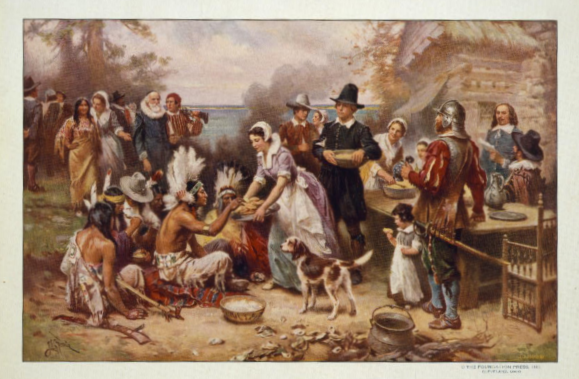
Many remember the Pilgrims’ arrival in 1620 and the very harsh winter in which many died. Their harvest in 1621 was not bad, and they met a couple of English-speaking Indians, including Squanto. Although the Pilgrims had farming experience, the soil and growing conditions were significantly different from those in Europe, so the Indians were helpful in farming and other ways.
The festival in the fall of 1621 was more in the tradition of European harvest festivals. There were, for example, multiple feasts in what would become Florida and other locations throughout the land in the years before 1621.
More ships brought more people, but the Pilgrims found that labor and planting were scarce. In 1622, they began assigning private property, which dramatically increased planting and labor in the fields. They began with communal farming, not as an experiment in communal living, but because they were under contract to send goods back to the company that funded their travel to the New World. Between 1621 and 1623, the number of acres planted increased about sevenfold.
Then, in 1623, they faced a test.
A drought began around the third week of May and continued into the middle of July. Very high temperatures parched the ground and partially withered the crops.
That year, they called for two distinct events.
The first was, in Bradford’s words, “a solemn day of humiliation, to seek the Lord by humble and fervent prayer.” What happened next was certainly nothing short of a miracle.
New England is known for its nor’easter storms, and one of those could have finished off the crops after two months of drought. But that’s not what happened. By late afternoon on the day they had set aside to pray, clouds began to form. By evening, a soft, gentle rain began. It continued for three days straight, then on and off over the following two weeks, ultimately yielding, in Bradford’s words, “a fruitful and liberal harvest.”
The Indians who lived among them were astonished. Nearby chief Hobbamock told Bradford he liked his God because He had saved their crops. Hobbamock became a Christian and built his village across the river to live closer to the Pilgrims.
The second event was a day of thanksgiving, which they set aside after the harvest specifically to celebrate this miracle.
In 1789, at Congress’s request, George Washington issued a Thanksgiving proclamation, the first under the new Constitution. The Continental Congress had issued a proclamation in 1777. I urge you to read it. It is included in the study linked below. Many have questioned whether our Founding Fathers were really people of faith. The proclamation, along with other evidence, removes all doubt.
Sarah Hale wrote in 1852 that Thanksgiving Day is "the national pledge of Christian faith in God." For nearly three decades, she lobbied presidents, including President Lincoln, to proclaim a national Thanksgiving. Lincoln issued a proclamation in 1863, and later presidents followed. The date varied over the years. In 1939, President Roosevelt moved Thanksgiving to an earlier date, and in 1941, Congress permanently set it on the fourth Thursday in November.
Many of you are familiar with much of the history of Thanksgiving, but hopefully this story will further encourage you this coming week to remember the blessings of a miracle-working God in securing the liberty and success of this nation.
Here’s a link to a study I did on this topic: The Miracle of 1623 by Doug Dibley.
Doug Dibley is an elder at The Well Fellowship in Sumner. He and his wife, Jenny, have been married for 37 years.
Highline Journal Comment Guidelines
We believe thoughtful conversation helps communities flourish. We welcome respectful, on-topic comments that engage ideas, not individuals. Personal attacks, harassment, hateful comments, directed profanity, false claims, spam, or sharing private information aren't allowed. Comments aren't edited and may be removed if they violate these guidelines.