Port of Seattle
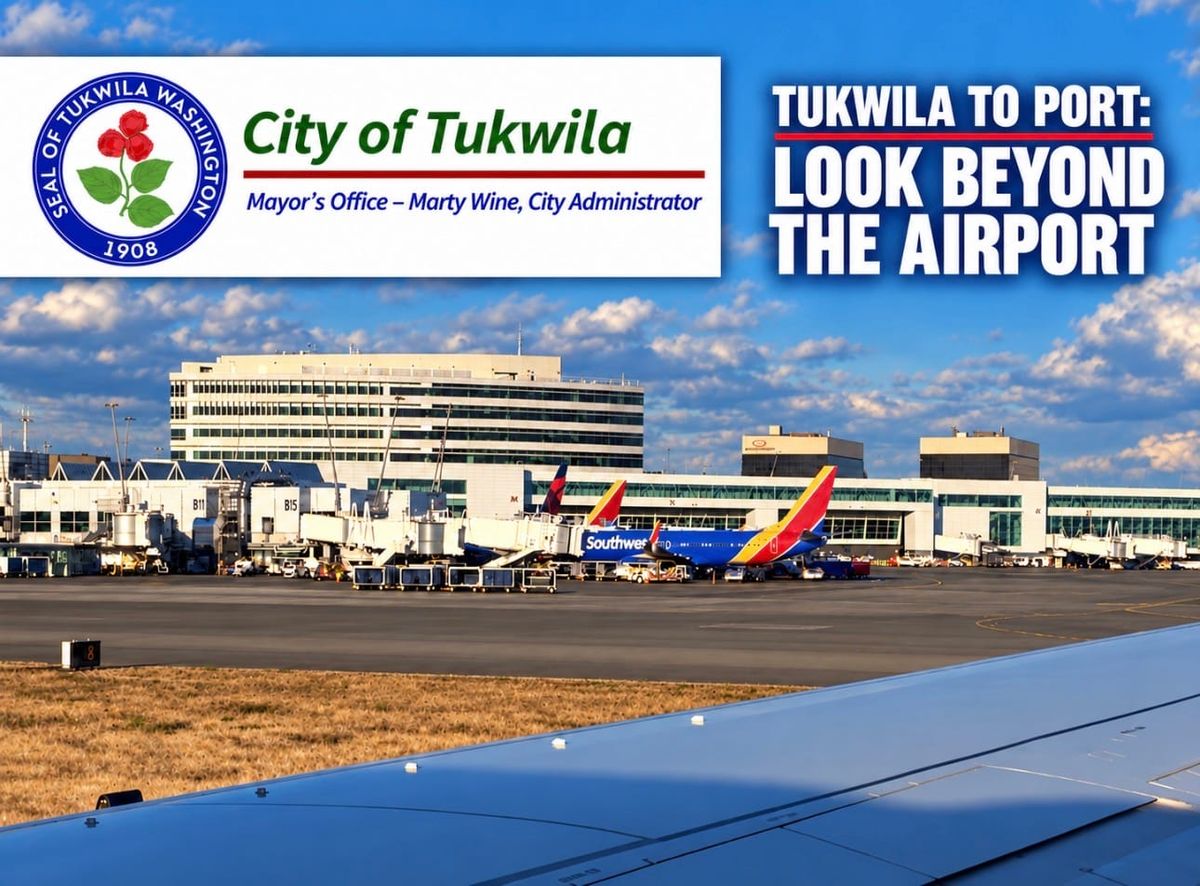
The City of Tukwila submitted a five-page letter on August 7 to the Port of Seattle about the Airport Master Plan Draft Environmental Impact Statement (SAMP/DEIS).
The letter raises several concerns that directly affect communities beyond the airport property. Tukwila argues that the Port is using too small a study area, is not adequately considering environmental justice, and is leaving out some of the financial costs borne by neighboring cities.
Though much shorter than the 187-page letter from Burien, Des Moines, and SeaTac, which we wrote about previously, Tukwila’s letter adds some important points the public should know about. It also has little overlap with the recent letter from the Highline Water District.
The Tukwila letter is signed by the mayor and City Council. It also references a separate letter submitted by city staff on July 16, 2026.
Highlights from the August 7 letter
Regional benefits, local costs
The airport is a regional asset, but the costs are not evenly distributed. They are paid by airport neighbors.
Airport impacts extend beyond the study area
The General Study Area needs to be much larger, a point City of Tukwila staff repeatedly raised with Port staff. Per the letter:
"The Port of Seattle assumes that the impacts of the airport's operations and the proposed projects are largely confined to the 3,692-acre General Study Area, which primarily consists of Port-owned property and immediately adjacent land uses. However, airport operations, including increased passenger activity, vehicle trips, aircraft operations, increased noise, air emissions, traffic, and future capacity expansion, have impacts that extend well beyond the GSA."
Additionally, Health Effects of Aviation Noise: Review of US Research and Findings recognizes sleep disturbance in areas exposed to nighttime noise levels of 45 dB and above.
"The City's concern is heightened by the fact that the Port routinely evaluates the airport's economic benefits on a regional scale while evaluating many of its environmental impacts using a much narrower geographic boundary. Applying different geographic scopes for benefits and impacts creates an incomplete picture of the airport's overall effect on surrounding communities."
Environmental justice should be central to planning
The letter advises the Port to use the state’s Healthy Environment for All Act, known as the HEAL Act, as a framework for planning and expansion:
"While the Port of Seattle is not currently directly subject to the HEAL Act, its principles provide an important framework for identifying, evaluating, and addressing disproportionate environmental burdens experienced by overburdened communities."
The financial costs should be included
The city asks the Port to include realistic financial costs associated with the airport’s impacts:
"These impacts include, but are not limited to, reduced property tax revenues, increased demand for human services, transportation infrastructure impacts, and higher public safety and municipal service costs associated with supporting one of the nation's busiest airports."
A call for a broader and more transparent review
The city closes its letter by asking for a different approach:
"A more comprehensive and transparent review will result in better-informed decisions, strengthen public confidence in the process, and demonstrate the Port's commitment to balancing regional mobility with the well-being of the communities that host the airport."
Members Discussion
Highline Journal Comment Guidelines
We believe thoughtful conversation helps communities flourish. We welcome respectful, on-topic comments that engage ideas, not individuals. Personal attacks, harassment, hateful comments, directed profanity, false claims, spam, or sharing private information aren't allowed. Comments aren't edited and may be removed if they violate these guidelines.